Author: Anne Young

America 250 Historical Driving Tour | Perry’s Victory and International Peace Memorial

Stop #16 | Address: 93 Delaware St., Put-in-Bay

Originally conceived as a memorial chapel in a surrounding park skirting the Put-in-Bay harbor containing eight memorial windows, one each to represent the seven other Lake States and one by Ohio, the final design for Perry’s Victory and International Peace Memorial was much different.  It took three years to build with various cost estimates between $600,000 and $1 million.  Intended to commemorate the September 1813 victory of Commodore Oliver Hazard Perry at the Battle of Lake Erie over the British, a key point in the War of 1812, the Memorial has come to represent the aspirations of all nations for the peace of the world.

To decide on the final design, a competition of American architects was held with the newly formed National Commission of Fine Arts serving as judge.  From over 147 architects, J. H. Freedlander and A. D. Seymour, Jr. of New York were selected.  Its winning focal point was the Doric column “rising above the isthmus of the Put-in-Bay Harbor as if from the sea.”   Reaching 352 feet skyward, the Doric column is made of pink Milford granite from Massachusetts.   It is the only international peace memorial in the U.S. National Park System and stands 47 feet taller than the Statue of Liberty in New York harbor.  The upper deck platform is 12 feet higher than the Statue of Liberty’s torch.

The cornerstone dedication ceremonies were held July 4, 1913 with over 5,000 masons attending.  The “peace idea” as part of the memorial was intended in the original planned centennial celebration and was followed through to the finished design.  But the solemnity of the centennial celebration was the transfer of the remains of three American and three British officers killed in the Battle of Lake Erie to beneath the rotunda of the mighty column.  Although some said the British would not attend the centennial celebration, come they did to help celebrate a century of peace and assist in the dedication of the memorial as an expression for world peace.  The memorial stands five miles from the longest undefended border in the world.

About “Tracking the Troops, Tippecanoe & Perry, Too!” This driving tour is a five-county collaborative project with Wyandot, Seneca, Sandusky, Wood and Ottawa counties that takes you on a self-guided driving tour following the military trail of General William Henry Harrison during the War of 1812. Harrison would later become the ninth president of the United States and has the shortest presidency, dying from pneumonia one month after having taken the oath of office.

America 250 Historical Driving Tour | Fort Ball

Stop #5 | Address: Frost Parkway, Tiffin

As General William Henry Harrison planned his advance north to capture British Fort Malden across Lake Erie in Canada, he had to consider how best to keep his troops supplied throughout the campaign.  Being on the offensive meant that the army needed to transport essential items with them: munitions, food, camp equipment, and forage for the oxen and horses that hauled the wagons and artillery.  Since his army planned to follow the Scioto-Sandusky Trail, which was intended for foot travel, movement promised to be slow.  Therefore, Harrison ordered that small supply forts be constructed periodically along his line of march.  These forts also served as fallback positions should Harrison’s plans fail.

After Fort Ferrer in Upper Sandusky, the next fort in this chain of supply depots was along the north side of the Sandusky River in present-day Tiffin.  It was named Fort (sometimes referred to as Camp) Ball after Lt. Colonel James Ball whose troops began construction of the stockade in July 1813.  We have a description of the fort by John Searles, an early settler who arrived after the war in 1820 with his wife and children.  They, as did many early arrivals, lived in a room of one of the fort’s blockhouses until they could build their own cabin.

“The roofs of the block houses were covered with clapboards.  The army road [the Scioto-Sandusky Trail, also known as Harrison’s Trail] ran along the river bank between the fort and the river.  There was just room enough for the road.  The fort has three block houses, one on two corners and one between these two corners, in the middle, all facing the river.  Back of the block houses was an open space, inside the pickets, of about half an acre.  There was room enough in the block houses for two hundred men.

Surrounding the ‘camp’ stakes about a foot in thickness were driven into the ground and on these fixed bayonets driven in horizontally in the stakes near to the top.  Against these stakes logs were piled on the outside and over them dirt was thrown from the ditch that surrounded the whole.  There was room in the interior for five hundred men.”

Despite having an ever-flowing spring of pure water nearby, disease took the lives of many soldiers assigned to the fort between 1813 and 1815 when the war ended and the fort was abandoned.  These deaths were probably the result of the traditionally poor understanding of proper sanitation during this time, as well as the swampy conditions of the region that caused ague (malaria).  The fort never came under attack from the British or Indian forces.

About “Tracking the Troops, Tippecanoe & Perry, Too!” This driving tour is a five-county collaborative project with Wyandot, Seneca, Sandusky, Wood and Ottawa counties that takes you on a self-guided driving tour following the military trail of General William Henry Harrison during the War of 1812. Harrison would later become the ninth president of the United States and has the shortest presidency, dying from pneumonia one month after having taken the oath of office.

America 250 Historical Driving Tour | End of Harrison Trail in Ohio – War of 1812

Stop #13 | Address: 126 W. Third St., Port Clinton

Marker reads “Six miles east is the western boundary of ‘The Fire Lands’ given by Connecticut to its citizens for property destroyed by the British during the Revolution.”  The marker was erected in 1930 by the Ohio Revolutionary Memorial Commission.

The ”Fire Lands” was located at the western end of the Connecticut Western Reserve and was intended as financial restitution for residents of Connecticut who had their homes burned in 1779 and 1781 by the British.  The 500,000 acres covered nearly all of present-day Huron and Erie counties, Ottawa’s Danbury Township and a portion of Catawba Island Township.

The War of 1812 opened in the west with the British capturing the American Fort Detroit located on the banks of the Thames River in southwestern Ontario.   William Henry Harrison, Governor of the Indiana Territory, was given command of the American forces and tasked with retaking the fort.  By spring 1813, Harrison’s plan involved moving forces along five routes that would converge in northwestern Ohio on the Maumee and Sandusky Rivers.  Beginning in Upper Sandusky, Harrison built small forts along his route north that served as storage depots for supplies as well as havens of safety.  He would use the DeLery Portage, a centuries-old path between the Sandusky Bay and the mouth of the Portage River, to transport supplies to Lake Erie and later send men and munitions from Fremont’s Fort Stepehenson.  American soldiers dragged boats overland on the two-mile course of what today is Fulton Street in Port Clinton.   

Ten days after the Battle of Lake Erie, Harrison first traveled to Put-in-Bay (South Bass Island) then to Middle Sister Island and finally landed in Canada.  In what became known as the Battle of Thames, Harrison defeated the British and Tecumseh was killed.  Before embarking for Canada, Harrison built a brush fence extending across the peninsula about two miles wide from the mouth of the Portage River to the opposite mouth of the Sandusky River.  There the American soldiers turned their horses loose.  Returning from Canada, Harrison’s Kentucky and Ohio volunteers camped, gathered their horses and proceeded home.

About “Tracking the Troops, Tippecanoe & Perry, Too!” This driving tour is a five-county collaborative project with Wyandot, Seneca, Sandusky, Wood and Ottawa counties that takes you on a self-guided driving tour following the military trail of General William Henry Harrison during the War of 1812. Harrison would later become the ninth president of the United States and has the shortest presidency, dying from pneumonia one month after having taken the oath of office.

America 250 Historical Driving Tour | Scott Hagan “Oliver Hazard Perry” Barn Mural

Stop #18 | Address: 14669 SR 105, Elmore

On September 10, 1813 the Battle of Lake Erie commenced. The British fleet consisted of six ships with 63 cannons and was commanded by Robert Heriot Barclay.   The American flotilla had nine ships with 54 cannons and was commanded by 28-year old naval officer, Oliver Hazard Perry.  He and his men first arrived at Presque Isle near Erie, Pennsylvania and over a span of months fashioned a fleet of ships from green oak timber.  From Presque Isle, Perry moved his base of operations to Put-in-Bay on South Bass Island.  Perry hosted his battle flag inscribed with “Don’t Give Up the Ship,” the last words of his friend Captain James Lawrence, who had been killed in a naval battle in June off the Atlantic coast.  Perry would name his flagship after Lawrence.  After inflicting significant damage on the British fleet, the Lawrence was severely damaged forcing Perry to move command to the nearby Niagara.  Continuing to battle throughout the afternoon, the British ships eventually were incapacitated and one-by-one surrendered.   Perry composed his famous message to General William Henry Harrison, “Dear General: We have met the enemy and they are ours.  Two ships, two brigs, one schooner and one sloop.  Yours with great respect and esteem. O.H.Perry.”  The battle was the only time in history that an entire British fleet was defeated.

The victory secured American control of Lake Erie, forcing the British to abandon Fort Malden on the Detroit River and retreat up the Thames where General Harrison defeated the undermanned and un-reinforced British army and its allied Indian force October 5, 1813.  Tecumseh died in the Thames battle.

The Battle of Lake Erie and the victory by the army at the Thames ensured the states of Ohio and Michigan would remain sovereign territory of the United States.

The Oliver Hazard Perry barn mural is one in a series of painted barns throughout Ohio as part of an Ohio History Connection project.  It was completed by barn artist Scott Hagan in 2017.  The barn is geographically located due south of the area in Lake Erie where the Battle of Lake Erie took place.

About “Tracking the Troops, Tippecanoe & Perry, Too!” This driving tour is a five-county collaborative project with Wyandot, Seneca, Sandusky, Wood and Ottawa counties that takes you on a self-guided driving tour following the military trail of General William Henry Harrison during the War of 1812. Harrison would later become the ninth president of the United States and has the shortest presidency, dying from pneumonia one month after having taken the oath of office.

America 250 Historical Driving Tour | Harrison Rock

Stop #11 | Address: Sandusky Co. Rt 590 (2 miles south of St Rt 6), Fremont

On Route 590 south of Route 6 in Jackson Township.  It is an 80-ton glacial boulder that is 13 feet long, 10 feet wide, and 7 feet tall (partly underground).  It became known as Harrison Rock because supposedly General William Henry Harrison’s soldiers used the huge landmark as a mess table as the army traveled between Fort Meigs on the Maumee River and Fort Seneca (in Old Fort) on the Sandusky River.  In 1946, a plaque was placed on the boulder by the George Croghan Chapter in Fremont of the Daughters of the American Revolution.

About “Tracking the Troops, Tippecanoe & Perry, Too!” This driving tour is a five-county collaborative project with Wyandot, Seneca, Sandusky, Wood and Ottawa counties that takes you on a self-guided driving tour following the military trail of General William Henry Harrison during the War of 1812. Harrison would later become the ninth president of the United States and has the shortest presidency, dying from pneumonia one month after having taken the oath of office.

America 250 Historical Driving Tour | Fort Meigs

Stop #12 | Address: 29100 W River Rd., Perrysburg

In an era when armies were relatively dormant in the colder months, General William Henry Harrison pushed his American command through the forest and swamps of Ohio on a rare over-the-winter campaign from 1812 into early 1813.  Harrison was responding to enormous pressure from the War Department to take back American territory overrun and occupied by the enemy the previous summer; then carry out the original war aim of pushing British authority out of Canada.  Following another unexpected American defeat at the Battle of the River Raisin in January 1813, the alarmed general now lacked the offensive punching power required to immediately move against Detroit – the American headquarters surrendered in August of 1812.  Harrison settled into a defensive posture at a key crossing position along the Maumee River in Northern Ohio. 

Fort Meigs was originally conceived as a staging area where the Americans could again gain strength through men and material.  It would be a massive supply depot right on the front lines, within striking distance of the enemy, and place the British in check for the fighting season of 1813.  After three months of construction the facility was more of a fortified camp than a true fortress.  A wooden stockade stretched just under one mile enclosing ten acres of a tented army and wooden storehouses.  Seven two-story blockhouses dotted the perimeter and concentrated firepower at key locations.  Five artillery batteries overlooked the river crossing from high ground on the southwest bank.   

Aware of the growing American threat at the Foot of the Maumee River Rapids, the allied army sought to knockout the American presence as soon as they were able.  A combined force of 1,000 British and 1,500 Indigenous invested the Maumee Valley and surrounded the American position of nearly equal force – commencing a near two-week siege at the end of April. In pouring rain conditions British and American artillery dueled until the fifth day of active combat when 

American reinforcements arrived.  The fresh brigade of Kentucky Militia allowed the Americans to engage in multiple ground operations and attempt to break the stranglehold.  Four days later, with dwindling troop numbers and favorable sailing winds for departure, the British withdrew from the area, the natives had largely already gone. 

Frustrated by the setback but still determined toward success, in June, Tecumseh’s army was greatly enlarged with new fighting men fromm the Upper and Western Lakes. 4,000 Indigenous with light British accompaniment besieged Fort Meigs a second time in late July – again a protracted eight-day struggle. Unable to dislodge the Americans by ruse or direct assault the 2nd siege ended with bitter strains on the British and Indigenous alliance.  

By the close of these endeavors, the American navy had moved into western Lake Erie, and the combined U.S. force had effectively bottled the allies into the Detroit River with dangerous supply problems.  The twin American stands at Fort Meigs represent the first time in the War of 1812 that the American army had successfully defended their own territory in the west.  The end of 1813 would see the army move on and carry out their immediate objectives before them.  The army of Fort Meigs was the invasion force that liberated Detroit and held large areas of Upper Canada.  The battle death of Tecumseh on October 5, 1813, marked the end of Indigenous resistance in the war.  

Fort Meigs stands today in Perrysburg. Ohio.  We encourage all to walk our grounds where heroes and leaders contested North America.  Our large monthly re-enactments can be an eye-opening and immersive 19th century military experience. 

About “Tracking the Troops, Tippecanoe & Perry, Too!” This driving tour is a five-county collaborative project with Wyandot, Seneca, Sandusky, Wood and Ottawa counties that takes you on a self-guided driving tour following the military trail of General William Henry Harrison during the War of 1812. Harrison would later become the ninth president of the United States and has the shortest presidency, dying from pneumonia one month after having taken the oath of office.

America 250 Historical Driving Tour | Fort Stephenson

Stop #8 | Address: Intersection of W. State St. & N. Arch St., Fremont

The fort was strategically located on a bluff overlooking the lower rapids of the Sandusky River. Originally the site of a French trading post, by 1813, it served as the northern most supply fort along the Harrison Trail. Frustrated by two failed attempts to capture Fort Meigs in May and July of 1813, British General Henry Proctor moved his army by water across Lake Erie and up the Sandusky River to the rapids below Fort Stephenson. Here the British and their Native American allies laid siege to the fort, certain this undermanned garrison could be easily overcome. General William Henry Harrison had entrusted command of the fort to a 21-year-old Kentuckian, Major George Croghan. Together with a garrison of 160 men and a single cannon captured during the French and Indian War, Croghan fought off a determined assault by British troops on August 2. Surprised by the Americans’ tenacious defense and their own heavy losses, the British quietly slipped away during the night. Word of Croghan’s victory spread throughout country, inspiring hope after months of gloomy war news. Never again would British troops set foot in Ohio. Birchard Library, located on Croghan Street in downtown Fremont, was constructed on the site of Fort Stephenson and houses a collection of artifacts from the battle. The old cannon that served Croghan’s garrison so well is displayed on the library lawn. Nearby, the remains of George Croghan are interred at the base of the Soldiers’ Monument.

About “Tracking the Troops, Tippecanoe & Perry, Too!” This driving tour is a five-county collaborative project with Wyandot, Seneca, Sandusky, Wood and Ottawa counties that takes you on a self-guided driving tour following the military trail of General William Henry Harrison during the War of 1812. Harrison would later become the ninth president of the United States and has the shortest presidency, dying from pneumonia one month after having taken the oath of office.

America 250 Historical Driving Tour | Hayes Presidential Library & Museums

Stop #9 | Address: Speigel Grove, Fremont

President Rutherford B. Hayes’s second son Webb spearheaded the drive to build the Museum in 1916 to honor his father. The nation’s first presidential library, it is located on a 25-acre estate known as Spiegel Grove. Access is near the intersection of Buckland and Hayes Avenues. The library has an extensive collection of books on Sandusky County history, as well as material related to the War of 1812. The Harrison Trail, which passes through the grounds beginning at the southern gate, originally connected Fort Seneca and Fort Stephenson. During the Revolutionary War, Daniel Boone passed along this trail as a captive of the Indians on his way to the British fort at Detroit. At the time, it was known as the Scioto-Sandusky Trail. Native Americans created it to facilitate travel between the Ohio River and Lake Erie.

About “Tracking the Troops, Tippecanoe & Perry, Too!” This driving tour is a five-county collaborative project with Wyandot, Seneca, Sandusky, Wood and Ottawa counties that takes you on a self-guided driving tour following the military trail of General William Henry Harrison during the War of 1812. Harrison would later become the ninth president of the United States and has the shortest presidency, dying from pneumonia one month after having taken the oath of office.

America 250 Historical Driving Tour | Toll House

Stop #2 | Address: Near the current log cabin on the Wyandot Co. Fairgrounds (10171 OH-53, Upper Sandusky)

The first attempt to establish a true “road” came about during the War of 1812 when General William Henry Harrison established the “Old War Road.” His troops cut out a route which ran from Delaware, passed roughly north-south through the central portion of the county, including Upper Sandusky and the area which would become McCutchenville, extending to Fremont. It was known as the Harrison Trail and follows roughly the same path as present-day United States Highway 53.

Shortly after the establishment of Upper Sandusky as the county seat in 1845, plans were begun to create a more permanent road north to Lower Sandusky (Fremont). A plank road running from Columbus to Tiffin was planned in 1848. On March 22, 1849, the Ohio General Assembly passed an act incorporating the Lower Sandusky, Tiffin and Fort Ball Plank Road Company. Wyandot County residents Joseph McCutchen, Robert McKelley, and Andrew McElvain were initial subscribers. One year later, on March 23, the Tiffin and Osceola Plank Road Company was incorporated by the state. This action extended the route through Wyandot County to Bucyrus.

The acts provided that the roadbed should be constructed at least eight feet wide of wood planks at least three inches thick and the roadway should be at least sixteen feet wide if double tracked. They further decreed that a properly maintained and drained earthen wagon track should be placed alongside the plank road for use by “animals, teams, and travelers of every description.” The road appeared like a giant wooden sidewalk extending to the horizon.

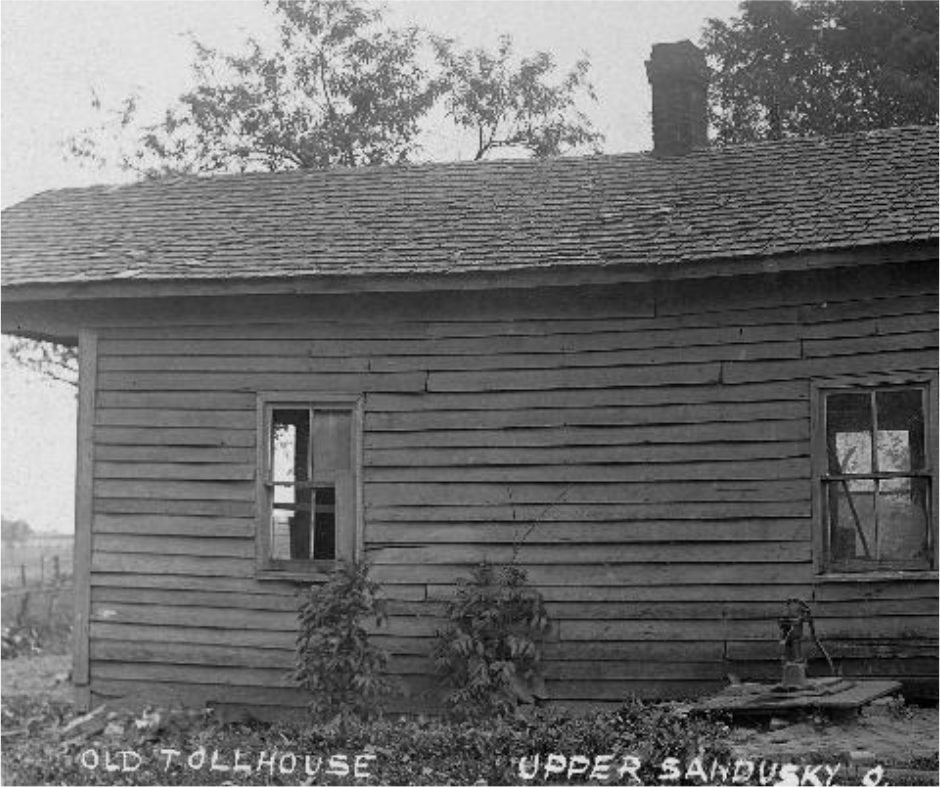
The acts further allowed the owners to erect gates and tollhouses after every five miles of plank road was completed. Everyone who used the road or path was required to pay a toll. Upper Sandusky’s tollhouse stood near the location of the present Wyandot County Fairgrounds. The toll was 12 ½ cents to run a team of horses from Upper Sandusky to Tiffin. After about five years, the roads became too difficult to maintain due to the constantly warping planks. Eventually the roads were abandoned, planks burned, and the tollhouses torn down. None of the investors in the plank roads ever made a profit. It would be many more years until gravel pikes would appear in the county.

Approximate Building Location (No Longer Standing): 10171 State Route 53 North, Upper Sandusky, Ohio 43351 (Near the current log cabin on the Wyandot County Fairgrounds.)

Approximate GPS Location: 40.8439922°N, -83.2803030°W

About “Tracking the Troops, Tippecanoe & Perry, Too!” This driving tour is a five-county collaborative project with Wyandot, Seneca, Sandusky, Wood and Ottawa counties that takes you on a self-guided driving tour following the military trail of General William Henry Harrison during the War of 1812. Harrison would later become the ninth president of the United States and has the shortest presidency, dying from pneumonia one month after having taken the oath of office.

America 250 Historical Driving Tour | Indian Mill

Stop #3 | Address: 7417 Co. Hwy. 47, Upper Sandusky

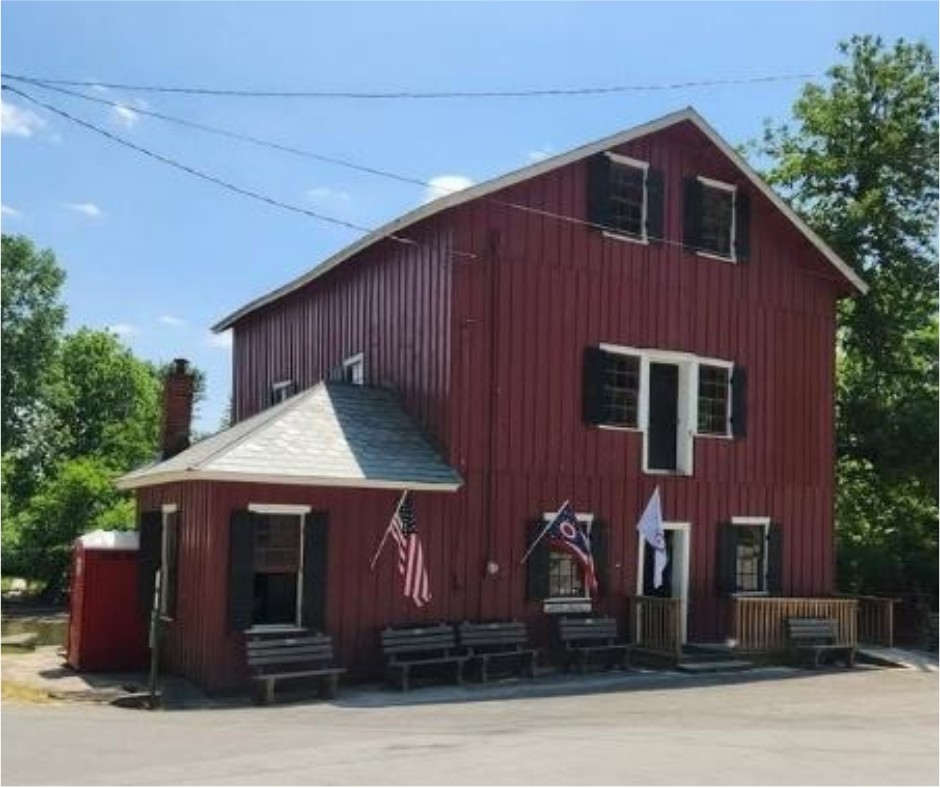
Just northwest of Upper Sandusky, along the scenic Sandusky River is the Indian Mill. Built in 1861, the mill is the nation’s first educational museum of milling in its original structure. The mill ceased operations in 1941, and ownership was transferred to the Ohio History Connection.

When the War of 1812 ended, members of the Wyandotte tribe settled near modern-day Upper Sandusky. Along with them was a group of African Americans—both free blacks and fugitives from slavery—who also settled nearby. The Wyandottes, who’d always been farmers, worked with the African Americans, and the African Americans in turn worked with them. Part of this intermingling led to some of the Wyandottes accepting Christianity and forsaking their customs. This in turn led to limited perks granted by the government, including federal money to build a mill.

As a reward for the loyalty the Wyandottes showed in supporting the Americans during the War of 1812, Article 10 of the Treaty of the Rapids of the Miami of Lake Erie (signed in 1817) called for a sawmill and a grist mill to be erected by the United States Government for the use of the Wyandottes. By 1820, a flour mill, dam and sawmill were constructed on the banks of the Sandusky River. These mills provided important services for the Wyandotte farmers as well as the African Americans living in the area. They were able to process their harvests and turn logs into timber to build their homes. However, under pressure from many white settlers who lived in the area surrounding the Wyandotte reservation, the federal government decided to permanently move the Wyandottes out of Ohio. In 1843, the last of the Wyandottes left the area.

Following the removal of the Wyandottes, these mills fell into disrepair and were abandoned and purchased by George Myers in 1848. He operated them until the current three-story mill was rebuilt with original materials on the present site by Lewis Rummel in 1861. The new mill was powered by three water-powered turbines made by the James Leffel & Co. of Springfield, Ohio. The mill has been owned by various people over the years and was donated to by the Ohio History Connection by the Walton Family in the mid-1950s. The mill was cleaned, restored and formally opened to the public in 1968 as the first educational museum of milling in the United States in a mill still in its original location.

Many exhibits are placed around the original mill machinery. A Leffel Turbine, along with the old stone burrs, bolting chests, and elevators are still visible in their original locations. The restored miller’s office displays historic artifacts related to the history of milling in the nineteenth and early twentieth centuries. Indian Mill is currently managed locally by the Wyandot County Archaeological & Historical Society.

Mill location: 7417 County Highway 47, Upper Sandusky, Ohio 43351

GPS Location: 40.8631119°N, -83.2540863°W

About “Tracking the Troops, Tippecanoe & Perry, Too!” This driving tour is a five-county collaborative project with Wyandot, Seneca, Sandusky, Wood and Ottawa counties that takes you on a self-guided driving tour following the military trail of General William Henry Harrison during the War of 1812. Harrison would later become the ninth president of the United States and has the shortest presidency, dying from pneumonia one month after having taken the oath of office.

America 250 Historical Driving Tour | Overland Inn

Stop #4 | Address: 283 OH-53, McCutchenville

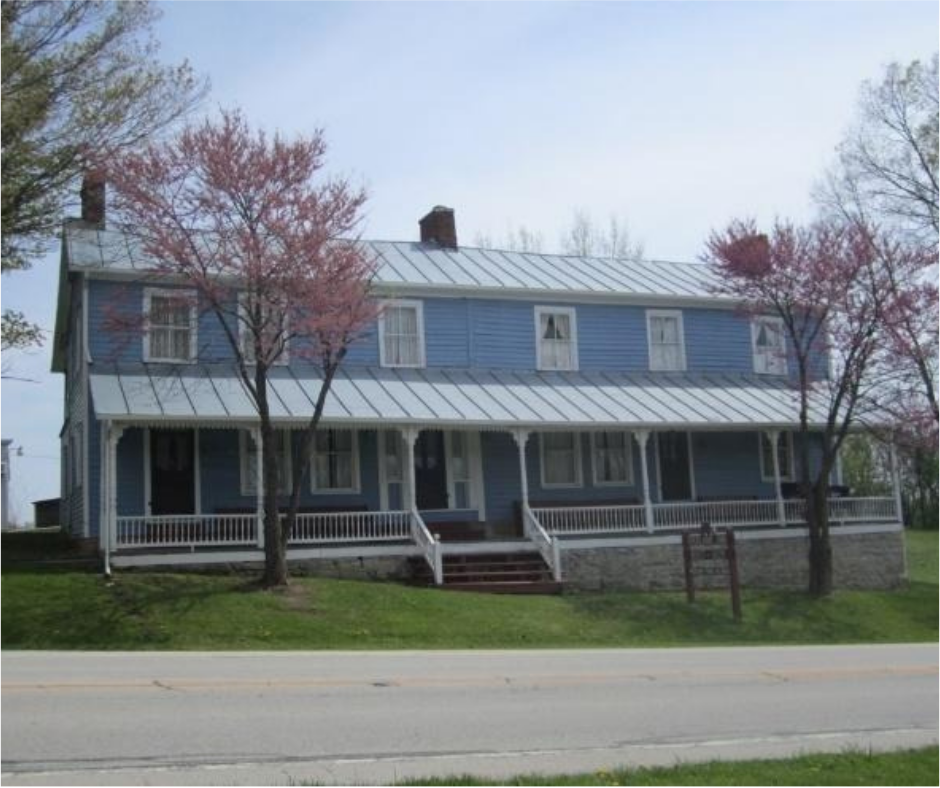
Colonel Joseph McCutchen erected the first building in the new town of McCutchenville, platted by Dr. George Sampson, and named for McCutchen.  The Pervain House, now known as the McCutchen Overland Inn, was erected during the summer of 1829. It was originally constructed as a hotel and later served as a stagecoach stop along the Harrison Trail. This was a former Indian Trail leading from the Scioto River near Columbus to Lake Erie, which was expanded by General William Henry Harrison in order to accommodate his troops during the War of 1812. McCutchen operate his Inn until January 1845 when he sold the property to Christopher Pierson.

On October 21, 1845, Pierson sold the land and original building to John F. Myers, who added on to the building and operated it as Myers Hotel until April 18, 1918, when it was sold at public auction. Hays Shireman purchased the building and operated it as a boarding house and eventually as an apartment building. The Wyandot County Historical Society acquired the building from the Shireman Estate in 1964.

By the time it was purchased by the Society, the Inn had fallen into disrepair. It took three years for community volunteers to restore the building to its stagecoach days. The McCutchen Overland Inn was dedicated as a stagecoach museum on June 11, 1967. It is one of only two original stagecoach inns remaining in their original locations in the state of Ohio.

Visitors to the Inn will delight in the quaint structure furnished with antiques donated by residents of Wyandot County (and surrounding counties), and retaining the original reception and bar room where travelers registered to spend the night. Touring the Inn will provide an experience of nineteenth century travel throughout Ohio and America.

In 2002, the redecoration of the Inn turned into a second major renovation/restoration stretching out over a four-year period. The Inn’s foundation was reinforced, the log cabin was dismantled log by log, the log cabin foundation was replaced, and the log cabin was rebuilt. Floors were refinished or replaced, and the Inn received a period-appropriate redecoration. An outpouring of support from current and former Wyandot County residents, businesses and organizations, including money collected by McCutchenville school children, provided financial resources as well as volunteer workers to complete the project. The grand reopening of the Inn was held on June 10, 2007. More than 500 people traveled to McCutchenville to join in the festivities.

In 2021, the Anderson General Store was transformed from a storage structure back to its appearance as a store, including a pharmacy section, filled with items you might find in a rural turn of the 20th century store.

Inn Location: 283 State Route 53 North, McCutchenville, Ohio 44844

GPS Location: 40.9898823°N, -83.2605967°W

About “Tracking the Troops, Tippecanoe & Perry, Too!” This driving tour is a five-county collaborative project with Wyandot, Seneca, Sandusky, Wood and Ottawa counties that takes you on a self-guided driving tour following the military trail of General William Henry Harrison during the War of 1812. Harrison would later become the ninth president of the United States and has the shortest presidency, dying from pneumonia one month after having taken the oath of office.

America 250 Historical Driving Tour | Fort Seneca

Stop #7 | Address: Intersection of CR 51 and Harrison St., Old Fort (Approx. 7861 Main St., Old Fort)

General William Henry Harrison ordered the construction of Fort (or as he called it, Camp) Seneca as another supply depot along the Army Road (formerly the Scioto-Sandusky Trail) in July of 1813.  It was located on a 40 ft bluff on the west side of the Sandusky River in present-day Old Fort, Ohio.

Twelve-foot oak pickets, 1 foot thick, enclosed a square of roughly 1 ½ acres.  The southwest corner had a blockhouse 16 ft high and 25 ft square, while smaller blockhouses protected the remaining three corners.  The pickets were extended at one point to enclose one of several freshwater springs near the fort, thereby ensuring a supply of water in case of a siege.  During the late summer of 1813, it was garrisoned by roughly 800 troops preparing to move north to attack British and Native American forces at Fort Malden.

Harrison used Fort Seneca as his headquarters from July of 1813 until September when news of Perry’s victory on Lake Erie allowed him to begin moving men and supplies toward the Lake for the final push against Malden.  The fort never came under attack from enemy forces, but troops at Fort Seneca could hear the sounds of battle during the failed British efforts to take Fort Stephenson (present-day Fremont) downstream.  Shortly after the battle and again during Harrison’s 1840 campaign for the presidency, his political enemies chastised him for not coming to the aid of Fort Stephenson.  Any such effort would have been foolhardy in view of the size of the British and Indian forces facing the Americans, and who had plans to ambush any forces sent to reinforce Fort Stephenson.

In July, a Shawnee named Little Blue Jacket conspired with the British at Malden to assassinate Harrison.  Blue Jacket entered Fort Seneca with a group of Indians loyal to the Americans but made the mistake of reveling his plans to Beaver, a friend of Harrison.  As Blue Jacket prepared to put his plan into action, Beaver killed him.

Following the war, Fort Seneca was abandoned.  Like the other forts along the Army Road, it provided early settlers with temporary shelter until more permanent homes could be built.  Rev. James Montgomery, the agent assigned to oversee the Seneca Reservation created in 1817, was one of them.  He and his family of 12 lived in the fort’s large blockhouse for 7 years.

About “Tracking the Troops, Tippecanoe & Perry, Too!” This driving tour is a five-county collaborative project with Wyandot, Seneca, Sandusky, Wood and Ottawa counties that takes you on a self-guided driving tour following the military trail of General William Henry Harrison during the War of 1812. Harrison would later become the ninth president of the United States and has the shortest presidency, dying from pneumonia one month after having taken the oath of office.

America 250 Historical Driving Tour | Old Fort Sandoski

Stop #14 | Address: 1985 Fulton St., Port Clinton

In 1912, two monuments were dedicated by the Ohio Society & Daughters of the American Revolution and the Ohio State Archaeological & History Society to mark a two-mile course of what today is Fulton Street in Port Clinton.  The course was used by General William Henry Harrison’s American soldiers to drag boats overland for crossing Lake Erie. 

These two pyramidal monuments stand at either end of what is known as the ‘DeLery Portage of 1754’, today’s Fulton Street.  One tablet at the south end of Fulton marks the site of Old Fort Sandoski.  Facing Sandusky Bay, opposite the mouth of the Sandusky River, Old Fort Sandoski is the first fort built by white men within the present limits of Ohio.  The fort’s location was confirmed by the discovery in 1906 of journals written by French Army engineer Lt. Chevalier Chaussegros de Lery.  In 1754 de Lery led a large military contingent from Quebec to Fort Detroit.  His route took him along the southern shore of Lake Erie into Sandusky Bay.  He and his 258 men arrived at the site of the fort to discover that it had been abandoned.  His journal included a sketch of the site.  The Old Fort Sandoski tablets detail the Indian-British Expedition of 1760, French Expedition of 1754, and American Expedition of 1813.  

The other tablet at the north end of Fulton Street is the Harrison-Perry Embarkation monument and overlooks Lake Erie near the old mouth of the Portage River.  It is located at the terminus of the portage where Indians and French explorers landed.  General Harrison and his soldiers embarked from this area in 1813 for the conquest of Canada’s Fort Detroit.

About “Tracking the Troops, Tippecanoe & Perry, Too!” This driving tour is a five-county collaborative project with Wyandot, Seneca, Sandusky, Wood and Ottawa counties that takes you on a self-guided driving tour following the military trail of General William Henry Harrison during the War of 1812. Harrison would later become the ninth president of the United States and has the shortest presidency, dying from pneumonia one month after having taken the oath of office.

America 250 Historical Driving Tour | Harrison-Perry Embarkation Monument

Stop #15 | Address: Waterworks Park, Port Clinton

In 1912, two monuments were dedicated by the Ohio Society & Daughters of the American Revolution and the Ohio State Archaeological & History Society to mark a two-mile course of what today is Fulton Street in Port Clinton.  The course was used by General William Henry Harrison’s American soldiers to drag boats overland for crossing Lake Erie. 

These two pyramidal monuments stand at either end of what is known as the ‘DeLery Portage of 1754’, today’s Fulton Street.  One tablet at the south end of Fulton marks the site of Old Fort Sandoski.  Facing Sandusky Bay, opposite the mouth of the Sandusky River, Old Fort Sandoski is the first fort built by white men within the present limits of Ohio.  The fort’s location was confirmed by the discovery in 1906 of journals written by French Army engineer Lt. Chevalier Chaussegros de Lery.  In 1754 de Lery led a large military contingent from Quebec to Fort Detroit.  His route took him along the southern shore of Lake Erie into Sandusky Bay.  He and his 258 men arrived at the site of the fort to discover that it had been abandoned.  His journal included a sketch of the site.  The Old Fort Sandoski tablets detail the Indian-British Expedition of 1760, French Expedition of 1754, and American Expedition of 1813.  

The other tablet at the north end of Fulton Street is the Harrison-Perry Embarkation monument and overlooks Lake Erie near the old mouth of the Portage River.  It is located at the terminus of the portage where Indians and French explorers landed.  General Harrison and his soldiers embarked from this area in 1813 for the conquest of Canada’s Fort Detroit.

About “Tracking the Troops, Tippecanoe & Perry, Too!” This driving tour is a five-county collaborative project with Wyandot, Seneca, Sandusky, Wood and Ottawa counties that takes you on a self-guided driving tour following the military trail of General William Henry Harrison during the War of 1812. Harrison would later become the ninth president of the United States and has the shortest presidency, dying from pneumonia one month after having taken the oath of office.

America 250 Historical Driving Tour | Battlefield Park in Danbury Township

Stop #17 | Address: 9878 E. Bayshore Rd, Lakeside Marblehead

The monument marks the first battle of the War of 1812 on Ohio soil, Danbury Peninsula, on September 29, 1812.   Known as the Peninsula Battle, or Skirmish on the Peninsula, members of a small Connecticut militia that had arrived from Fort Avery near Milan, Ohio were attacked by Indians, thought to have been a combined force of Ottawa and Wyandot.  Some soldiers held the Indians at bay from a nearby cabin while others escaped by boat to Cedar Point.  Two days later reinforcements arrived, driving off the attackers.  Eight soldiers were killed and about forty Wyandot or Ottawa.

As the war ensued, battles in which Tecumseh’s warriors backed the British soldiers against American troops were waged at many locations surrounding Ottawa County, including in and around Detroit, at Fort Meigs on the Maumee near Toledo, and at Fort Stephenson in Fremont (then known as Lower Sandusky).  

Among the survivors of the Peninsula Battle was seventeen-year old Joshua Giddings, who later became an anti-slavery Congressman from Ohio.  In 1858 he would have a monument placed with the names of three victims to mark the graves and battle site.  The land on which the monument stands was deeded in 1911 by Kelley Island Lime & Transport Company to the National Society U.S. Daughters of 1812, State of Ohio, who in 1914 added a plaque to include five more names.

About “Tracking the Troops, Tippecanoe & Perry, Too!” This driving tour is a five-county collaborative project with Wyandot, Seneca, Sandusky, Wood and Ottawa counties that takes you on a self-guided driving tour following the military trail of General William Henry Harrison during the War of 1812. Harrison would later become the ninth president of the United States and has the shortest presidency, dying from pneumonia one month after having taken the oath of office.

America 250 Historical Driving Tour | Fort Ferree – Overland Inn – Indian Spring Historical Marker

Stop #1 | Address: In front of Elks Lodge No. 83 (320 E. Wyandot Ave., Upper Sandusky)

FORT FERREE – OVERLAND INN

INDIAN SPRING

——

Fort Ferree
built by Gen. Harrison’s Army, 1812.
Overland Inn
1814 until 1846, on site Elks Lodge.
Indian Spring
used by Indians 1730 to 1843.

Col. Crawford’s Army drank at Spring

June 4, 1782. Charles Dickens stopped 

at Inn and Spring, 1842. Scioto Trail

led past the Indian Spring and Inn.

Erected in 1956 by the Wyandot County Historical Society and the Benevolent Protectorate of Elks Lodge No. 83 (Upper Sandusky). It was refurbished within the past ten years.

Marker Location: East Wyandot Avenue near the current Elks Lodge parking lot.

GPS Location: 40.8275750°N, -83.2776475°W

About “Tracking the Troops, Tippecanoe & Perry, Too!” This driving tour is a five-county collaborative project with Wyandot, Seneca, Sandusky, Wood and Ottawa counties that takes you on a self-guided driving tour following the military trail of General William Henry Harrison during the War of 1812. Harrison would later become the ninth president of the United States and has the shortest presidency, dying from pneumonia one month after having taken the oath of office.

America 250 Historical Driving Tour | Sandusky County Historical Society Museum

Stop #10 | Address: 514 Birchard Ave, Fremont

514 Birchard Avenue near Park Avenue.  The 1884 mansion has a War of 1812 room with battle artifacts, a scale model of Fort Stephenson, a model of Perry’s ship the Niagara, and a George Croghan collection.  The museum is open to the public from mid-May through October on Wednesdays from 3-7 and the first Saturday of each month from 10-2, or by special appointment.

About “Tracking the Troops, Tippecanoe & Perry, Too!” This driving tour is a five-county collaborative project with Wyandot, Seneca, Sandusky, Wood and Ottawa counties that takes you on a self-guided driving tour following the military trail of General William Henry Harrison during the War of 1812. Harrison would later become the ninth president of the United States and has the shortest presidency, dying from pneumonia one month after having taken the oath of office.

America 250 Historical Driving Tour | Seneca County Museum

Stop #6 | Address: 28 Clay St., Tiffin

The Seneca County Museum is located in the Fort Ball Historic District near the site of the former Fort Ball.  The Museum houses a number of items related to the War of 1812.  There are oil paintings of both Fort Ball and Fort Seneca by local 19th century artist, Ed Lepper.   A model of Fort Seneca displays what the fort would have looked like along the Sandusky River.  There are a few pieces of weaponry that predate the War of 1812 and also date to that time period. 

The docents at the Museum are available to share these items with you and also answer any questions you might have regarding the driving tour sites in Seneca County.  The Museum is within easy walking distance of the Fort Ball historic marker site.  

There are also other noteworthy points of interest along Frost Parkway related to the War of 1812. The Sycamore tree, that is said to have sprung up as a sapling from the decaying fort in the 1800s, is protected by wrought iron fencing. In 1906, a plaque of recognition of the Fort Ball site,  from the Dolly Madison Chapter of the Daughter’s of American Revolution, was placed on the tree, which today would be over 200 years old. 

The bronze Indian Maiden statue is located near the site of the spring that flowed into Fort Ball.  The plaque on the base of the statue tells the legend of the maiden offering water to a pioneer traveler.  The Indian Maiden was originally placed on the site of the spring in 1926, but in the 1990s she was moved to her current location when the park added the gazebo. The spring was located a few feet east of the gazebo.

The monument “island” at the intersection of Adams Street and Frost Parkway has at its center what is known as the Soldiers’ & Sailors’ Monument and was dedicated on July 3, 1885.  This pays tribute to the men from Seneca County who served in the War of 1812 and the Civil War.  

Visit the Seneca County Museum website for hours and other America 250 events.  https://senecacountyohiomuseum.org

About “Tracking the Troops, Tippecanoe & Perry, Too!” This driving tour is a five-county collaborative project with Wyandot, Seneca, Sandusky, Wood and Ottawa counties that takes you on a self-guided driving tour following the military trail of General William Henry Harrison during the War of 1812. Harrison would later become the ninth president of the United States and has the shortest presidency, dying from pneumonia one month after having taken the oath of office.

America 250 Historical Driving Tour | Welcome & War of 1812 Introduction

Welcome!

Step back in time as you follow this driving tour through Northwest Ohio, where the War of 1812 played a pivotal role in shaping our young nation. Often called America’s “second war of independence,” this conflict grew out of tensions between the United States, Great Britain, and Native American tribes, especially across the Great Lakes region.

Under the leadership of General William Henry Harrison, American forces moved north through Ohio along historic routes like the Scioto-Sandusky Trail, building a chain of forts including Fort Ball in present-day Tiffin and Fort Seneca to support their advance. The journey was difficult, as troops had to navigate the dense Black Swamp and the constant threat of attack.

The turning point came in 1813, when Commodore Oliver Hazard Perry secured a crucial victory on Lake Erie. This allowed American troops to move into Canada and defeat British forces at the Battle of the Thames. Along this tour, you will explore the places and stories that helped shape the future of the United States.

The War of 1812 (1812-1815) is sometimes called our country’s second war of independence.  In part, it grew out of long-simmering tensions along the Canadian-United States border, especially around the Great lakes.  One source of contention was the unfulfilled British promise to vacate United States territory negotiated in the 1783 Treaty of Paris, which ended the Revolutionary War.  Additionally, British authorities in Canada continuously stoked Indian resentment towards Americans who were now settling on their lands, frequently leading to open conflict.

Until late 1814, much of the War was limited to two theaters: naval engagements on the high seas and battles on and around the Great Lakes.  As the governor of the Indiana Territory before the War, William Henry Harrison had dealt frequently with the growing animosity between the Great Lakes tribes and white settlers for years.  His familiarity with the region made him the logical choice to command U. S. forces there.

Harrison’s strategy centered on neutralizing Fort Malden on the Canadian (British) side of the Detroit River.  For years, authorities at the fort had sought to influence events in United States territory along the southern Lakes.  There were accusations by many in the region that they supplied Indians with weapons and encouraged them to attack settlements in the Ohio Valley.  The military forces stationed at Malden included a fleet of naval vessels, whose primary role was control of Lake Erie.  Since overland travel was impossible through the Canadian wilderness, the resupply of Malden from military stores at Niagara had to travel by water.  Without this ability, Malden’s survival was in jeopardy.

The Lake likewise figured into Harrison’s strategy.  A successful conquest of Fort Malden required that a substantial military force and its supplies travel north through Ohio.  Although Ohio had become a state in 1803, the northwestern part of the state was undeveloped; in fact, it was technically Indian land set aside by the 1794 Treaty of Greenville.  In addition, a sizeable portion of this region was covered by the impenetrable Black Swamp.  An American army traveling overland would have to overcome these considerable obstacles just to reach Malden.  This force also faced the possibility of Indian ambushes along the way.  And after all that, Harrison’s army would have to retake Fort Detroit, which had been captured by the British shortly after the War began, before making an amphibious crossing of the Detroit River to reach Malden.

In late 1812, Harrison thought it might be possible to avoid some of these obstacles by marching his army across the frozen waters of Lake Erie.  Unfortunately, the winter of 1812-1813 proved to be too mild and he was forced to devise other plans.  He began by building Fort Meigs at the rapids on the Maumee River, north of the Black Swamp.  This substantial fortification would present a formidable obstacle should the British consider an attack into western Ohio.  It would also provide a staging area for troops and supplies for his conquest of Fort Malden.

Harrison’s strategy then concentrated on gaining control of Lake Erie.  Under the direction of Oliver Hazard Perry, operations had already begun in early 1813 to build an American fleet in eastern Lake Erie to challenge the British for control of the Lake.  This was a gamble.  Could Perry acquire the supplies and find the sailors necessary in time to make this happen?  If successful, it not only would cut the British supply line to Malden, but Harrison would also be free to transport his troops by boat across the Lake without opposition.

Still, Harrison needed to move his forces northward from central Ohio to be prepared to advance once the British fleet was defeated.  His main line of march followed the northern stretch of the Scioto-Sandusky Trail.  The Shawnee Tribe had originally created this route connecting the Ohio River to Lake Erie by following the Scioto River upstream where a short portage led to the source of the Sandusky River, which they then followed downstream to the Lake.  Harrison established a series of fortified supply depots along this trail, which also could serve as fallback positions should the American plan fail.  He began with Fort Ferrer at Upper Sandusky (Wyandotte County) near the origins of the Sandusky River.  He then had Fort Ball constructed at present-day Tiffin and Fort Seneca built at present-day Old Fort (both in Seneca County).  Finally, he ordered that the already existing Fort Stephenson in Lower Sandusky, now Fremont (Sandusky County), be enlarged and reinforced.  

During the summer of 1813, the British and their Indian allies made two unsuccessful attempts to capture Fort Meigs.  Frustrated, they tried to overwhelm the much more vulnerable Fort Stephenson.  But here too the undermanned but resolute garrison repelled the attack.  The vanquished British forces returned to Malden, where many of the disheartened Indians returned to their homes.  Perry’s remarkable victory over the British fleet in September off South Bass Island allowed Harrison to consolidate his forces, which included troops from Fort Meigs, at the mouth of the Portage River in present-day Port Clinton and move them by boat across Lake Erie to attack Malden.  The British and their remaining Indian allies burned the fort before Harrison’s forces arrived and fled east into the wilds of Canada in a desperate attempt to reach Niagara.  The Americans caught up to them along the Thames River and won a resounding victory.  Aside from a few more engagements, such as the ill-fated American attempt to capture the British fort on Mackinac in 1814, fighting came to an end in the region.

About “Tracking the Troops, Tippecanoe & Perry, Too!” This driving tour is a five-county collaborative project with Wyandot, Seneca, Sandusky, Wood and Ottawa counties that takes you on a self-guided driving tour following the military trail of General William Henry Harrison during the War of 1812. Harrison would later become the ninth president of the United States and has the shortest presidency, dying from pneumonia one month after having taken the oath of office.

America 250 | Ohio Music & Entertainment Seneca County

America 250- History Lives Here | March 2026

In 2026, we will celebrate the 250th anniversary of the United States by exploring the many ways Ohio and Seneca County have contributed to U.S. History. Each month, a new theme will highlight Ohio’s unique and lasting contributions. Learn more about the 2026 Celebration Themes here.

In the early 20th century, you didn’t have to travel to New York City or Hollywood to find the heartbeat of American entertainment. Right here in Seneca County, we had two orchestrated places serving the arts to our community, and all across the country. From glamorous movies and performances in the Ritz Theatre, to hometown pageants rooted in Fostoria, our community wasn’t just watching history, but making it. This month, we also honor the legacy of Rodger Wilton Young, a local hero whose story transitioned from the battlefields of WWII to the heights of American musical culture. 

The Ritz Theatre | Tiffin’s Movie Palace

With the rising popularity of motion pictures in the late 1920s, downtown Tiffin was alive with entertainment. Three theaters were already operating, each drawing in crowds seeking the silver screen. But two local visionaries, Dan Kerwin and Adam Ritzler, dreamed of a movie palace more grand and beautiful than anything they had ever seen. 

This is where the vision of the “Ritz” came to life. Completed in only nine months, the Ritz Theatre was immediately dubbed “Tiffin’s quarter-million-dollar movie palace.” This stood as a testament to the community’s ambition, craftsmanship, and love for community art’s. 

In 1928, the dream fully came to life when over 1,500 patrons packed the theatre, eager to listen to the Ritz Quality Orchestra. Guests were there not just for the stir of the beautiful sounds of the orchestra, but for the marvel of experience. Elegant decor, ornate details, and modern whirs made seeing a performance impactful.

During the 1920’s and 1930’s, four theatres operated in Tiffin. Today, the Ritz stands as a golden reminder of a period when theaters were as much of an attraction as the films they show. Renovated in 1998 and restored to near-original splendor, The Ritz Theatre continues to connect generations. It stands not only as a historic landmark, but as a living piece of Tiffin’s cultural heritage, proof that dreams can live on for generations. 

The John B Rogers Company | Producers of the American Pageant

For much of the 20th century, a small company based in Fostoria helped communities across America celebrate their history and heritage in a big way. The John B Rogers Company, founded in 1903, specialized in organizing large-scale historical pageants for communities marking centennials, anniversaries, and other milestones. 

Rather than bringing in outside performers, the company worked with local residents, turning neighbors, farmers, doctors, and business owners into actors in elaborate outdoor productions. These shows would feature hundreds of participants, detailed costumes, music, and dramatic retellings of the area’s history. 

Beyond the pageant itself, Roger’s helped communities plan full-year-long celebrations with events, contests, and themes to tie in the community’s celebration all in one. At its peak, the company produced dozens of shows each summer, with over 5,000 shows produced before its closing in 1977. 

The John B Rogers Company paved the way for the arts in our community and communities all across America. Their unique way of highlighting rich histories across America gave music, art, and entertainment to areas that may have never had it otherwise. Their dedication and impact show how the Seneca County area shaped music and entertainment across America. 

Rodger W. Young | The Ballad of a Hero

As we celebrate America 250, the legacy of Rodger W. Young, known as “Fuzz,” stands as a powerful example of how military sacrifice intertwines with American music and entertainment. Whether for entertainment by the Green Springs Town Band or our high school bands over the years, a specific piece of music has been played to recognize and honor this local icon. The Ballad of Rodger Young, written by Frank Loesser, continues to honor his memory and bridge the gap between history and the arts.

Rodger W. Young was born in Tiffin, Ohio, and spent his early days living and attending school in Green Springs, Ohio. Rodger joined the National Guard in Fremont, Ohio, serving in WWII with Co. B, 148th Infantry Rgt, 37th Infantry Div., ONG, US Army. He died near the Munda Strip during the battle of New Georgia in the Solomon Islands in July 1943. Rodger’s body, first buried on the island, was disinterred and returned to Green Springs for a funeral at the Methodist Church and taken to Clyde for burial in McPherson Cemetery.

Posthumously, Rodger was awarded a WWII Medal of Honor for his bravery in serving our country. The ballad written by Loesser honors and showcases the bravery of Rodger W. Young and men alike who protected our country. Celebrated and played often by community and high school bands, the ballad is steadfast in our community as a song to honor those who served our country. Rodger W. Young and his dedication to our country continue to impact our community and country through his legacy, memorialized in American music & entertainment.

To listen to the Ballad of Rodger Young click here.

Today, both the Ritz Theatre and the John B Rogers Company still impact our community. The Ritz Theatre still stands as a beautifully restored testament to serving the arts, while the John B Rogers Company lives in the communities and the people it allowed to be entertainers. Along with the enduring notes of Rodgers Young’s ballad, their legacies serve as a true testament to music and entertainment in the past, present, and future of Seneca County.

For all America 250 Seneca County events, news, and happenings, visit DestinationSenecaCounty.org/America250.

America 250 | Ohio Industry & Innovation Seneca County

America 250- History Lives Here | February 2026

In 2026, we will celebrate the 250th anniversary of the United States by exploring the many ways Ohio and Seneca County have contributed to U.S. History. Each month, a new theme will highlight Ohio’s unique and lasting contributions. Learn more about the 2026 Celebration Themes here.

Ohio has long been a center of manufacturing and industry in America. This rich industrial heritage brought families, jobs, and economic prosperity to communities across the state. From the late 1800s through the early 1900s, Fostoria and Tiffin emerged as major centers for glassmaking in the Northwestern region. Drawn by abundant natural gas and access to key railroads, skilled craftsmen and investors built thriving glass factories that produced some of the nation’s most beautiful and innovative glass. Between 1887 and 1920, Fostoria was home to 13 glass companies, while Tiffin Glass became recognized in the industry for its fine stemware and decorative pieces. These industries fueled local economies, created thousands of jobs, and shaped the cultural identity of the region.

Glass Today

Today, Seneca County’s proud glassmaking heritage lives on through organizations and businesses committed to preserving, sharing, and advancing the art of glass. Museums, galleries, and working studios continue the traditions of craftsmanship and creativity that defined the area for years, offering visitors a unique opportunity to explore the past, present, and future of glass in Northwestern Ohio. 

Tiffin Glass Museum & Shop 

The Tiffin Glass Museum preserves the glass legacy, displaying more than 1,000 unique pieces and honoring the men and women of the Tiffin “Glass House”. The glass industry brought economic growth, middle-class jobs, and artistic innovation to the region, permanently shaping our area’s identity. Ohio’s role in the glass revolution left a lasting mark, one still seen today throughout the area of Northwestern Ohio and Seneca County. The Tiffin Glass Museum invites visitors to come discover and celebrate the history that has changed our area and its culture. 

Glass Heritage Gallery

Between 1887 and 1920, Fostoria was home to 13 different glass companies, an important glass-producing community in our area. With more than 7 plants operating at one time, the industry flourished with abundant natural gas and access to five major railroad lines. These advantages led to unmatched success and attracted investors and skilled glassworkers from all over the country. Today, the Glass Heritage Gallery preserves and celebrates this remarkable legacy. The gallery specializes in 10 of the glass companies in Fostoria, focusing on the vibrant decorative and artistic glass produced. 

Hawke’s Crystal

Hawke’s Crystal is proudly reviving the historic T.G. Hawkes trademark, blending traditional craftsmanship with modern design. Continuing to create traditional and contemporary pieces in a new trademark line, the artist crafts the glass, a practice that has remained consistent for over 100 years.

Led by Master Brilliant Cutter and designer Aiden J. Scully, one of only a few master cutters in the United States, Hawkes Crystal is based in Tiffin, Ohio, continuing the area’s rich glassmaking history. With over thirty years of experience and work featured in major museums and galleries, Scully’s vision honors the past while shaping the future of fine American crystal. 

The story of glass in Seneca County is one of innovation, craftsmanship, and community pride. From the booming factories of the late 19th century to the vibrant studios of artistic glass today, glass has shaped the area’s identity and economy for generations. By preserving this history, Seneca County ensures that its rich glassmaking legacy will continue to inspire and achieve new heights in years to come. Our county’s legacy in the glass industry represents the innovation and industry that has and currently thrives in our area, a proud dedication to our county’s role in the greater story of Ohio and our nation’s history. 

America 250 | Ohio’s First and Originals Seneca County

America 250- History Lives Here | January 2026

In 2026, we will celebrate the 250th anniversary of the United States by exploring the many ways Ohio and Seneca County have contributed to U.S. History. Each month, a new theme will highlight Ohio’s unique and lasting contributions. Learn more about the 2026 Celebration Themes here.

Ohio’s story is filled with bold firsts and unforgettable originals, a legacy that lives right here in Seneca County. This month, we focus on the unique contributions in Ohio from Presidents to other pioneers and change makers. We also highlight the local people and contributions that helped change this state and country with their innovative ideas. From hometown trailblazers to sites that made a larger impact, our county is proud to play a larger role in Ohio’s story. This month, we invite you to recognize and applaud the people and places that make our county, state, and country as special as it is today.

St. Paul’s | Early Electric Illumination

When St. Paul’s Methodist Episcopal Church was dedicated on January 6, 1884, an ornate brass chandelier presented by the Edison Electric Light Company provided illumination for the congregation. St. Paul’s became the first church in the United States to be wired for electricity while still under construction.

Just weeks earlier, the Tiffin Edison Electric Illuminating Company had been established, becoming the first central electric power station in Ohio, and the tenth in the country. To mark the church’s groundbreaking achievement, the first of its kind, Edison donated the beautiful chandelier as a symbol of innovation and progress. Still in use today, the chandelier hangs as a lasting reminder of Tiffin’s early embrace of electric power and technological advancement.

The Cronise Sisters | Ohio’s First Female Lawyers

In 1873, Tiffin’s Cronise Sisters became the first women admitted to the Ohio Bar. Annette “Nettie” Cronise Lutes and her sister Florence were true pacemakers in a profession that had long excluded women.

On April 4th, 1873, Nettie Cronise applied for admission to the district court. Despite strong opposition, local leading attorneys, William Harvey Gibson and George Seney, supported Nettie’s application. That same year, the U.S. Supreme Court upheld another state’s denial of bar admission to another woman based upon gender, making Nettie’s success even more remarkable. Six months later, Florence Cronise was also admitted to the bar and became Ohio’s first female notary public. 

Together, the sisters opened Ohio’s first female law practice, N. & F. Cronise, in their hometown of Tiffin. Nettie attended Heidelberg College and graduated from State Normal School in Illinois. Florence graduated from Heidelberg College in 1865 and was named Valedictorian of her class. In 1893, the sisters attended a national gathering of women in Chicago at the World’s Columbian Exposition, where Florence was elected president of the new National League of Women Lawyers. 

Long before women had the right to vote, the Cronise sisters pushed boundaries and opened doors that changed Ohio’s legal landscape forever. Today, the Cronise sisters remain powerful examples of Ohio’s firsts and originals, leaving a lasting mark on the legal profession, leadership, courage, and equality. 

Ballreich Snack Food Company | A Taste of Home

Locally owned for over 100 years, Ballreich’s began in Tiffin, Ohio, in 1920 by Fred & Ethel Ballreich. Started in a dirt-floor garage using a copper kettle heated with wood scraps, the Ballreich’s started their homemade potato chip operation, producing 14 pounds a day. 

Their signature “marcelled” (wavy) potato chips quickly became in high demand, prompting Fred’s brother Carl and his wife Emma to move from Michigan to help meet the needs of the operation. Living side by side, the families built a small factory behind their homes to expand production. After World War II, the next generation joined the operation, and the business was incorporated into Ballreich Bros, Inc. 

Continued growth led to new equipment, including sacking machines and hydraulic lifts, as well as a warehouse in Defiance, Ohio. By the 1990s, Ballreich’s expanded its product line to include new chip flavors and expanded its infamous snack line.

Today, Ballreich’s produces 2,000-5,000 pounds of product an hour and offers more than 70 sack varieties. Beyond its success, Ballreich’s remains deeply rooted in the community, collaborating with local businesses and universities on products like Heidelberg’s Siggy Sauce and Tiffin University’s Blazin’ BBQ chips. For many, Ballreich’s is more than just a chip; it’s a taste of home and a symbol of Seneca County pride.

Tiffin Glass | Shaping an Industry

From 1884 to 1984, Tiffin Glass was a prominent producer of stemware and decorative glass. Drawn by a rich source of natural gas, A.J. Beatty & Sons Glass Factory of Steubenville, Ohio, relocated to Tiffin. The start of what became a major industry in Northwestern Ohio.

Over the years, the factory operated under various owners and names, producing stemware, tableware, and blown products. When production ceased, the molds were sold and dispersed to collectors and manufacturers. Today, the Tiffin Glass Collectors Club owns the Tiffin shield trademark, which has since been reproduced. 

The Tiffin Glass Museum & Shoppe preserves this legacy, displaying more than 1,000 unique pieces and honoring the men and women of the Tiffin “Glass House”. The glass industry brought economic growth, middle-class jobs, and artistic innovation to the region, permanently shaping our area’s identity. Ohio’s role in the glass revolution left a lasting mark, one still seen today throughout the area of Northwestern Ohio and Seneca County.

Fort Seneca | War of 1812

Fort Seneca played a key role in Northwestern Ohio during the War of 1812. Built by General William Henry Harrison, the fort served as a stockaded supply depot for the area, supporting military operations. It was constructed on a site previously known as Camp Seneca, named after the Seneca Native Americans who lived in the area. 

In the 1820s, a general store and grist mill were established on the site by the famous Scioto-Sandusky Indian trail near the Sandusky River. The village of Fort Seneca was officially surveyed in January of 1836, the name derived from General Harrison’s War of 1812 fort. 

Fort Seneca represents Ohio’s early strategic performance and its role in westward expansion. As part of the state’s first defense and supply networks, it helped secure American territory for settlement. Today, the village stands as an original Ohio settlement, demonstrating the importance of military sites and how they became a foundation for permanent communities.

Together, these stories reflect the innovation, spirit, and leadership that define both Ohio and Seneca County. From early technological advances and historic firsts to family-owned businesses, each example highlights how local people and places helped shape history. As we look ahead to America’s 250th anniversary, we are reminded that history not only lives in textbooks, it lives here in our communities, traditions, and legacies that make our area special. Seneca County’s contributions stand as a testament to Ohio’s role in our nation’s past, present, and future history.

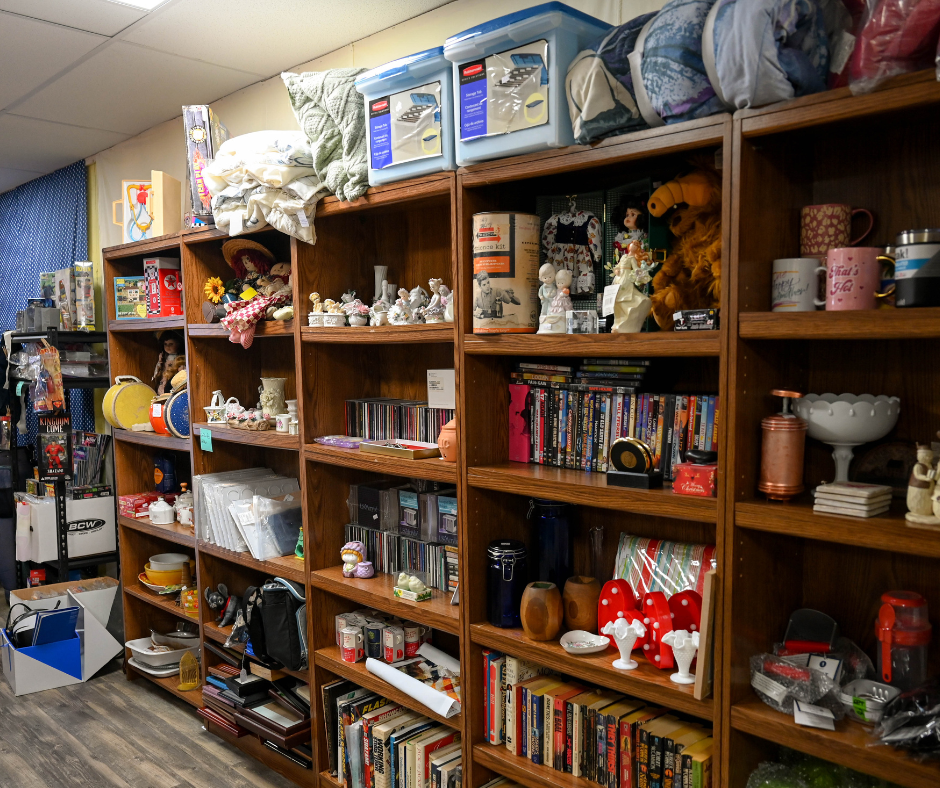
Boujee Community Thrift Store: Curated Finds with a Community Heart

Boujee Community Thrift Store is more than a place to shop. It is a community hub built on service, compassion, and the belief that everyone deserves access to quality items at prices they can afford.

Since opening in 2024, Boujee has reinvented itself with a clear mission. What began as Boujee on a Budget has grown into a space focused on helping the Fostoria community in meaningful ways. The store is operated without personal profit, with every dollar beyond operating costs going directly back into supporting local residents.

A Store Rooted in Community Care

Boujee Community Thrift Store works closely with local agencies, including Serenity Christian Counseling, by providing clothing vouchers and assistance for individuals and families in need. The store also supports those experiencing homelessness and helps provide food for local residents during Thanksgiving and Christmas through community adoption efforts.

In addition to everyday support, Boujee hosts free and low cost events that bring people together. These include family friendly gatherings, food drives, free meals, book signings, and seasonal celebrations. Holiday events have included visits from Santa, free gifts for children, door prizes, and shopping experiences designed to create joy for families.

An Elevated Thrift Experience

The vision for Boujee is simple. When you walk through the door, you walk into more than a thrift store. The space is designed to feel welcoming and thoughtfully arranged, offering a shopping experience that feels elevated while remaining accessible.

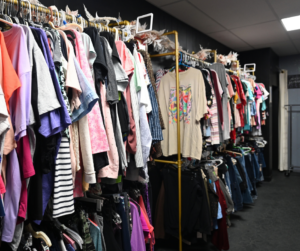
New items are added daily, including new and gently used pieces, name brands, and vintage finds. Most items are priced under five dollars. Shoppers can find clothing, jewelry, glassware, housewares, medical items, toys, puzzles, comics, incense, gems, and everyday essentials.

Boujee believes you do not have to spend a fortune to look like you did.

A Place for Everyone

Boujee Community Thrift Store is proudly woman owned, operated by a disabled veteran, and is a LGBTQ+ friendly space. Everyone is welcome and valued.

By shopping at Boujee, customers are supporting more than affordable prices. They are supporting their neighbors, strengthening the local community, and helping ensure resources remain available for those who need them most.

Boujee Community Thrift Store continues to serve the Fostoria area with donations, dedication, and a deep love for the community it calls home! Learn more and keep up to date with everything they have going on by following them on Facebook.

Holiday Magic Awaits | Seneca County Holiday Events Guide

The holidays are the most magical time of year in Seneca county, when twinkling lights brighten historic streets, seasonal music fills the air, and communities come together to celebrate in unforgettable ways. From festive parades and cozy craft markets to visits with Santa and family-friendly winter adventures, there’s something special happening in every corner of the county this season. Whether you’re a longtime local or planning your first holiday getaway, this guide will help you discover the must-see events, traditions, and experiences that make the season here truly shine.

Check out these awesome holiday events throughout Seneca County!  Are we missing something?  Help us check our list twice! To add your event, contact us!

See a full list of events happening in Seneca County on the Community Calendar!

December 8 – December 14

Crafted For The Holidays | The Urbanwoody Brewery & The HoneyBee Winery

Monday, December 8th

6 PM

The UrbanWoody Brewery & The HoneyBee Winery, Fostoria, OH

December Craft Series | Bellevue Public Library

Tuesday, December 9th

6 PM

224 E Main St, Bellevue, OH 

Wine & Cheese Pairing | The UrbanWoody Brewery & The HoneyBee Winery

Tuesday, December 9th

6 PM

The UrbanWoody Brewery & The HoneyBee Winery, Fostoria, OH

Hand Bell Practice | Trinity United Church of Christ Tiffin

Tuesday, December 9th

6:45 PM

Trinity United Church of Christ, Tiffin, OH

Goodies & Gifting | Women Empowering Women

Wednesday, December 10th

6- 7:30 PM

928 W Market St, Tiffin, OH 

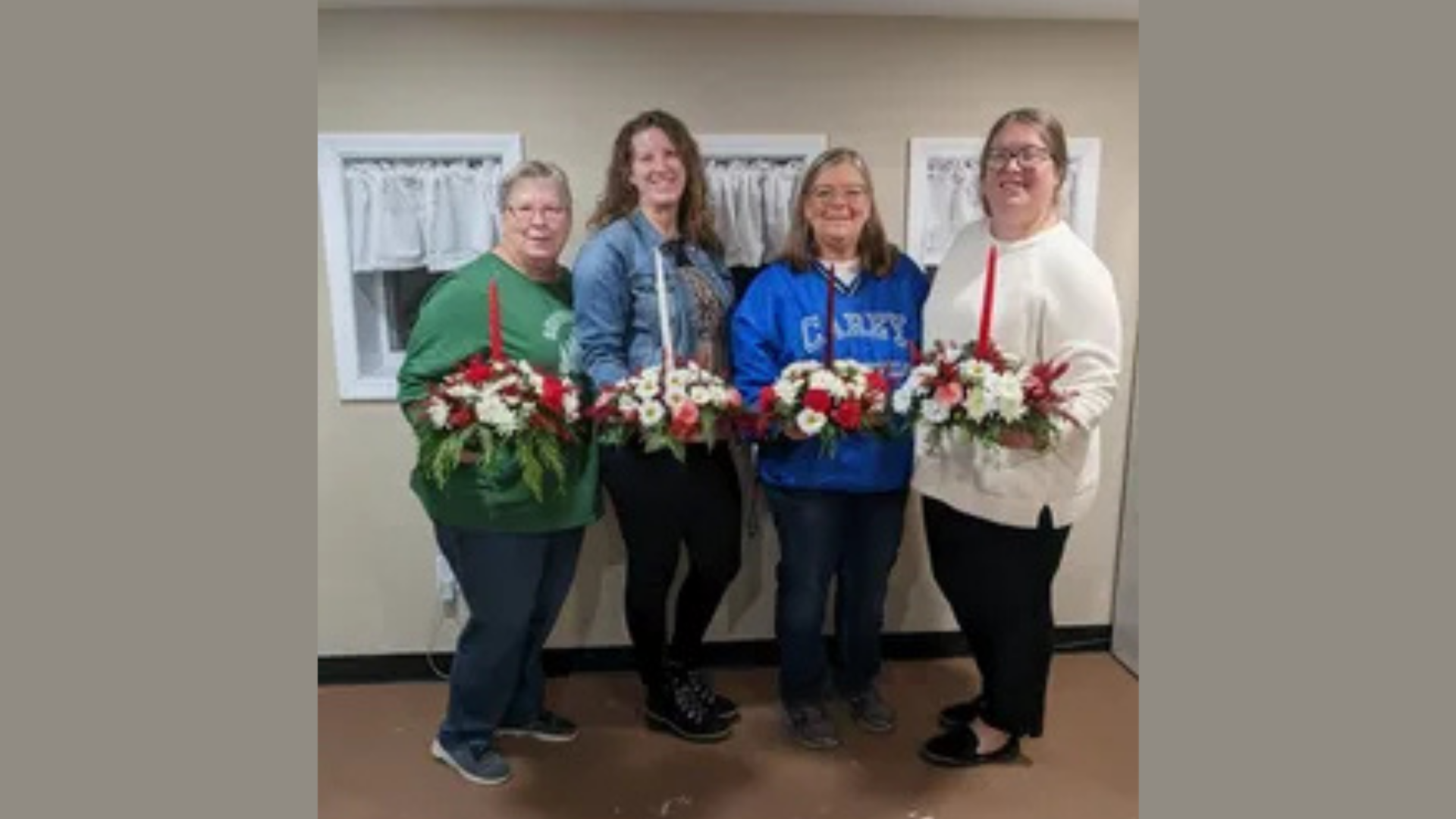
Botanical Gifts for the Holidays | Tiffin Community Kitchen

Wednesday, December 10th

6:30 PM

Tiffin Community Kitchen, Tiffin, OH

Holiday Open House! | Bellevue Public Library

Thursday, December 11th

9 AM- 8 PM

224 E Main St, Bellevue, OH 

2025 Holiday Party | Seneca County Collaborative

Thursday, December 11th

4-8 PM

The Barn at Seneca Hills, Tiffin, OH

Grinch Tree Class | Flowerland Fostoria

Thursday, December 11th

6:30 PM

11040 OH-18, Fostoria, OH 

Adult Gingerbread House Decorating | Calico Charlie’s Candy and More

Thursday, December 11th

6:30 PM

Calico Charlie’s Candy and More, Fostoria, OH

Downtown “Christmas” Trivia Night | Downtown Tiffin

Thursday, December 11th

7:00-8:30 PM

49 E Perry St, Tiffin, OH 

Business Sponsored FREE Skate | Sutton Bank Rink at Oakley Park

Friday, December 12th

5-9 PM

Oakley Park, Tiffin, OH

Jingle Bells 2025 | CrossFit Tiffin Competitions

Saturday, December 13th

7 AM

1617 County Road 54, Tiffin, OH 

Pancakes with Santa | Amvets Post #48

Saturday, December 13th

8 AM- 12 PM

1909 OH-100, Tiffin, OH 

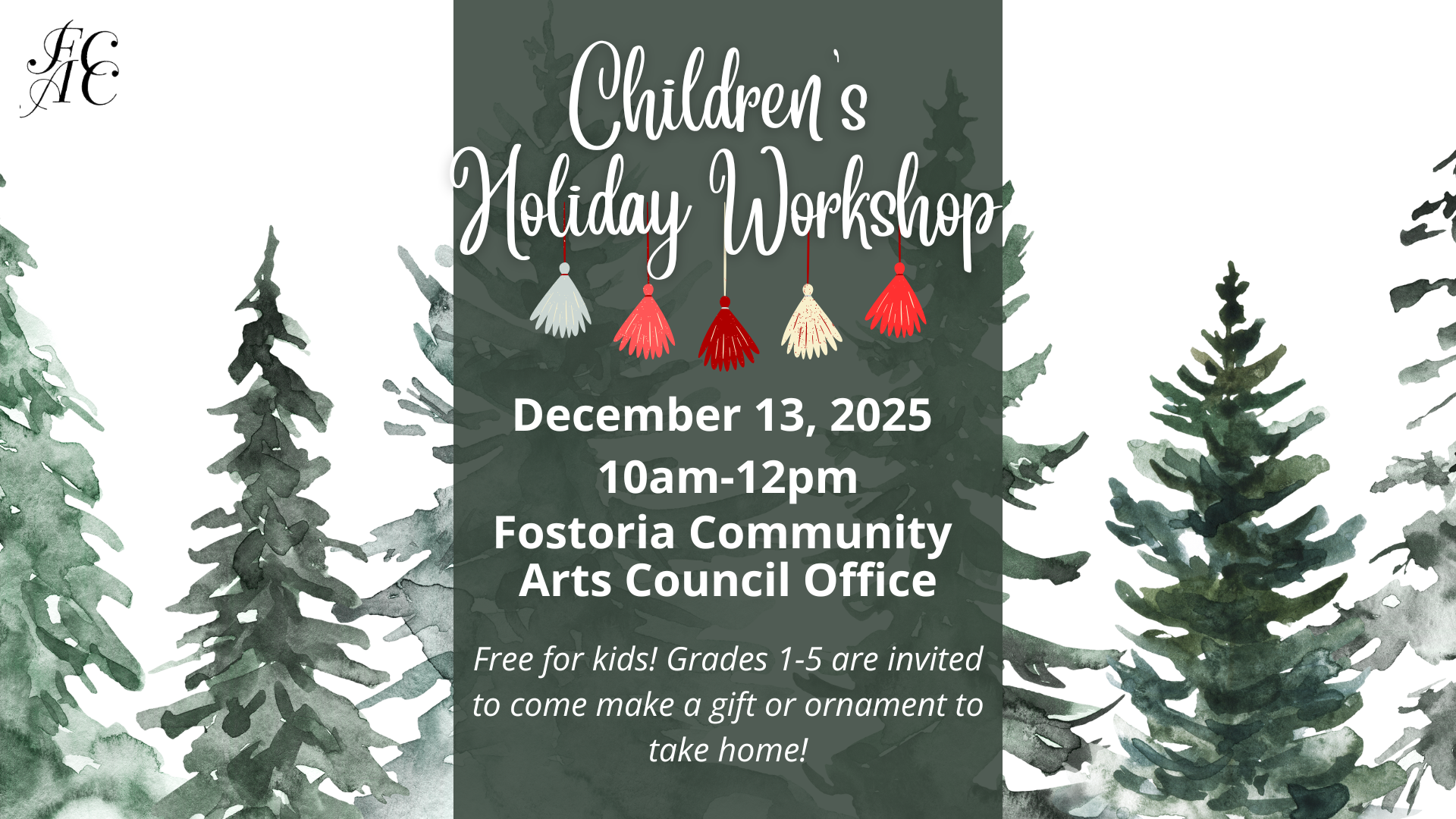
Children’s Holiday Workshop | Fostoria Community Arts Council

Saturday, December 13th

10:00 AM- 12:00 PM

125 S Main St., Fostoria, Ohio

Make Your Own Edible Christmas Gifts | Tiffin Community Kitchen

Saturday, December 13th

10 AM- 12 PM

89 Jefferson St, Tiffin, OH 

Operation Elf | Tiffin-Seneca Public Library

Saturday, December 13th

10 AM- 1 PM

77 Jefferson St, Tiffin, OH 

Snowman Scavenger Hunt 

Saturday, December 13th

10 AM- 3 PM

227 E Perry St, Tiffin, OH

Business Sponsored FREE Skate | Sutton Bank Rink at Oakley Park

Saturday, December 13th

11:00 AM- 3:00 PM

Oakley Park, Tiffin, OH

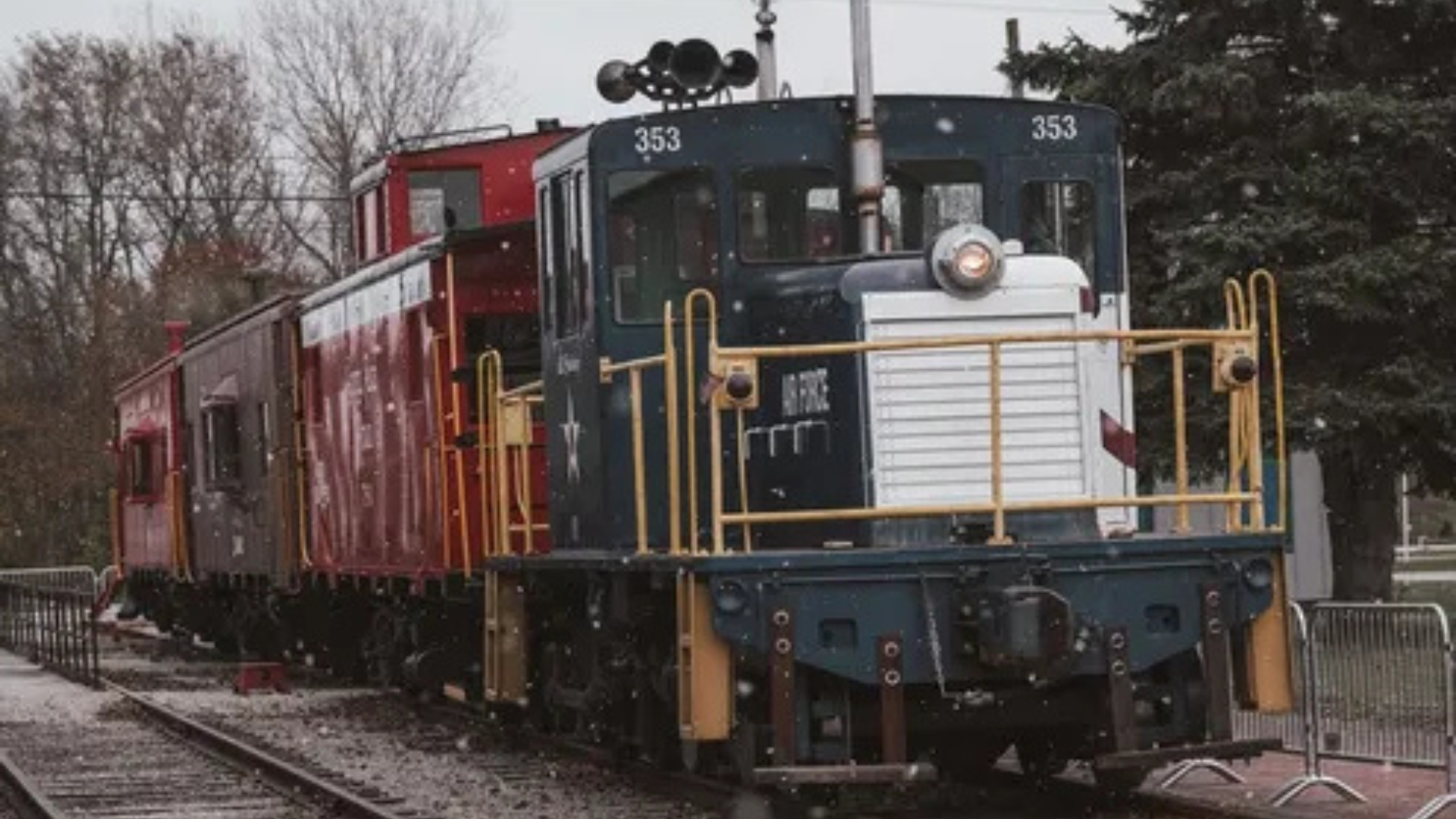
Holiday Train | Mad River & NKP Railroad

Saturday, December 13th 

12- 5 PM

242 Southwest St, Bellevue, OH 

Children’s Gingerbread House Decorating | Calico Charlie’s Candy and More

Saturday, December 13th

2 PM

Calico Charlie’s Candy and More, Fostoria, OH

Business Sponsored FREE Skate | Sutton Bank Rink at Oakley Park

Saturday, December 13th

4:00- 8:00 PM

Oakley Park, Tiffin, OH

SCCoH Annual Ugly Sweater Christmas Party | Transformation Life Center

Saturday, December 13th

6:00- 9:00 PM

25 Court St, Tiffin, OH 

Daniel Neer From Bellevue to Broadway | A Christmas Music Special

Saturday, December 13th

7 PM

205 Maple St, Bellevue, OH 

Holiday Train | Mad River & NKP Railroad

Sunday, December 14th 

12- 5 PM

242 Southwest St, Bellevue, OH 

Cookies with Santa & Mrs. Clause | Franciscan Earth Literacy Center

Sunday, December 14th

1:00- 3:00 PM

194 St Francis Ave, Tiffin, OH 

Sip & Paint | Gilbert’s Place

Sunday, December 14th

1:00 PM

130 E Main St, Bellevue, OH 

FREE Holiday Movie at the Ritz Theatre | Christmas with the Kranks!

Sunday, December 14th

2:00 PM

6 Riverside Dr, Tiffin, OH 

December 15 – December 21

Crafted For The Holidays | The Urbanwoody Brewery & The HoneyBee Winery

Monday, December 15th

6 PM

The UrbanWoody Brewery & The HoneyBee Winery, Fostoria, OH

Hand Bell Practice | Trinity United Church of Christ Tiffin

Tuesday, December 16th

6:45 PM

Trinity United Church of Christ, Tiffin, OH

Christmas Family Storytime | Tiffin-Seneca Public Library

Thursday, December 18th

6:30- 7:30 PM

Tiffin-Seneca Public Library, Tiffin, OH

Adult Gingerbread House Decorating | Calico Charlie’s Candy and More

Thursday, December 18th

6:30 PM

Calico Charlie’s Candy and More, Fostoria, OH

Grinch Tree Class | Flowerland Fostoria

Thursday, December 18th

6:30 PM

11040 OH-18, Fostoria, OH 

Drop-In Holiday Open House | Seneca East Public Library

Friday, December 19th

10:00 AM- 5:30 PM

Seneca East Public Library, Attica, OH

Guess Who?? Santa is Coming!! | Jungle Junction

Friday, December 19th

5:00- 8:00 PM

110 Cherry Blvd, Bellevue, OH 

Make Your Own Hot Chocolate Bombs | Tiffin Community Kitchen

Saturday, December 20th

10:00 AM- 12:00 PM

Tiffin Community Kitchen, Tiffin, OH

Drop-In Holiday Open House | Seneca East Public Library

Saturday, December 20th

10:00 AM- 2:30 PM

Seneca East Public Library, Attica, OH

Christmas Carol Sing-Along! | Calico Charlie’s Candy & More

Saturday, December 20th

2:00- 4:00 PM

206 S Main St, Fostoria, OH 

Mini Sip-N-Shop | The UrbanWoody Brewery & The HoneyBee Winery

Saturday, December 20th

2:30- 5:30 PM

The UrbanWoody Brewery & The HoneyBee Winery, Fostoria, OH

Business Sponsored FREE Skate | Sutton Bank Rink at Oakley Park

Saturday, December 20th

4:00- 8:00 PM

Oakley Park, Tiffin, OH

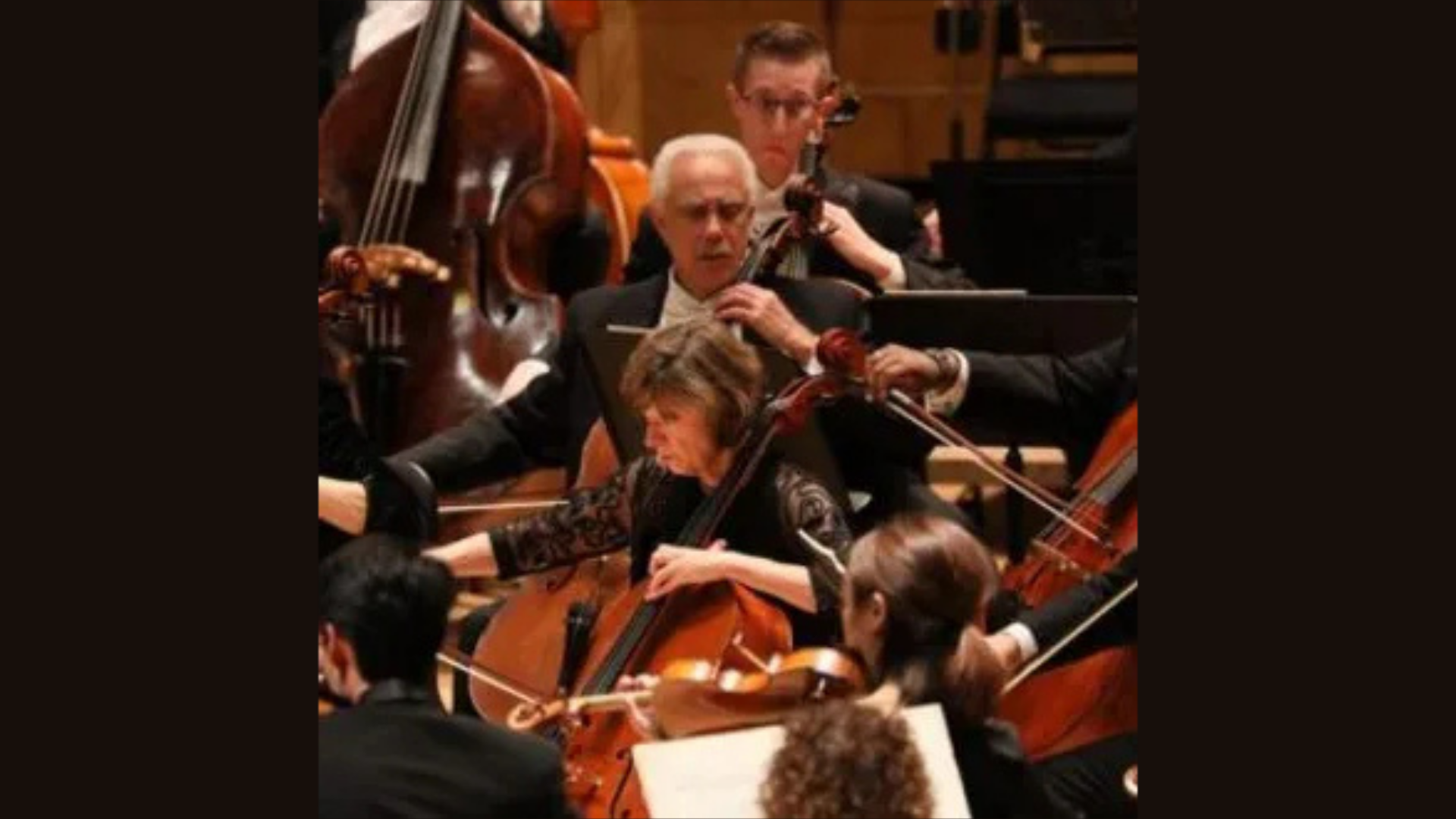
Toledo Symphony Orchestra Holiday Concert | The Ritz Theatre

Saturday, December 20th

7:30 PM

The Ritz Theatre, Tiffin, OH

December 22 – December 28

Holiday Take & Make | Bellevue Public Library 

Monday, December 22nd

All Day

224 E Main St, Bellevue, OH 

Drop-In Holiday Open House | Seneca East Public Library

Monday, December 22nd

10:00 AM- 8:30 PM

Seneca East Public Library, Attica, OH

Crafted For The Holidays | The Urbanwoody Brewery & The HoneyBee Winery

Monday, December 22nd

6 PM

The UrbanWoody Brewery & The HoneyBee Winery, Fostoria, OH

Winter Centerpiece Class | Flowerland Fostoria

Monday, December 22nd

6:30 PM

11040 OH-18, Fostoria, OH 

Holiday Take & Make | Bellevue Public Library 

Tuesday, December 23rd

All Day

224 E Main St, Bellevue, OH 

Drop-In Holiday Open House | Seneca East Public Library

Tuesday, December 23rd

10:00 AM- 8:30 PM

Seneca East Public Library, Attica, OH

Hand Bell Practice | Trinity United Church of Christ Tiffin

Tuesday, December 23rd

6:45 PM

Trinity United Church of Christ, Tiffin, OH

Holiday Take & Make | Bellevue Public Library 

December 26th-27th, 29th-30th

All Day

224 E Main St, Bellevue, OH 

The season is packed with sparkle, sound, and celebration. Don’t miss a moment! Mark your calendar, grab your crew, and dive into the holiday magic happening all across Seneca County!

Continue Reading

Continue reading

Thankful for Local in Seneca County

Seneca County’s Seasons & Stories – Monthly Blog | November 2025

Each month, we bring you stories and inspiration shaped by what makes that time of year special in Seneca County. From seasonal events and local traditions to unique places and hidden gems, our themes highlight what’s most relevant to the month.

November is a month for gratitude. As the leaves fall and we gather around the table with family and friends, it is the perfect time to pause and reflect on the people and places that make Seneca County feel like home. Here, we do not have to look far to find reasons to be thankful. From thriving downtowns in Tiffin and Fostoria to the quiet beauty of our rural towns, we are surrounded by businesses and experiences that make living, shopping, and celebrating local so easy.

Thankful for Flavor

Good food brings people together, and we have so much to be grateful for when it comes to local flavor. Whether it is dinner out with loved ones, a coffee date with a friend, or picking up your Thanksgiving pies, Seneca County has something for everyone.

In Fostoria, The UrbanWoody Brewery & HoneyBee Winery brings people together over craft beer and community spirit. Their rotating brews and cozy atmosphere make it a favorite local stop to unwind after a long week. Over in Tiffin, The Turntable continues to impress with its locally sourced menu and relaxed, music-filled setting. Out in rural New Riegel, The New Riegel Cafe has been a gathering place for decades, serving famous barbecue and home-style comfort food that reminds us of simpler times.

Whether you are savoring a meal or picking up something to share, local flavor connects us all. And for that, we are thankful.

Thankful for Creative Hands, Local Craftsmanship, and Curated Quality

Seneca County is full of makers, artists, and dreamers whose work adds color and creativity to our community. Their small businesses remind us that talent and heart thrive right here at home.

In Fostoria, Beyond Laser Creations showcases the creativity and craftsmanship that make local shopping special. From custom laser-engraved gifts to home décor and personalized keepsakes, their work brings joy to any occasion and highlights the power of imagination and community pride. In Bloomville, Weasner Archery is a full-service hunting and target archery pro-shop located in the heart of rural Seneca County. Their passion for outdoor sports and customer service makes them a trusted local resource for seasoned hunters and newcomers alike. In Tiffin, businesses like SOUL Boutique and Threads offer locally curated products and stylish finds that make shopping local a personal experience filled with care and community.

From handmade gifts to heartfelt creations, our local makers give us countless reasons to be thankful.

Thankful for Experiences that Bring Us Together

Some of the best memories are made when we come together to share experiences. Seneca County offers so many opportunities to connect, learn, and enjoy the season with those we love.

In downtown Tiffin, The Ritz Theatre continues to light up the stage with incredible performances and local talent. Its historic charm and community spirit make every show feel special. In Fostoria, The Fostoria Iron Triangle Rail Park celebrates the city’s proud rail heritage and provides a one-of-a-kind spot to spend time outdoors. Out in the countryside, Seneca Caverns gives visitors a glimpse into the natural wonders beneath our feet, reminding us how rich and unique our region truly is.

No matter where you go, these experiences make us thankful to call Seneca County home.

Thankful for Community and Connection

The heart of Seneca County is its people. Our neighbors, business owners, and volunteers make this a community that cares deeply and supports one another. Every time we choose to eat, shop, hire, support, and explore local, we strengthen that bond.

Through the Love Local Campaign through our sister division, Seneca Regional Chamber & Development, we are reminded that choosing local means more than just convenience. More of every dollar spent here stays here, supporting local families and investing in the future of our community. This season of thanks is the perfect time to show appreciation by visiting your favorite local businesses or discovering new ones across Seneca County.

As we move through November, let’s take a moment to be grateful for where we live. From Tiffin to Fostoria and every small town, village and township in between, Seneca County is filled with people and places that make “loving local” easy. Now these are just a few of the amazing businesses and organizations in our community, get out and discover everything this community has to offer!

This Thanksgiving, we are thankful for Seneca County and for the countless reasons it gives us to celebrate every day!

Get Spooked! Celebrate Halloween in Seneca County

Seneca County’s Seasons & Stories – Monthly Blog | October 2025

Each month, we bring you stories and inspiration shaped by what makes that time of year special in Seneca County. From seasonal events and local traditions to unique places and hidden gems, our themes highlight what’s most relevant to the month.

Gather your friends and family and get ready for Halloween in Seneca County! Seneca County is filled with fun-filled, family-friendly events for everyone to enjoy. From trick or treats to 5K runs and more, there’s something for everyone to enjoy. Have a spookily good Halloween with these events in Seneca County!

Thursday, October 9

5:00-6:30 PM | Hoot in the Park, Seneca County Opportunity Center

Saturday, October 11

10:00 AM- 2:00 PM | Glass Pumpkin Scavenger Hunt, The Poignon Project

Thursday, October 16

5:00- 8:00 PM | Downtown Tiffin Trick or Treat Third Thursday, Downtown Tiffin

Saturday, October 18

10:00 AM- 12:00 PM | Tiffin Zombie Run, Casa of SSW

10:30 AM- 12:00 PM | Halloween Party ft. Steven’s Puppet Legend of Sleepy Hollow, Seneca East Public Library

1:00- 3:00 PM | Paws and Treats (Trunk and Treat), A.S.A.P. All Species Adoption Program

7:00 PM | Films and Fun at the East Green, City of Tiffin

Sunday, October 19

6:00- 7:00 PM | Trunk or Treat, Fostoria Elementary Parent Lighthouse Team & Title

Thursday, October 23

6:00- 7:00 PM | Trunk or Treat, Fostoria Elementary Parent Lighthouse Team & Title

Friday, October 24

6:00- 7:30 PM | Trick or Treat at Autumnwood Care Center, Autumnwood Care Center

Saturday, October 25

10:00 AM | Seneca County Halloween Parade, Destination Seneca County

Sunday, October 26

11:00 AM- 3:00 PM | Truck or Treat, Keller Brothers Enterprise

2:00 | Old Fort Halloween Parade, Trick or Treat to Follow after Parade

2:00- 3:00 PM | Village Spooktacular!, Village of Attica Parks & Recreation

2:00-4:00 PM | New Riegel Halloween Parade and Trick or Treat, Village of New Riegel, Trick or Treat to Follow after Parade

3:00- 5:00 PM | Attica Trick or Treat, Village of Attica

4:00 – 5:00 PM | Bettesville Volunteer Fire Department Open House

4:00 PM | Costume Contest, Green Springs Fire Department

5:00 PM | Bettesville Trick or Treat

5:00-7:00 PM | Green Springs Halloween Parade, Green Springs Fire Department, Trick or Treat to Follow after the Parade

5:00 PM | Fostoria Halloween Parade, City of Fostoria

5:30- 7:00 PM | Republic Trick or Treat, Village of Republic

6:00- 8:00 PM | City of Tiffin Trick or Treat, City of Tiffin

Tuesday, October 28

6:00-7:00 PM | Bascom Trick or Treat

Wednesday, October 29

5:00-7:00 PM | Tiffin Moose Trunk or Treat

Thursday, October 30

6:30-8:00 PM Bloomville Trick or Treat

6:00-9:00 PM Haunted Heidelberg

Friday, October 31

5:30-7:00 PM | City of Fostoria Trick or Treat

5:30-7:00 PM | Kansas Trick or Treat

Saturday, November 1

7:00 PM- 2:00 AM | Bel-Mar Boat Landing Halloween Party, Bel-Mar Boat Landing

Don’t miss out on these amazing events in our area this Halloween season. In Seneca County we are proud to be home to so many families and supportive businesses that host these amazing events, it’s love at first bite!

See an event missing? Please reach out and let us know! For more information on these events, visit here.

All Aboard! | Fostoria Rail Festival Returns for its 23rd Year

Train enthusiasts, come one and come all! The Fostoria Rail Preservation Society is very excited to announce that the 23rd Annual Fostoria Rail Festival will be held on Saturday, September 27, 2025, from 10:00 am to 4:00 pm. Held at Fostoria Junior/ Senior High School and Fostoria Elementary School, this event is filled with exciting activities for all who love trains. Head out to the festival to explore and celebrate the rich railroad heritage we have here in Fostoria, Ohio!

Plan Your Visit:

  • Date – Saturday, September 27, 2025 
  • Time – 10:00 AM- 4:00 PM
  • Location – Fostoria Junior/Senior High School and Elementary School (1001 Park Ave., Fostoria, OH 44830)
  • Admission – $6 (Children under 10 are Free)
  • Parking – Free (Available on Site)


This family-friendly event offers fun for all ages. Experience a world of trains with model trains, train merchandise, mini-train ride, kids’ activities, photo contest, and more! Indulge in the various food vendors available at the festival with all the delicious foods there are to offer. Even better, participate in the soup contest where everyone can put their cooking skills to the test! In addition, continue to explore the festival by making your way over to the Iron Triangle to experience trains up close. The Fostoria Iron Triangle Railpark is a 5-acre tract directly inside the three double-track mainline freight trains that run through Fostoria, Ohio. Open 24/7, this park has a 360 degree viewing platform that allows visitors to immerse themselves in the sights and sounds of the 60 plus trains that travel through Fostoria daily.

The Fostoria Rail Festival is organized by the Fostoria Rail Preservation Society, a non-profit organization dedicated to preserving and promoting the city’s railroad heritage. By visiting the festival, you’re not only building long-lasting memories but supporting a good cause. 

Don’t miss out on this exciting event! Take your friends and family for a day full of lasting memories in Fostoria’s rich train heritage at the Fostoria Rail Festival!

For more information on this event visit here.

Never Forget: Remembering 9/11 in Seneca County

As we reflect this year on the devastating event that occurred on September 11, 2001- the attacks on the World Trade Center, the Pentagon, and the heroic actions of those aboard Flight 93, we encourage you to visit the Tiffin Police and Fire All Patriots Memorial to reflect and take part in a special ceremony marking the 24th anniversary of that day. 

This Thursday, September 11, at 8:46 a.m.- the exact time the first World Trade Center was hit, community members are invited to join local first responders, veterans, and officials in a time of reflection upon this solemn event that forever changed our country. A wreath laying, a rifle salute, and the playing of taps to honor all those who lost their lives for the protection of our people will take place at this ceremony. 


During the ceremony, the American Flag donated by Tiffin native Richard Martin will be placed and flown until sunset as a reminder of the strength our country has had and still has to this day during such a tragic event to our nation. 

The All Patriots Memorial, located at Washington and Water streets, near downtown Tiffin, serves as a reminder of the events of September 11, 2001. Featuring a beam from the World Trade Center, the memorial honors the attacks and commemorates the Tiffin’s police and firefighters who died in the line of duty. Local police, firefighters, and community members raised $375,000 to create the memorial, which was dedicated on September 9, 2012. 
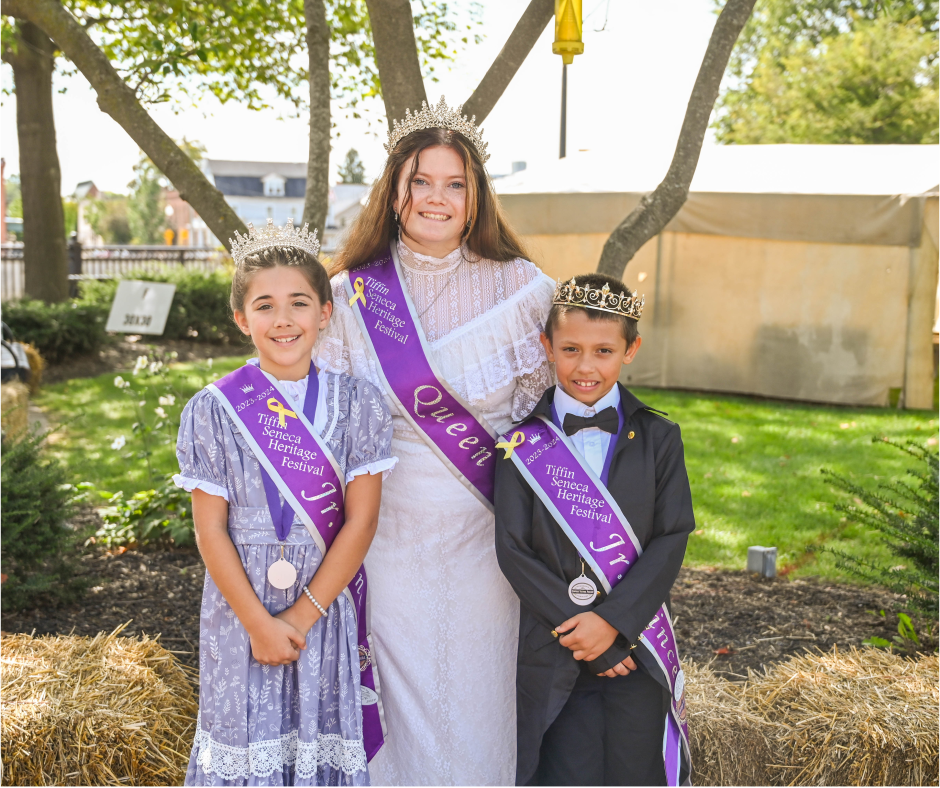
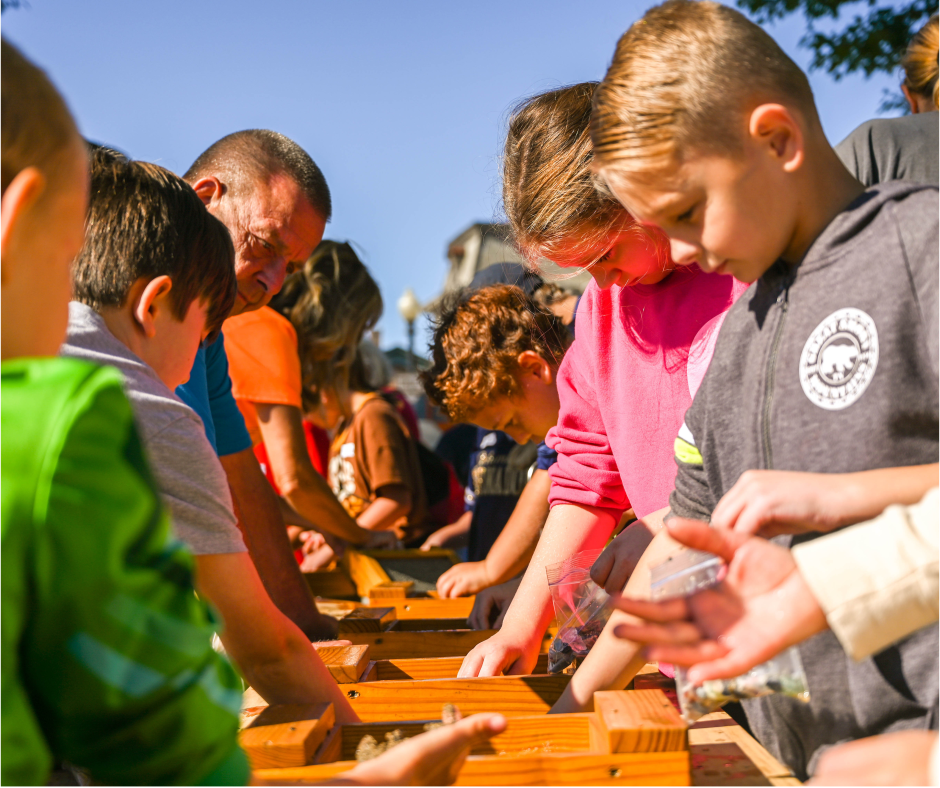
 

As you visit the memorial, take time to notice its symbolic features. The 17.5-foot, three-ton beam rests at a 9.11-degree angle atop a pentagon-shaped base, representing the attack on the Pentagon. The beam features an “M-18” inscription, the investigator’s identification number, along with the words “Never Forget” etched across the monument. Names of Tiffin fallen police and firefighters are written as well to remember those who put their lives on the line for our community.

Behind the monument stands a Callery pear tree, a tribute to the Survivor Tree from Ground Zero, reduced from the wreckage and later replanted at the new World Trade Center site. Nearby, a 40-inch-tall post honors the Flight 93 passengers, all 40, each inch representing each passenger and crew member who died in the crash in Shanksville, Pennsylvania. In addition, a nearby grass mound symbolizes the crash site of the plane. 

The All Patriots Memorial serves as a place of remembrance, reflection, and education. It keeps the events of September 11, 2001, alive in our community and honors all local police and firefighters who have and continue to protect our community. The monument flies the United States Flag, the National Fallen Police Flag, and the National Fallen Firefighters Flag. The site is regularly used for memorial services during both local and national tragedies.

We invite you to join us on September 11 to honor those who sacrificed their lives, reflect on the tragic events of 9/11, and ensure that we Never Forget.

History Comes Alive- Tiffin-Seneca Heritage Festival Celebrates 45 Years

Seneca County’s Seasons & Stories – Monthly Blog | September 2025

Each month, we bring you stories and inspiration shaped by what makes that time of year special in Seneca County. From seasonal events and local traditions to unique places and hidden gems, our themes highlight what’s most relevant to the month.

History Comes Alive- Tiffin-Seneca Heritage Festival Celebrates 45 Years

Living history comes alive again this September! The Tiffin-Seneca Heritage Festival is looking forward to celebrating 45 years of Tiffin and Seneca County Heritage this year. For over four decades, this beloved event has brought the past to life for visitors and community members alike. This event is treasured as a time to experience and celebrate our past, which has given us our rich heritage for our community today. Explore all this festival has to offer this year for an unforgettable weekend of fun!

Living History Village | Hedges-Boyer Park

The Tiffin-Seneca Heritage Festival is proud to host their “Living Village” at Hedges Boyer Park, Tiffin, OH. While at the Living Village, you can step back in time from the 1800s to the mid-1900s in an immersive experience filled with many activities for all ages. Enjoy delicious food, some even cooked over an open fire in the living village. Along with that, listen to folk and period music as you enjoy the festival with families and friends. The village features “Hands on Arts” spaces where you can experience the past times of our ancestors free of charge. In addition, visitors can also shop for vintage and early American arts and crafts proudly displayed by dedicated crafters. Along the way, enjoy interactions with reenactors from various periods, all who have been serving and sharing their gifts with this festival for over 40 years. 

For more information, visit here.

Downtown Tiffin | Entertainment & German Village

In the Downtown Area of this festival, visitors will find plenty of family-friendly entertainment. Enjoy a German Heritage tent with live music and fun German-themed activities for kids that feel just like you’re in Oktoberfest. Enjoy food from the various food vendors set up along the midway and shop from over 50 artisans displaying their unique crafts. Don’t forget to stop at the children’s area, as well as the German Heritage lot for face-painting, crafts, coloring, and more!

Head over to the East Green Amphitheater to hear from talented local and statewide performers all day long. The T Town DJ will be there all day to keep the music and vibes pumping in between sets for a fun music-filled atmosphere!

For more information, visit here.

TSHF Royalty Pageant

Our Heritage Festival is proud to host an annual royalty pageant for our local youth. The court proudly represents our festival as they visit other festivals all across the state during their reign. Serving on the Tiffin-Seneca Heritage Festival Royalty Court is more than just a crown, it’s a connection of youth who share their love for our county with pride everywhere they go. This year’s festival pageant will be held on September 13, 2025. Mark your calendars and join the court as a time to celebrate our youth, our heritage, and our bright young leaders we have where we call home, Seneca County. 

For more information, visit here.

School Days

A unique tradition of the Tiffin-Seneca Heritage Festival is its annual School Days Program. This experience invites fourth graders from local school districts to take a step outside the classroom. Students are able to come together to learn about their Ohio heritage in a sanctioned experience hosted in Living Village.  This private event allows students to visit with historical reenactors, enjoy music, and participate in fun-filled activities with their friends and classmates. This experience is a proud event that the Heritage Festival boasts as a time of community outreach to our youth that continues our proud Ohio heritage. They are proud to be able to host it annually as not only a way to provide kids with unique experiences, but pass down the stories, spirit’s, and pride we have of Ohio’s past with your youth.

TSHF Parade

We are proud to announce that the Heritage Festival Parade, sponsored by Brian Bower- loanDepot, will take place Saturday September 20, 2025 at 10 am. This parade showcases groups from all over our community, from our local bands, schools, businesses, organizations, and more. The annual parade is a proud tradition that our community looks forward to every year to share with one another as a time of celebration in the heart of it all. Bring your families and friends for an unforgettable experience!

This year’s Grand Marshals are Ron & Melissa Kramer, Jim & Brenda Stultz, and Gary & Jan Dundore. These three couples have been long-time volunteers for the Tiffin-Seneca Heritage Festival and for more than two decades were part of the minds, hands, and hearts that made the festival possible. Without their leadership, oversight, hard work, and passion, the Tiffin-Seneca Heritage Festival would not be what it is today. These three couples worked alongside many other dedicated volunteers to ensure the festival’s success and longevity.

The Tiffin-Seneca Heritage Festival is a beloved event that our community looks forward to every year. For 45 years, this event has been a testament to our community’s pride in sharing our history and spirit with all who visit. From the vibrant living village to the downtown festivities, there is something for everyone. Gather your family and friends and experience our proud Ohio heritage right here in the heart of Seneca County. Mark your calendars and plan to be a part of the 45th annual Tiffin-Seneca Heritage Festival. We can’t wait to see you there!

For a schedule of all Festival events visit here.

Seneca County Heads Back to Class

Seneca County’s Seasons & Stories – Monthly Blog | August 2025

Each month, we bring you stories and inspiration shaped by what makes that time of year special in Seneca County. From seasonal events and local traditions to unique places and hidden gems, our themes highlight what’s most relevant to the month.

Seneca County Heads Back to Class – Get Schooled in the Education Community

It’s that time again! As we gear up this August for back to school season, we’d like to take some time to look at the amazing schools and resources we have locally here in Seneca County. With numerous education options from pre-k to higher education, Seneca County has all that you could ever need right here at home. With two universities located in the heart of Seneca County, there are endless learning opportunities here in our community!

Our Schools

Here in Seneca County, we have many educational options all across the community. With 11 schools, two located in the county seat, Tiffin, there is much to offer. There are so many choices for families to find the perfect school community for them. Seneca County is a proud home to all the schools that build and support safe spaces for learners of all ages!

Tiffin City Schools

Serving PK-12 students, Tiffin City Schools is a public school district that provides learning for all ages. With six schools working together as one, they are based in the county seat of Seneca County, Tiffin. Tiffin City Schools is proud to work in partnership with students, families, and their community to create a learning environment where all students can feel confident and reach their full potential. For more information visit here.

Calvert Catholic Schools

As the only private school located in Seneca County, Calvert Catholic Schools is devoted to educating students from PK-12 as one family committed to Christ. They focus on an education centered spiritually, academically, physically, and socially. With an elementary and high school located near downtown Tiffin, Calvert offers faith-based education right in the heart of Tiffin. For more information visit here.

Hopewell-Loudon Schools

Located in West Central Seneca County, Hopewell-Loudon Schools offers PK-12 education in a rural setting. Housed in one building, education is served in a close-knit community between grades that strives to uphold the values of the entire school community. For more information visit here.

New Riegel Local School District

Providing education to PK-12 students, New Reigel Local School District is a small school focused on serving its community. They strive for their students to achieve academic excellence and push them to the next level while being supported in a safe environment. For more information visit here.

Seneca East Local Schools

Located in Attica, Seneca East is a PK-12 school serving the County area. The district is dedicated to providing high-quality education in a safe, supportive environment. All in one building, Seneca East fosters academic excellence in a small community to prepare its students for successful lives. For more information visit here.

Mohawk Local School District

Mohawk Local School District is a proud district offering PK-12 education to our area. With all grades in one building, Mohawk brings a sense of community and family to its small district. For more information visit here.

Old Fort Local School District

Located in the northern part of our county, Old Fort Local School District provides PK-12 education to our area. A school rooted in tradition, Old Fort is a proud community striving to support kids in their futures. For more information visit here.

Fostoria City School District

Serving PK-12, Fostoria City School District is devoted to providing academic excellence in our area. With dedication to inspire and achieve, students are pushed to their full potential in all aspects. For more information visit here.

Seneca County Opportunity Center

The Seneca County Opportunity Center, operated under the Seneca County Board of Developmental Disabilities, provides services to those with disabilities in our community. With adapting to the constantly-changing disability services landscape, SCOC provides care for children to adults in many different forms. SCOC works very hard to ensure there are community spaces and places accessible for all those with a disability in our community. For more information visit here.

Vanguard-Sentinel Career & Technology Centers

Providing education for workforce preparation, Sentinel focuses on career and technical education in our area. An award-winning school district, Sentinel is committed to student success, providing students with premier opportunities to help them achieve high levels of academic excellence. For more information visit here.

Our Universities

Seneca County is proudly home to two universities, Tiffin University and Heidelberg University. Rich in tradition and history, both universities bring together students from all across the globe into our community. Students from all backgrounds come together at these institutions to proudly call Seneca County their home.

Tiffin University

One of the two universities located in our county, Tiffin University provides education for bachelor’s, master’s, and doctorate programs. With more than 3,000 students TU provides a homey campus with excellent professors for a strong-suited education located in a small community. Along with that, TU offers online schooling, providing the opportunity for people from all over the country to obtain degrees from this prestigous institution. For more information visit here.

Heidelberg University

Also located in Seneca County, Heidelberg University serves education through bachelor’s, master’s, and doctorate programs. A school dedicated to challenging their students, Heidelberg is a dedicated community of Opportunity Makers built for more in their futures. Integrating liberal arts and professional preparation across all disciplines, students are prepared to be global citizens and to exceed expectations in their futures. For more information visit here.

Libraries 

We’re so fortunate to have so many amazing libraries in our community. From bouncing babies, to an enthrilling novel, everyone is sure to be able find something they love at these beloved libraries in our communities.

Educational Centers

Along with our libaries, we are proud to have profound educational centers in our community. These centers work hand and hand with our local districts to serve students of all ages in our community with the help and training they need.

North Central Ohio Educational Service Center

Committed to serving our community, the North Central Ohio Educational Service Center offers high-quality programs and services that help school districts meet their unique needs. With a network of resources at local, state, and national levels, NCOESC is a top provider for our area in resources that any district could need. For more information visit here.

Fostoria Learning Center

Serving K-12 and adult learners, Fostoria Learning Center is a  n outlet delivering high-quality training opportunities to the Seneca County area. With specialized labs for welding, industrial maintenance, medical training, and construction, the Fostoria Learning Center uplifts individuals going through their programs. With strong connections with businesses, educational institutions, and community organizations, the Fostoria Learning Center empowers people with training to help them exceed excellence in the workforce. For more information visit here.

Tax-Free Season

All geared up for school? Take this opportunity to get anything from school supplies, back to school clothes, and more during tax free season in Ohio! Running from August 11th-14th, shoppers are able to purchase eligible items without paying state sales tax both in-store and online. Not only is this a great time to save some money, but its a great time to love local. Go out and support these small businesses who support our community. Seek Seneca County!

We wish everyone a great upcoming school year! Seneca County is so proud to be home and a part of so many wonderful schools and resources our area provides.