Businesses Encouraged to Share Plans Ahead of Big Boy 4014 Visits to Fostoria

Businesses Encouraged to Share Plans Ahead of Big Boy 4014 Visits to Fostoria

Big Boy’s Coast-to-Coast Tour anticipated to bring thousands of visitors to area for experience

Local businesses are encouraged to share their plans, special offerings, extended hours, events, and visitor amenities ahead of Union Pacific Big Boy No. 4014’s scheduled visits to Fostoria this summer as part of its Coast-to-Coast Tour commemorating America 250. The one stop shop information hub for this experience can be found at BigBoyFostoria.com.

Community partners, local businesses, and tourism officials are continuing preparations for what is expected to be one of the largest rail-related events in the area’s history. Visitors and residents are encouraged to plan ahead and monitor BigBoyFostoria.com and social media for updates and event information.

The website, which will be continuously updated as new information is available and official plans are made, will serve as the central location for schedules, parking information, viewing locations, maps, local business information, lodging options, dining opportunities, community activities, and additional event details related to the Big Boy’s visit.

Businesses interested in being included on BigBoyFostoria.com are encouraged to complete the participation form and share information about their offerings that will be available during the Big Boy experience. The business participation form can be found and completed at BigBoyFostoria.com

The Big Boy No. 4014, the world’s largest operating steam locomotive, will pass through Fostoria twice. On its eastbound trip, it is expected to arrive in Fostoria at approximately 2 PM on Saturday, June 6, 2026, with a brief stop until 2:15 PM, before continuing its route.

The locomotive will return to Fostoria on Monday, July 13, 2026. Public viewing will take place on Tuesday, July 14, 2026, from 9 AM to 3 PM at the Norfolk Southern Fostoria Automotive Distribution Center, located at 3101 North Township Road 47 on the east side of the city.

The train is scheduled to depart the Norfolk Southern facility at 9 AM on Wednesday, July 15, 2026, traveling westbound and passing through the Rail Park shortly after departure. The train will not stop at the Rail Park during this time, but it will provide an opportunity for viewing and photography as it moves through the Iron Triangle.

America 250 | Ohio Arts, Culture, & Literature

America 250- History Lives Here | May 2026

In 2026, we will celebrate the 250th anniversary of the United States by exploring the many ways Ohio and Seneca County have contributed to U.S. History. Each month, a new theme will highlight Ohio’s unique and lasting contributions. Learn more about the 2026 Celebration Themes here.

This May, we are coming together to celebrate the vibrant tapestry of arts, culture, and literature that defines our region. From the historical foundations laid by our pioneers to the modern-day creators shaping our future, Seneca County is a place where creativity blooms in the very fabric of daily life. We invite you to explore the local landmarks, community projects, and independent shops that serve as the heartbeat of our artistic community, illustrating that inspiration is all around us.

Murals Across Ohio

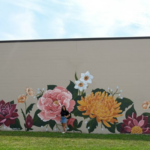
Seneca County is excited to participate in the America 250 Murals Across Ohio event this year. Murals Across Ohio joins all 88 counties to commemorate our history by telling stories through art of our great state’s past, present, and future. Click here to learn more.

Creativity Trail

Seneca County is proud to participate in the Creativity Trail, showcasing our rich industrial and artistic heritage. Featured stops include:

Community Art Shed | The Poignon Project

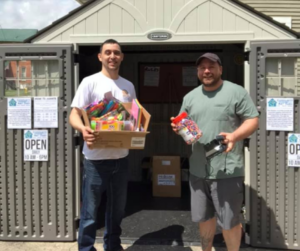
The Community Art Shed makes creativity accessible across our county. With the idea of a Little Free Library but for art, local artists and entrepreneurs, Ryan and Monica Poignon, brought their vision to life. All supplies in the art shed are donated or purchased with donated money from fellow art lovers. From children visiting on their bikes to young artists returning to show off their latest creations, the shed has become a vibrant hub of community inspiration. The Tiffin Community Art Shed shows the dedication to creativity our community has. It gives accessibility to art for people of all ages in our community and fosters the future of creative minds in our state and country. The Tiffin Community Art Shed is open every day from 10 a.m. to 6 p.m. at The Poignon Project for anyone who needs supplies.

Pan Yan Bookstore 

Pan Yan Bookstore is a locally owned independent bookstore. The name Pan Yan originates from the site of Fort Ball, 1812, where Erastus Bowe fought. He returned to the site in 1817 and built the Pan Yan Tavern, the first business establishment of Tiffin.

Stepping into Pan Yan is like taking a walk through Tiffin’s timeline. The shelves are curated for every person, offering a quiet escape for readers to explore new worlds or rediscover their own roots. At Pan Yan, they feature “Images of America,” a series of early townships and settlements in our great country.

Beyond the history, the bookstore serves as a modern gathering place for book lovers of all ages. By prioritizing local authors and community engagement, Pan Yan ensures that the spirit of Tiffin’s first business establishment lives on through the power of storytelling. Whether you are looking for a deep dive into Ohio’s past or the latest best-seller, Pan Yan is the perfect place to immerse yourself in a new and creative world with the perfect book.

Fostoria Community Arts Council

The Fostoria Community Arts Council is dedicated to bringing the joy of the arts to every corner of the city. By hosting workshops, exhibits, and community events, the Council ensures that art remains a vibrant and accessible part of daily life in Fostoria. Central to their mission is a unique facility called “The Space.” Whether you are a seasoned artist looking for room to work or a beginner eager to try a new medium, “The Space” provides the resources and community support needed to bring ideas to life. It serves as a collaborative hub where tools, talent, and imagination meet, sparking innovation and creativity in Seneca County.

Tiffin Municipal Arts Commission

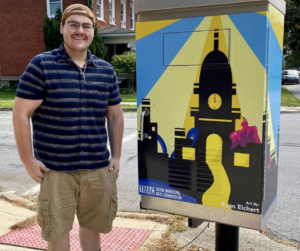
The Tiffin Municipal Arts Commission is dedicated to fostering the advancement and collaboration of arts in the community by promoting equal access and supporting art engagement. Their goal is to advocate, educate, and promote the culture, creation, and celebration of arts in Tiffin, Ohio. TMAC sponsors the Tiffin Park and Recreation Xplore Art Camp annually. They also sponsor contests to foster creativity and art, such as the traffic box contest. The Tiffin Municipal Arts Commission’s dedication to making art accessible in Tiffin continues a legacy of creativity and culture in Seneca County.

Ritz Theatre

The Ritz Theatre stands as a testament to the community’s ambition, craftsmanship, and love for community art. Born from the vision of Dan Kerwin and Adam Ritzler, who dreamed of a movie palace more grand and beautiful than anything they had ever seen, the Ritz was completed in only nine months and immediately dubbed “Tiffin’s quarter-million-dollar movie palace.” In 1928, that dream fully came to life when over 1,500 patrons packed the theatre, eager to listen to the Ritz Quality Orchestra. Guests were there not just for the stir of the beautiful sounds of the orchestra, but for the marvel of the experience, where elegant decor, ornate details, and modern whirs made seeing a performance a true cultural event.

During the 1920s and 1930s, four theatres operated in Tiffin, but today the Ritz stands as a golden reminder of a period when theatres were as much of an attraction as the films they showed. Renovated in 1998, the theatre continues to connect generations. It stands not only as a historic landmark but as a living piece of Tiffin’s cultural heritage, providing proof that dreams and artistic vision can live on for generations.

As we look toward the future of our county, Seneca County’s art, culture, and literature are shaped by both the preservation of our past and the innovation of our present. Whether it’s through a historic performance at The Ritz, a new discovery at Pan Yan Bookstore, or a hands-on project at the Community Art Shed, Seneca County remains a place where creativity is nurtured and celebrated. We invite you to step out this May and experience these cultural treasures for yourself, keeping the spirit of local art alive for the next generation.

For all America 250 Seneca County events, news, and happenings, visit DestinationSenecaCounty.org/America250.

Whether you’re exploring Murals Across Ohio or finding inspiration in a local shop, come experience the vibrant spirit that makes our community a masterpiece!

The East Green Announces 2026 Summer Concert Lineup

The East Green Announces 2026 Summer Concert Lineup

Full season of live music  to take place at the Frost-Kalnow Amphitheater at the East Green

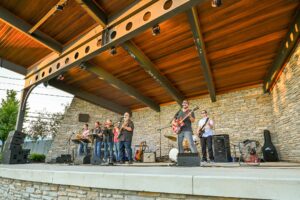
The East Green is pleased to announce the 2026 summer concert lineup, featuring a season of free live music at the Frost-Kalnow Amphitheater in downtown Tiffin. The schedule includes performances as part of The Foundation Series (formerly the East Green Summer Concert Series) along with additional concerts hosted by community organizations and partners throughout the summer.

Presented by the East Green Foundation, the Foundation Series brings a curated lineup of live music to The East Green, highlighting the rich sounds of jazz, blues, and soul. This year’s series will feature four performances from regional and national artists. The Foundation Series is made possible through the support of community sponsors that include the National Machinery Foundation, East Green Foundation, Reineke Family Dealerships, and the Seneca County Collaborative.

Additional performances throughout the summer will be presented as part of the Tiffin Community Series and Thursday Night Tunes, offering a variety of live music and events hosted by local organizations such as Simply Shop Local and Tiffin Parks & Recreation. The full East Green Concert schedule includes:

  • Thursday, June 18, 7pm – No Eileen (Thursday Night Tunes)
  • Saturday, June 20, 7pm – Out of Eden-A Tribute To The Eagles (Tiffin Community Series)
  • Thursday, June 25, 7pm – Paul Bogner (Thursday Night Tunes)
  • Saturday, June 27, 8pm- The Detroit Retro Society (The Foundation Series)
  • Thursday, July 9, 7pm – Mike Risner (Thursday Night Tunes)
  • Saturday, July 11, 8pm – Hailey Schattschneider (The Foundation Series)
  • Thursday, July 16, 7pm – Jake Heil (Thursday Night Tunes)
  • Thursday, July 23, 7pm – Local 419 (Thursday Night Tunes)
  • Saturday, August 1, 8pm – The Cleveland Vocal Project (The Foundation Series)
  • Thursday, August 6, 7pm – The Tuesday Crowd (Thursday Night Tunes)
  • Thursday, August 13, 7pm – Flat Top Republic (Thursday Night Tunes)
  • Saturday, August 15, 8pm – Hubb’s Groove (The Foundation Series)
  • Thursday, August 27, 7pm – Band Bash (Thursday Night Tunes)
  • Saturday, August 29, 7pm – Ultrasonik (Tiffin Community Series)

Additional information and details can be found at EastGreenConcerts.com.

Destination Seneca County Launches “Be Local” Campaign Alongside New Community Guide

Destination Seneca County Launches “Be Local” Campaign Alongside New Community Guide

New campaign and guide promote local businesses, attractions, events, and community pride

Destination Seneca County has officially launched its new “Be Local in Seneca County” campaign alongside the release of the 2026-2027 Seneca County Community Guide.

The new campaign is designed to encourage both residents and visitors to experience Seneca County through local businesses, events, attractions, dining, shopping, and community connections. Built around the message “Be Local in Seneca County,” the campaign emphasizes that every experience comes with a warm welcome, a sense of connection, and a place to belong.

Local is not where you’re from. It’s how you experience Seneca County while you’re here. Whether someone is visiting for a day or has lived here their entire life, Destination Seneca County wants people to feel connected to what makes Seneca County unique.

As part of the campaign rollout, Destination Seneca County will introduce updated messaging, branding, and creative designs across billboards, digital advertising, social media, print materials, and the Destination Seneca County website. The campaign will also expand the county’s reach through new advertising and marketing channels, increased statewide tourism involvement and exposure, and take advantage of additional opportunities designed to attract visitors while strengthening local engagement.

The new 2026–2027 Community Guide has been mailed to every residential address in Seneca County. Additional copies are being distributed statewide through Ohio Turnpike travel plazas, visitor centers, destination marketing organizations, tourism bureaus, and other travel-focused locations, as well as through more than 200 local businesses, organizations, and government offices throughout Seneca County.

The guide includes information on local dining, shopping, outdoor recreation, lodging, events, community resources, and attractions designed to support both visitors and residents exploring the area.

“The ‘Be Local in Seneca County’ campaign highlights the businesses, organizations, and people that make our community strong,” said Bill Frankart, President of the Seneca County Board of Commissioners. “The new community guide is another important tool to showcase what Seneca County has to offer while encouraging residents and visitors alike to support local and stay connected.”

The 2026–2027 Community Guide is available throughout Seneca County and online at SenecaCountyGuide.com.

Tiffin Glass Collectors Club to Host 38th Annual Artistry in American Glass Show & Sale

The Tiffin Glass Collectors Club will host the 38th Annual Artistry in American Glass Show & Sale on Saturday, June 20 from 10 AM to 5 PM and Sunday, June 21 from 10 AM to 3 PM at Tiffin Middle School, 103 Shepherd Drive, in Tiffin. The annual event remains one of the community’s longest-running traditions celebrating Tiffin’s rich glassmaking heritage.

Glass dealers from across the United States will join local and regional exhibitors for the two-day event, which attracts collectors and enthusiasts from throughout the country. The show will feature fine tableware and decorative glassware, including pieces produced by the historic Tiffin Glass factory from 1889 to 1980, along with additional quality glassware from fellow dealers.

Admission to the show is $5.00, with a $1.00 discount available with the event card. The show is hosted in a handicapped accessible facility with free parking available for attendees. Lunch and snacks will also be available for purchase.

Visitors are encouraged to explore Tiffin’s additional glass-related attractions throughout the weekend, including the Tiffin Glass Museum & Shoppe, The Poignon Project, and Hawkes Crystal.

The Tiffin Glass Museum & Shoppe, located at 25 – 27 S. Washington St., features more than 3,000 pieces of Tiffin Glass and highlights the history of the factory from its beginnings in 1889 through 1980. The museum’s retail shop offers Tiffin Glass and other collectible glassware for sale.

The Poignon Project, located at 227 E. Perry St., showcases handcrafted and locally made glass items, while Hawkes Crystal, 207 S. Washington St., features the work of Master Brilliant Cutter Aiden J. Scully, one of only a handful of Master Brilliant Cutters actively creating in the United States.

“The Artistry in American Glass Show & Sale is a tradition that continues to bring visitors to Tiffin from across the country while celebrating an important part of our community’s history,” said Tiffin Mayor Lee Wilkinson. “Events like this help showcase the unique heritage, local attractions, and hospitality that make Tiffin a special destination.”

For additional information about the event, contact Thomas Maiberger at tmaiberger54@yahoo.com or 419-618-5036, or Ed Goshe at egoshe@heidelberg.edu or 419-618-1441. Additional information is also available at www.tiffinglass.org.

Tiffin Municipal Arts Commission Announces 2026 Arts Grant Opportunities

The Tiffin Municipal Arts Commission (TMAC) is now accepting applications for its 2026 grant programs designed to support local arts initiatives, public placemaking projects, and artist development opportunities within the City of Tiffin.

Through two separate grant opportunities, TMAC aims to encourage creativity, strengthen community engagement through the arts, and support artists and organizations contributing to Tiffin’s growing arts and culture scene.

The TMAC Community Placemaking Grant will award up to $1,500 for arts-focused community projects that are free or low-cost and open to the public. Eligible projects may include concerts, festivals, public art installations, murals, performances, artist commissions, and other creative initiatives that contribute to Tiffin’s vibrancy and visibility as an arts destination.

TMAC is also offering an Artistic Development Grant of up to $500 to support artists who live in or attend school in the City of Tiffin. Funding may be used for professional development experiences and artistic materials, including conference attendance, artist residencies, studio equipment, software, instruments, and creative supplies.

Applications for both grant programs are now open and will close on Sunday, June 7, 2026, at 11:59 p.m.

Projects will be evaluated based on artistic and cultural impact, feasibility, community engagement, and overall contribution to Tiffin’s arts ecosystem. Community Placemaking Grant applications will also be reviewed for economic and audience impact.

Grant recipients will be notified in June, with funded work to be completed by November 30, 2026.

Complete program guidelines, eligibility information, grant agreements, and application materials are available at: DestinationSenecaCounty.org/TAPP

Farmers Markets in Seneca County 2026

Get your reusable bags ready because farmers’ market season is back in Seneca County! There is nothing quite like the experience of biting into a sun-ripened peach or finding the perfect handcrafted piece of jewelry made right here in our community. Whether you are hunting for the perfect heirloom tomato, a warm loaf of artisan bread, or a unique gift from a local maker, our 2026 markets are packed with homegrown goodness.

Our local growers and artisans have been working hard behind the scenes all winter to ensure this season is full of flavor and connection. From seasonal flowers and garden starts to locally sourced honey and farm-fresh meats, the variety found at our local stands is truly impressive. Supporting these markets is a great way to meet the people who grow your food while keeping our local economy strong. Scroll down for the full 2026 schedule and start mapping out your market visits today.

830 Market


All markets are held in downtown Fostoria on Main Street. Markets will run from 10 am-2 pm.

  • May 9, 2026
  • June 13, 2026
  • July 11, 2026
  • August 8, 2026
  • September 12, 2026
  • October 10, 2026

Tiffin Seneca Farmers Market

Markets take place every Saturday on S. Washington Street in downtown Tiffin and will run from 9 am-1 pm. Learn more here.

  • May: 16th, 23rd & 30th
  • June: 6th, 13th, 20th, & 27th
  • July: 11th, 18th, & 25th
  • August: 1st, 8th, 15th, 22nd & 29th
  • September: 5th, 12th, 19th (location TBD) & 26th
  • October: 3rd, 10th, & 17th

Bloomville Farmer’s Market

All markets will take place at Bloomville Veterans Memorial Park from 11 am-2 pm. Learn more here.

  • May 3rd, 2026
  • September 27, 2026

Whether you are a dedicated regular or a first-time explorer, every market visit is a chance to discover something new and delicious. Come for the produce, stay for the atmosphere, and leave with a piece of Seneca County.

Explore Seneca County’s homegrown produce, goods, and more. Be local this market season!

America 250 | Ohio Transportation Seneca County

America 250- History Lives Here | April 2026

In 2026, we will celebrate the 250th anniversary of the United States by exploring the many ways Ohio and Seneca County have contributed to U.S. History. Each month, a new theme will highlight Ohio’s unique and lasting contributions. Learn more about the 2026 Celebration Themes here.

As we approach the 250th anniversary of the United States, we celebrate a nation defined by its restless spirit and the constant drive to move forward, a journey clearly etched into the landscape of Northwest Ohio. From the early pioneers of the Allen Motor Company who dared to reinvent the “horseless carriage” to the rhythmic clatter of freight trains passing through the Fostoria Iron Triangle, transportation has always been the heartbeat of our region, serving as the engine of opportunity that connects small-town innovation to the global stage. Today, this legacy lives on through the soaring paths of aircraft at Tiffin Aire Inc. and The Donald P. Miller Fostoria Metropolitan Airport, as well as the compassionate network of North Central Area Transit, which ensures that mobility remains a fundamental right for every citizen. As we participate in the Ohio Trails and Tales and reflect on the America 250 milestone, we recognize that our roads, rails, and runways are more than just infrastructure, but enduring links that have fueled a national revolution and continue to pave the way toward our collective future.

The Allen Car

The story of the Allen Motor Car is more than a footnote in Ohio’s industrial history; it is a testament to the ambitious spirit of the America 250 milestone. By transitioning from the old Peabody Buggy plant to the cutting-edge Allen Motor Company, Fostoria’s innovators bridged the gap between horse-drawn carriages and the modern age of mobility.

While the Allen car was known for high quality, its premium price put the company under pressure from mass-manufacturers like Ford. This led to a takeover by Columbus investors, who continued production until the company finally succumbed to economic pressures in 1921. Though the factory is long gone, the legacy of “quality over quantity” remains a vital chapter in how a local community fueled a national transportation revolution. Today, a surviving car is housed in the Fostoria Area Historical Society Museum. It stands not just as a relic, but as a symbol of the small town dreams that defined the 20th century landscape. As we look toward the next 250 years, the Allen Motor Company serves as a reminder that the road to the future was paved by the bold risks of local pioneers in towns like Fostoria.

Fostoria Iron Triangle 

The Fostoria Rail Preservation Society, a 501c3 non-profit, stands as a vital guardian of American transportation history through its dedication to public education and the preservation of the former Lake Erie and Western Depot at 128 West North Street. This legacy comes to life at the Fostoria Iron Triangle Visitor Center and Viewing Area, a 5.6-acre rail park that offers a unique 360-degree unobstructed view of the nation’s industrial pulse. The park’s distinctive geography is defined by three mainline double tracks that cross to form a perfect triangle, where over 100 freight trains pass through each day. Open 24/7, 365 days a year, the site invites visitors to experience this continuous flow of American commerce firsthand, providing modern amenities like restrooms and a vending machine alongside a historic caboose available for the public to explore. This celebration period, the Fostoria Iron Triangle is participating in the Ohio Trails and Tales, a trail celebrating the innovation in transportation in Ohio that contributed to America. 

The Donald P. Miller Fostoria Metropolitan Airport

The Donald P. Miller Fostoria Metropolitan Airport serves as a vital aviation hub for Fostoria, Ohio, providing essential infrastructure for recreational, private, charter, and cargo operations. Committed to safety and efficiency, the airport offers reliable services, including fuel and hangar space, acting as a welcoming first point of contact for visitors. By supporting a diverse range of aviation activities, the facility plays a key role in the community’s modern transportation network and local economic connectivity.

Tiffin Aire Inc. 

Located at the Seneca County Airport, Tiffin Aire, Inc. serves as a premier aviation hub in Northwest Ohio. The facility features a 4,000 foot runway equipped with GPS and navigation approaches to accommodate a variety of pilots. Visitors enjoy a seamless experience with convenient amenities like 24 hour self-service fuel, catering, and courtesy cars for local travel. Specializing in expert propeller services, maintenance, and flight instruction, Tiffin Aire ensures that the spirit of American mobility continues to thrive. As part of the America 250 celebration, this hub represents the vital link between local communities and the national freedom of the skies.

North Central Area Transit

North Central Area Transit (NCAT) serves as a vital lifeline for Crawford and Seneca counties, operating as a non-profit dedicated to safe, affordable, and accessible public transportation. Unlike traditional fixed-route systems, NCAT provides specialized curb-to-curb service, ensuring that residents, regardless of their physical mobility, can navigate their communities with dignity. With a fleet equipped with wheelchair lifts and professionally trained drivers who offer personal assistance, NCAT removes the barriers to independence that often isolate individuals in rural and semi-rural areas.

The organization’s commitment to inclusivity is backed by a strict adherence to the Title VI Civil Rights Act, ensuring that services are provided without discrimination based on race, color, or national origin. By welcoming service animals and accommodating specialized medical needs like oxygen tanks, NCAT embodies the modern American ideal that transportation is a fundamental right. As we celebrate the nation’s 250th anniversary, NCAT represents the evolution of our transit systems from simple infrastructure into a compassionate network that prioritizes the connectivity of every citizen.

As we honor the America 250 milestone, we celebrate a nation defined by its restless spirit and the constant drive to move forward, a journey clearly etched into the landscape of Northwest Ohio. From the early pioneers of the Allen Motor Company who dared to reinvent the “horseless carriage” to the rhythmic clatter of freight trains passing through the Fostoria Iron Triangle, transportation has always been the heartbeat of our region. These stories serve as a reminder of how local innovation fuels the engine of opportunity, connecting small-town ingenuity to the global stage.

Today, this legacy of mobility lives on through the soaring paths of aircraft at Tiffin Aire and the Fostoria Metropolitan Airport, as well as the essential services of North Central Area Transit, which ensures that every citizen remains connected to their community. As we participate in the Ohio Trails and Tales and reflect on our shared history, we recognize that our roads, rails, and runways are more than just infrastructure. They are the enduring links that have powered a national revolution and continue to pave the way toward our collective future.

For all America 250 Seneca County events, news, and happenings, visit DestinationSenecaCounty.org/America250.

NWO’s Premier Flea Market Returns for 2026 Season

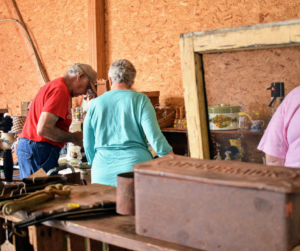
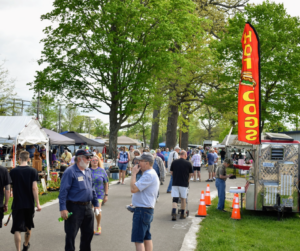
Northwest Ohio’s premier treasure hunt is back! The Tiffin Flea Market is gearing up for its 48th spectacular year, and it’s bigger than ever. Founded in 1978, this local staple has transformed from a small gathering into a massive statewide draw, hosting up to 400 vendors and welcoming nearly 10,000 visitors every single weekend. Whether you’re hunting for rare antiques, unique collectibles, or the perfect piece of home decor, the Seneca County Fairgrounds becomes a gold mine for shoppers every time the gates open.

2026 Market Dates

Mark your calendars! The Tiffin Flea Market will be held on the following weekends this year:
  • April 25-26
  • May 16-17
  • June 6-7
  • June 27-28
  • August 15-16
  • September 12-13
  • October 3-4

Market Hours

Saturdays: 9:00 AM- 4:00 PM

Sundays: 9:00 AM- 3:00 PM

Planning your visit is a breeze thanks to the market’s guest-friendly amenities. Skip the entry fees with free admission and parking, and enjoy a comfortable day of browsing on smooth, handicap-accessible paths. If you need a break from the sun, you’ll find plenty of shaded areas to relax and grab a bite. From unique antique finds to a diverse lineup of food vendors, the market is built for a full day of family-friendly exploration.

This event is a fundraising effort by the Seneca County Jr. Fair Foundation, a non-profit and volunteer-run organization that was established in 1971. The foundation is deeply dedicated to supporting opportunities for the youth of Seneca County, helping them to learn and develop essential leadership skills through the Jr. Fair and various other educational programs. Proceeds from the organization go directly toward strengthening these programs and providing necessary resources to over 1,500 youth who participate in the Jr. Fair. These participants represent a wide variety of groups, including 4-H, FFA, Girl Scouts, and more. Whether you are on the hunt for a rare collectible or you are simply looking for an enjoyable weekend outing, the Tiffin Flea Market offers a great experience that directly gives back to the local community.

Find information on vendors, fairground map, and more at: tiffinfleamarket.com

America 250 Historical Driving Tour | Perry’s Victory and International Peace Memorial

Stop #16 | Address: 93 Delaware St., Put-in-Bay

Originally conceived as a memorial chapel in a surrounding park skirting the Put-in-Bay harbor containing eight memorial windows, one each to represent the seven other Lake States and one by Ohio, the final design for Perry’s Victory and International Peace Memorial was much different.  It took three years to build with various cost estimates between $600,000 and $1 million.  Intended to commemorate the September 1813 victory of Commodore Oliver Hazard Perry at the Battle of Lake Erie over the British, a key point in the War of 1812, the Memorial has come to represent the aspirations of all nations for the peace of the world.

To decide on the final design, a competition of American architects was held with the newly formed National Commission of Fine Arts serving as judge.  From over 147 architects, J. H. Freedlander and A. D. Seymour, Jr. of New York were selected.  Its winning focal point was the Doric column “rising above the isthmus of the Put-in-Bay Harbor as if from the sea.”   Reaching 352 feet skyward, the Doric column is made of pink Milford granite from Massachusetts.   It is the only international peace memorial in the U.S. National Park System and stands 47 feet taller than the Statue of Liberty in New York harbor.  The upper deck platform is 12 feet higher than the Statue of Liberty’s torch.

The cornerstone dedication ceremonies were held July 4, 1913 with over 5,000 masons attending.  The “peace idea” as part of the memorial was intended in the original planned centennial celebration and was followed through to the finished design.  But the solemnity of the centennial celebration was the transfer of the remains of three American and three British officers killed in the Battle of Lake Erie to beneath the rotunda of the mighty column.  Although some said the British would not attend the centennial celebration, come they did to help celebrate a century of peace and assist in the dedication of the memorial as an expression for world peace.  The memorial stands five miles from the longest undefended border in the world.

About “Tracking the Troops, Tippecanoe & Perry, Too!” This driving tour is a five-county collaborative project with Wyandot, Seneca, Sandusky, Wood and Ottawa counties that takes you on a self-guided driving tour following the military trail of General William Henry Harrison during the War of 1812. Harrison would later become the ninth president of the United States and has the shortest presidency, dying from pneumonia one month after having taken the oath of office.

America 250 Historical Driving Tour | Fort Ball

Stop #5 | Address: Frost Parkway, Tiffin

As General William Henry Harrison planned his advance north to capture British Fort Malden across Lake Erie in Canada, he had to consider how best to keep his troops supplied throughout the campaign.  Being on the offensive meant that the army needed to transport essential items with them: munitions, food, camp equipment, and forage for the oxen and horses that hauled the wagons and artillery.  Since his army planned to follow the Scioto-Sandusky Trail, which was intended for foot travel, movement promised to be slow.  Therefore, Harrison ordered that small supply forts be constructed periodically along his line of march.  These forts also served as fallback positions should Harrison’s plans fail.

After Fort Ferrer in Upper Sandusky, the next fort in this chain of supply depots was along the north side of the Sandusky River in present-day Tiffin.  It was named Fort (sometimes referred to as Camp) Ball after Lt. Colonel James Ball whose troops began construction of the stockade in July 1813.  We have a description of the fort by John Searles, an early settler who arrived after the war in 1820 with his wife and children.  They, as did many early arrivals, lived in a room of one of the fort’s blockhouses until they could build their own cabin.

“The roofs of the block houses were covered with clapboards.  The army road [the Scioto-Sandusky Trail, also known as Harrison’s Trail] ran along the river bank between the fort and the river.  There was just room enough for the road.  The fort has three block houses, one on two corners and one between these two corners, in the middle, all facing the river.  Back of the block houses was an open space, inside the pickets, of about half an acre.  There was room enough in the block houses for two hundred men.

Surrounding the ‘camp’ stakes about a foot in thickness were driven into the ground and on these fixed bayonets driven in horizontally in the stakes near to the top.  Against these stakes logs were piled on the outside and over them dirt was thrown from the ditch that surrounded the whole.  There was room in the interior for five hundred men.”

Despite having an ever-flowing spring of pure water nearby, disease took the lives of many soldiers assigned to the fort between 1813 and 1815 when the war ended and the fort was abandoned.  These deaths were probably the result of the traditionally poor understanding of proper sanitation during this time, as well as the swampy conditions of the region that caused ague (malaria).  The fort never came under attack from the British or Indian forces.

About “Tracking the Troops, Tippecanoe & Perry, Too!” This driving tour is a five-county collaborative project with Wyandot, Seneca, Sandusky, Wood and Ottawa counties that takes you on a self-guided driving tour following the military trail of General William Henry Harrison during the War of 1812. Harrison would later become the ninth president of the United States and has the shortest presidency, dying from pneumonia one month after having taken the oath of office.

America 250 Historical Driving Tour | End of Harrison Trail in Ohio – War of 1812

Stop #13 | Address: 126 W. Third St., Port Clinton

Marker reads “Six miles east is the western boundary of ‘The Fire Lands’ given by Connecticut to its citizens for property destroyed by the British during the Revolution.”  The marker was erected in 1930 by the Ohio Revolutionary Memorial Commission.

The ”Fire Lands” was located at the western end of the Connecticut Western Reserve and was intended as financial restitution for residents of Connecticut who had their homes burned in 1779 and 1781 by the British.  The 500,000 acres covered nearly all of present-day Huron and Erie counties, Ottawa’s Danbury Township and a portion of Catawba Island Township.

The War of 1812 opened in the west with the British capturing the American Fort Detroit located on the banks of the Thames River in southwestern Ontario.   William Henry Harrison, Governor of the Indiana Territory, was given command of the American forces and tasked with retaking the fort.  By spring 1813, Harrison’s plan involved moving forces along five routes that would converge in northwestern Ohio on the Maumee and Sandusky Rivers.  Beginning in Upper Sandusky, Harrison built small forts along his route north that served as storage depots for supplies as well as havens of safety.  He would use the DeLery Portage, a centuries-old path between the Sandusky Bay and the mouth of the Portage River, to transport supplies to Lake Erie and later send men and munitions from Fremont’s Fort Stepehenson.  American soldiers dragged boats overland on the two-mile course of what today is Fulton Street in Port Clinton.   

Ten days after the Battle of Lake Erie, Harrison first traveled to Put-in-Bay (South Bass Island) then to Middle Sister Island and finally landed in Canada.  In what became known as the Battle of Thames, Harrison defeated the British and Tecumseh was killed.  Before embarking for Canada, Harrison built a brush fence extending across the peninsula about two miles wide from the mouth of the Portage River to the opposite mouth of the Sandusky River.  There the American soldiers turned their horses loose.  Returning from Canada, Harrison’s Kentucky and Ohio volunteers camped, gathered their horses and proceeded home.

About “Tracking the Troops, Tippecanoe & Perry, Too!” This driving tour is a five-county collaborative project with Wyandot, Seneca, Sandusky, Wood and Ottawa counties that takes you on a self-guided driving tour following the military trail of General William Henry Harrison during the War of 1812. Harrison would later become the ninth president of the United States and has the shortest presidency, dying from pneumonia one month after having taken the oath of office.

America 250 Historical Driving Tour | Scott Hagan “Oliver Hazard Perry” Barn Mural

Stop #18 | Address: 14669 SR 105, Elmore

On September 10, 1813 the Battle of Lake Erie commenced. The British fleet consisted of six ships with 63 cannons and was commanded by Robert Heriot Barclay.   The American flotilla had nine ships with 54 cannons and was commanded by 28-year old naval officer, Oliver Hazard Perry.  He and his men first arrived at Presque Isle near Erie, Pennsylvania and over a span of months fashioned a fleet of ships from green oak timber.  From Presque Isle, Perry moved his base of operations to Put-in-Bay on South Bass Island.  Perry hosted his battle flag inscribed with “Don’t Give Up the Ship,” the last words of his friend Captain James Lawrence, who had been killed in a naval battle in June off the Atlantic coast.  Perry would name his flagship after Lawrence.  After inflicting significant damage on the British fleet, the Lawrence was severely damaged forcing Perry to move command to the nearby Niagara.  Continuing to battle throughout the afternoon, the British ships eventually were incapacitated and one-by-one surrendered.   Perry composed his famous message to General William Henry Harrison, “Dear General: We have met the enemy and they are ours.  Two ships, two brigs, one schooner and one sloop.  Yours with great respect and esteem. O.H.Perry.”  The battle was the only time in history that an entire British fleet was defeated.

The victory secured American control of Lake Erie, forcing the British to abandon Fort Malden on the Detroit River and retreat up the Thames where General Harrison defeated the undermanned and un-reinforced British army and its allied Indian force October 5, 1813.  Tecumseh died in the Thames battle.

The Battle of Lake Erie and the victory by the army at the Thames ensured the states of Ohio and Michigan would remain sovereign territory of the United States.

The Oliver Hazard Perry barn mural is one in a series of painted barns throughout Ohio as part of an Ohio History Connection project.  It was completed by barn artist Scott Hagan in 2017.  The barn is geographically located due south of the area in Lake Erie where the Battle of Lake Erie took place.

About “Tracking the Troops, Tippecanoe & Perry, Too!” This driving tour is a five-county collaborative project with Wyandot, Seneca, Sandusky, Wood and Ottawa counties that takes you on a self-guided driving tour following the military trail of General William Henry Harrison during the War of 1812. Harrison would later become the ninth president of the United States and has the shortest presidency, dying from pneumonia one month after having taken the oath of office.

America 250 Historical Driving Tour | Harrison Rock

Stop #11 | Address: Sandusky Co. Rt 590 (2 miles south of St Rt 6), Fremont

On Route 590 south of Route 6 in Jackson Township.  It is an 80-ton glacial boulder that is 13 feet long, 10 feet wide, and 7 feet tall (partly underground).  It became known as Harrison Rock because supposedly General William Henry Harrison’s soldiers used the huge landmark as a mess table as the army traveled between Fort Meigs on the Maumee River and Fort Seneca (in Old Fort) on the Sandusky River.  In 1946, a plaque was placed on the boulder by the George Croghan Chapter in Fremont of the Daughters of the American Revolution.

About “Tracking the Troops, Tippecanoe & Perry, Too!” This driving tour is a five-county collaborative project with Wyandot, Seneca, Sandusky, Wood and Ottawa counties that takes you on a self-guided driving tour following the military trail of General William Henry Harrison during the War of 1812. Harrison would later become the ninth president of the United States and has the shortest presidency, dying from pneumonia one month after having taken the oath of office.

America 250 Historical Driving Tour | Fort Meigs

Stop #12 | Address: 29100 W River Rd., Perrysburg

In an era when armies were relatively dormant in the colder months, General William Henry Harrison pushed his American command through the forest and swamps of Ohio on a rare over-the-winter campaign from 1812 into early 1813.  Harrison was responding to enormous pressure from the War Department to take back American territory overrun and occupied by the enemy the previous summer; then carry out the original war aim of pushing British authority out of Canada.  Following another unexpected American defeat at the Battle of the River Raisin in January 1813, the alarmed general now lacked the offensive punching power required to immediately move against Detroit – the American headquarters surrendered in August of 1812.  Harrison settled into a defensive posture at a key crossing position along the Maumee River in Northern Ohio. 

Fort Meigs was originally conceived as a staging area where the Americans could again gain strength through men and material.  It would be a massive supply depot right on the front lines, within striking distance of the enemy, and place the British in check for the fighting season of 1813.  After three months of construction the facility was more of a fortified camp than a true fortress.  A wooden stockade stretched just under one mile enclosing ten acres of a tented army and wooden storehouses.  Seven two-story blockhouses dotted the perimeter and concentrated firepower at key locations.  Five artillery batteries overlooked the river crossing from high ground on the southwest bank.   

Aware of the growing American threat at the Foot of the Maumee River Rapids, the allied army sought to knockout the American presence as soon as they were able.  A combined force of 1,000 British and 1,500 Indigenous invested the Maumee Valley and surrounded the American position of nearly equal force – commencing a near two-week siege at the end of April. In pouring rain conditions British and American artillery dueled until the fifth day of active combat when 

American reinforcements arrived.  The fresh brigade of Kentucky Militia allowed the Americans to engage in multiple ground operations and attempt to break the stranglehold.  Four days later, with dwindling troop numbers and favorable sailing winds for departure, the British withdrew from the area, the natives had largely already gone. 

Frustrated by the setback but still determined toward success, in June, Tecumseh’s army was greatly enlarged with new fighting men fromm the Upper and Western Lakes. 4,000 Indigenous with light British accompaniment besieged Fort Meigs a second time in late July – again a protracted eight-day struggle. Unable to dislodge the Americans by ruse or direct assault the 2nd siege ended with bitter strains on the British and Indigenous alliance.  

By the close of these endeavors, the American navy had moved into western Lake Erie, and the combined U.S. force had effectively bottled the allies into the Detroit River with dangerous supply problems.  The twin American stands at Fort Meigs represent the first time in the War of 1812 that the American army had successfully defended their own territory in the west.  The end of 1813 would see the army move on and carry out their immediate objectives before them.  The army of Fort Meigs was the invasion force that liberated Detroit and held large areas of Upper Canada.  The battle death of Tecumseh on October 5, 1813, marked the end of Indigenous resistance in the war.  

Fort Meigs stands today in Perrysburg. Ohio.  We encourage all to walk our grounds where heroes and leaders contested North America.  Our large monthly re-enactments can be an eye-opening and immersive 19th century military experience. 

About “Tracking the Troops, Tippecanoe & Perry, Too!” This driving tour is a five-county collaborative project with Wyandot, Seneca, Sandusky, Wood and Ottawa counties that takes you on a self-guided driving tour following the military trail of General William Henry Harrison during the War of 1812. Harrison would later become the ninth president of the United States and has the shortest presidency, dying from pneumonia one month after having taken the oath of office.

America 250 Historical Driving Tour | Fort Stephenson

Stop #8 | Address: Intersection of W. State St. & N. Arch St., Fremont

The fort was strategically located on a bluff overlooking the lower rapids of the Sandusky River. Originally the site of a French trading post, by 1813, it served as the northern most supply fort along the Harrison Trail. Frustrated by two failed attempts to capture Fort Meigs in May and July of 1813, British General Henry Proctor moved his army by water across Lake Erie and up the Sandusky River to the rapids below Fort Stephenson. Here the British and their Native American allies laid siege to the fort, certain this undermanned garrison could be easily overcome. General William Henry Harrison had entrusted command of the fort to a 21-year-old Kentuckian, Major George Croghan. Together with a garrison of 160 men and a single cannon captured during the French and Indian War, Croghan fought off a determined assault by British troops on August 2. Surprised by the Americans’ tenacious defense and their own heavy losses, the British quietly slipped away during the night. Word of Croghan’s victory spread throughout country, inspiring hope after months of gloomy war news. Never again would British troops set foot in Ohio. Birchard Library, located on Croghan Street in downtown Fremont, was constructed on the site of Fort Stephenson and houses a collection of artifacts from the battle. The old cannon that served Croghan’s garrison so well is displayed on the library lawn. Nearby, the remains of George Croghan are interred at the base of the Soldiers’ Monument.

About “Tracking the Troops, Tippecanoe & Perry, Too!” This driving tour is a five-county collaborative project with Wyandot, Seneca, Sandusky, Wood and Ottawa counties that takes you on a self-guided driving tour following the military trail of General William Henry Harrison during the War of 1812. Harrison would later become the ninth president of the United States and has the shortest presidency, dying from pneumonia one month after having taken the oath of office.

America 250 Historical Driving Tour | Hayes Presidential Library & Museums

Stop #9 | Address: Speigel Grove, Fremont

President Rutherford B. Hayes’s second son Webb spearheaded the drive to build the Museum in 1916 to honor his father. The nation’s first presidential library, it is located on a 25-acre estate known as Spiegel Grove. Access is near the intersection of Buckland and Hayes Avenues. The library has an extensive collection of books on Sandusky County history, as well as material related to the War of 1812. The Harrison Trail, which passes through the grounds beginning at the southern gate, originally connected Fort Seneca and Fort Stephenson. During the Revolutionary War, Daniel Boone passed along this trail as a captive of the Indians on his way to the British fort at Detroit. At the time, it was known as the Scioto-Sandusky Trail. Native Americans created it to facilitate travel between the Ohio River and Lake Erie.

About “Tracking the Troops, Tippecanoe & Perry, Too!” This driving tour is a five-county collaborative project with Wyandot, Seneca, Sandusky, Wood and Ottawa counties that takes you on a self-guided driving tour following the military trail of General William Henry Harrison during the War of 1812. Harrison would later become the ninth president of the United States and has the shortest presidency, dying from pneumonia one month after having taken the oath of office.

America 250 Historical Driving Tour | Toll House

Stop #2 | Address: Near the current log cabin on the Wyandot Co. Fairgrounds (10171 OH-53, Upper Sandusky)

The first attempt to establish a true “road” came about during the War of 1812 when General William Henry Harrison established the “Old War Road.” His troops cut out a route which ran from Delaware, passed roughly north-south through the central portion of the county, including Upper Sandusky and the area which would become McCutchenville, extending to Fremont. It was known as the Harrison Trail and follows roughly the same path as present-day United States Highway 53.

Shortly after the establishment of Upper Sandusky as the county seat in 1845, plans were begun to create a more permanent road north to Lower Sandusky (Fremont). A plank road running from Columbus to Tiffin was planned in 1848. On March 22, 1849, the Ohio General Assembly passed an act incorporating the Lower Sandusky, Tiffin and Fort Ball Plank Road Company. Wyandot County residents Joseph McCutchen, Robert McKelley, and Andrew McElvain were initial subscribers. One year later, on March 23, the Tiffin and Osceola Plank Road Company was incorporated by the state. This action extended the route through Wyandot County to Bucyrus.

The acts provided that the roadbed should be constructed at least eight feet wide of wood planks at least three inches thick and the roadway should be at least sixteen feet wide if double tracked. They further decreed that a properly maintained and drained earthen wagon track should be placed alongside the plank road for use by “animals, teams, and travelers of every description.” The road appeared like a giant wooden sidewalk extending to the horizon.

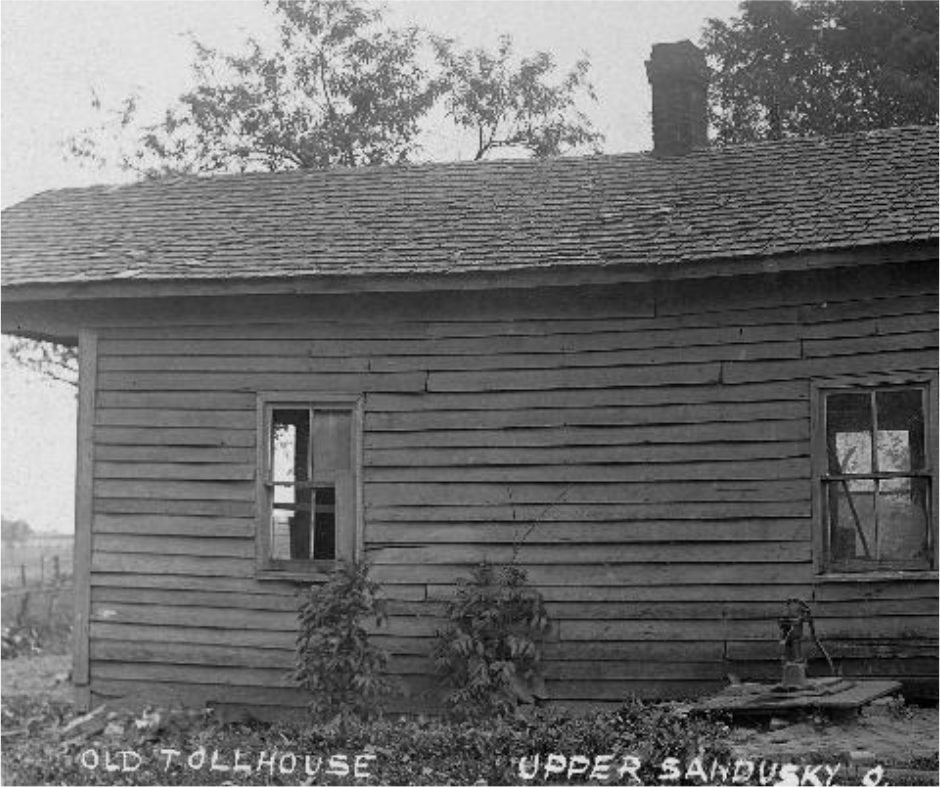
The acts further allowed the owners to erect gates and tollhouses after every five miles of plank road was completed. Everyone who used the road or path was required to pay a toll. Upper Sandusky’s tollhouse stood near the location of the present Wyandot County Fairgrounds. The toll was 12 ½ cents to run a team of horses from Upper Sandusky to Tiffin. After about five years, the roads became too difficult to maintain due to the constantly warping planks. Eventually the roads were abandoned, planks burned, and the tollhouses torn down. None of the investors in the plank roads ever made a profit. It would be many more years until gravel pikes would appear in the county.

Approximate Building Location (No Longer Standing): 10171 State Route 53 North, Upper Sandusky, Ohio 43351 (Near the current log cabin on the Wyandot County Fairgrounds.)

Approximate GPS Location: 40.8439922°N, -83.2803030°W

About “Tracking the Troops, Tippecanoe & Perry, Too!” This driving tour is a five-county collaborative project with Wyandot, Seneca, Sandusky, Wood and Ottawa counties that takes you on a self-guided driving tour following the military trail of General William Henry Harrison during the War of 1812. Harrison would later become the ninth president of the United States and has the shortest presidency, dying from pneumonia one month after having taken the oath of office.

America 250 Historical Driving Tour | Indian Mill

Stop #3 | Address: 7417 Co. Hwy. 47, Upper Sandusky

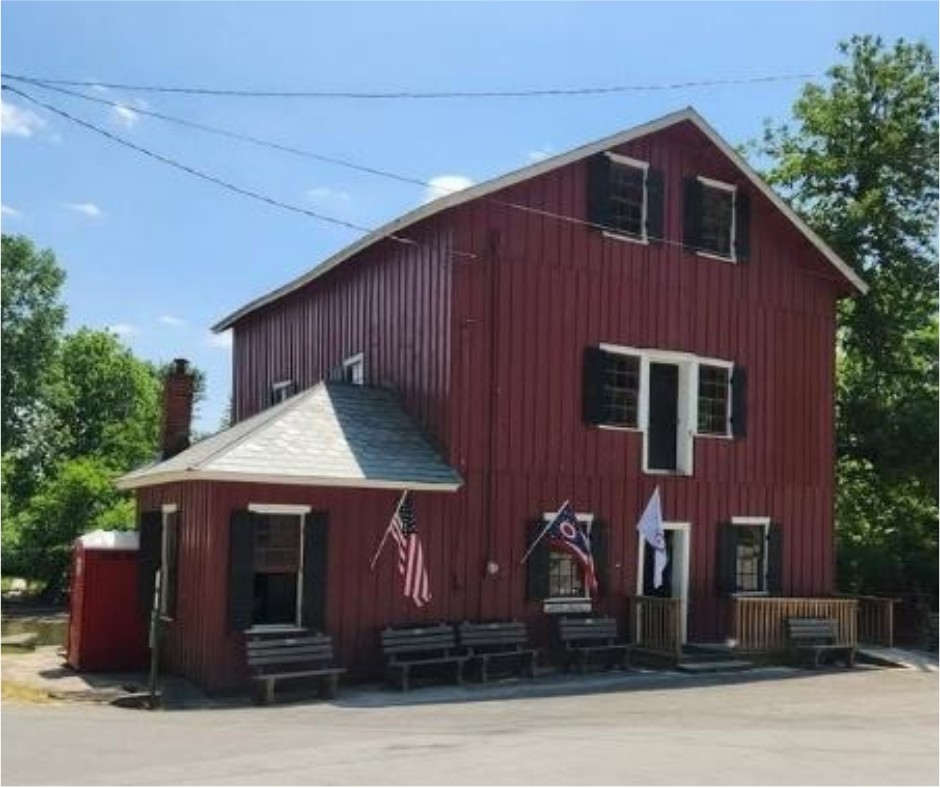
Just northwest of Upper Sandusky, along the scenic Sandusky River is the Indian Mill. Built in 1861, the mill is the nation’s first educational museum of milling in its original structure. The mill ceased operations in 1941, and ownership was transferred to the Ohio History Connection.

When the War of 1812 ended, members of the Wyandotte tribe settled near modern-day Upper Sandusky. Along with them was a group of African Americans—both free blacks and fugitives from slavery—who also settled nearby. The Wyandottes, who’d always been farmers, worked with the African Americans, and the African Americans in turn worked with them. Part of this intermingling led to some of the Wyandottes accepting Christianity and forsaking their customs. This in turn led to limited perks granted by the government, including federal money to build a mill.

As a reward for the loyalty the Wyandottes showed in supporting the Americans during the War of 1812, Article 10 of the Treaty of the Rapids of the Miami of Lake Erie (signed in 1817) called for a sawmill and a grist mill to be erected by the United States Government for the use of the Wyandottes. By 1820, a flour mill, dam and sawmill were constructed on the banks of the Sandusky River. These mills provided important services for the Wyandotte farmers as well as the African Americans living in the area. They were able to process their harvests and turn logs into timber to build their homes. However, under pressure from many white settlers who lived in the area surrounding the Wyandotte reservation, the federal government decided to permanently move the Wyandottes out of Ohio. In 1843, the last of the Wyandottes left the area.

Following the removal of the Wyandottes, these mills fell into disrepair and were abandoned and purchased by George Myers in 1848. He operated them until the current three-story mill was rebuilt with original materials on the present site by Lewis Rummel in 1861. The new mill was powered by three water-powered turbines made by the James Leffel & Co. of Springfield, Ohio. The mill has been owned by various people over the years and was donated to by the Ohio History Connection by the Walton Family in the mid-1950s. The mill was cleaned, restored and formally opened to the public in 1968 as the first educational museum of milling in the United States in a mill still in its original location.

Many exhibits are placed around the original mill machinery. A Leffel Turbine, along with the old stone burrs, bolting chests, and elevators are still visible in their original locations. The restored miller’s office displays historic artifacts related to the history of milling in the nineteenth and early twentieth centuries. Indian Mill is currently managed locally by the Wyandot County Archaeological & Historical Society.

Mill location: 7417 County Highway 47, Upper Sandusky, Ohio 43351

GPS Location: 40.8631119°N, -83.2540863°W

About “Tracking the Troops, Tippecanoe & Perry, Too!” This driving tour is a five-county collaborative project with Wyandot, Seneca, Sandusky, Wood and Ottawa counties that takes you on a self-guided driving tour following the military trail of General William Henry Harrison during the War of 1812. Harrison would later become the ninth president of the United States and has the shortest presidency, dying from pneumonia one month after having taken the oath of office.

America 250 Historical Driving Tour | Overland Inn

Stop #4 | Address: 283 OH-53, McCutchenville

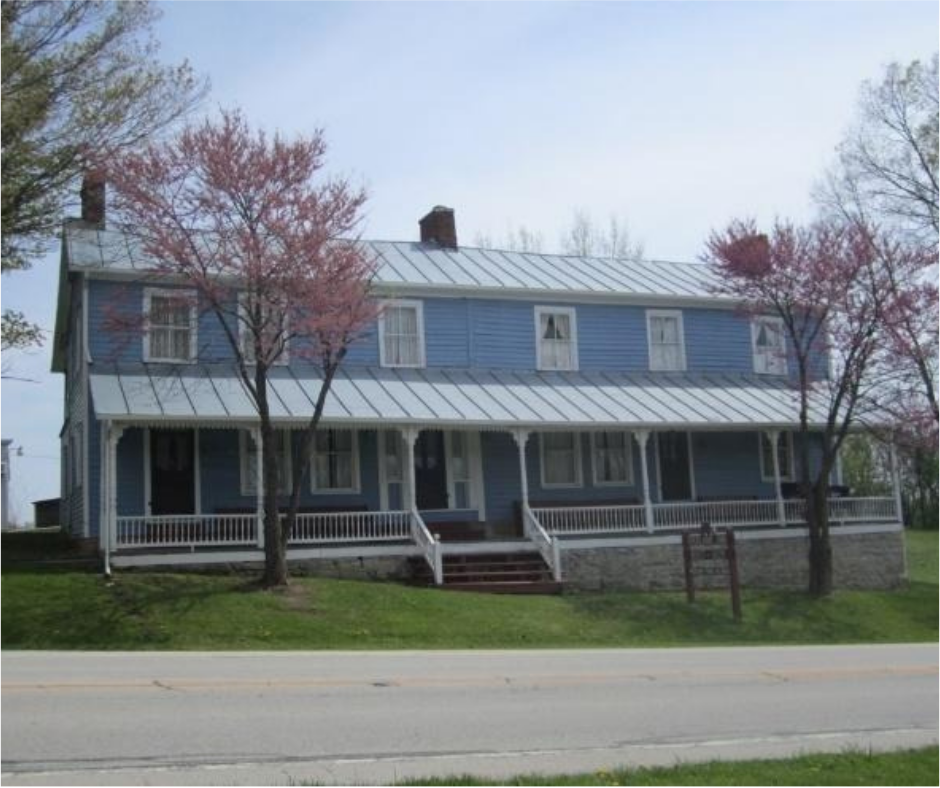
Colonel Joseph McCutchen erected the first building in the new town of McCutchenville, platted by Dr. George Sampson, and named for McCutchen.  The Pervain House, now known as the McCutchen Overland Inn, was erected during the summer of 1829. It was originally constructed as a hotel and later served as a stagecoach stop along the Harrison Trail. This was a former Indian Trail leading from the Scioto River near Columbus to Lake Erie, which was expanded by General William Henry Harrison in order to accommodate his troops during the War of 1812. McCutchen operate his Inn until January 1845 when he sold the property to Christopher Pierson.

On October 21, 1845, Pierson sold the land and original building to John F. Myers, who added on to the building and operated it as Myers Hotel until April 18, 1918, when it was sold at public auction. Hays Shireman purchased the building and operated it as a boarding house and eventually as an apartment building. The Wyandot County Historical Society acquired the building from the Shireman Estate in 1964.

By the time it was purchased by the Society, the Inn had fallen into disrepair. It took three years for community volunteers to restore the building to its stagecoach days. The McCutchen Overland Inn was dedicated as a stagecoach museum on June 11, 1967. It is one of only two original stagecoach inns remaining in their original locations in the state of Ohio.

Visitors to the Inn will delight in the quaint structure furnished with antiques donated by residents of Wyandot County (and surrounding counties), and retaining the original reception and bar room where travelers registered to spend the night. Touring the Inn will provide an experience of nineteenth century travel throughout Ohio and America.

In 2002, the redecoration of the Inn turned into a second major renovation/restoration stretching out over a four-year period. The Inn’s foundation was reinforced, the log cabin was dismantled log by log, the log cabin foundation was replaced, and the log cabin was rebuilt. Floors were refinished or replaced, and the Inn received a period-appropriate redecoration. An outpouring of support from current and former Wyandot County residents, businesses and organizations, including money collected by McCutchenville school children, provided financial resources as well as volunteer workers to complete the project. The grand reopening of the Inn was held on June 10, 2007. More than 500 people traveled to McCutchenville to join in the festivities.

In 2021, the Anderson General Store was transformed from a storage structure back to its appearance as a store, including a pharmacy section, filled with items you might find in a rural turn of the 20th century store.

Inn Location: 283 State Route 53 North, McCutchenville, Ohio 44844

GPS Location: 40.9898823°N, -83.2605967°W

About “Tracking the Troops, Tippecanoe & Perry, Too!” This driving tour is a five-county collaborative project with Wyandot, Seneca, Sandusky, Wood and Ottawa counties that takes you on a self-guided driving tour following the military trail of General William Henry Harrison during the War of 1812. Harrison would later become the ninth president of the United States and has the shortest presidency, dying from pneumonia one month after having taken the oath of office.

America 250 Historical Driving Tour | Fort Seneca

Stop #7 | Address: Intersection of CR 51 and Harrison St., Old Fort (Approx. 7861 Main St., Old Fort)

General William Henry Harrison ordered the construction of Fort (or as he called it, Camp) Seneca as another supply depot along the Army Road (formerly the Scioto-Sandusky Trail) in July of 1813.  It was located on a 40 ft bluff on the west side of the Sandusky River in present-day Old Fort, Ohio.

Twelve-foot oak pickets, 1 foot thick, enclosed a square of roughly 1 ½ acres.  The southwest corner had a blockhouse 16 ft high and 25 ft square, while smaller blockhouses protected the remaining three corners.  The pickets were extended at one point to enclose one of several freshwater springs near the fort, thereby ensuring a supply of water in case of a siege.  During the late summer of 1813, it was garrisoned by roughly 800 troops preparing to move north to attack British and Native American forces at Fort Malden.

Harrison used Fort Seneca as his headquarters from July of 1813 until September when news of Perry’s victory on Lake Erie allowed him to begin moving men and supplies toward the Lake for the final push against Malden.  The fort never came under attack from enemy forces, but troops at Fort Seneca could hear the sounds of battle during the failed British efforts to take Fort Stephenson (present-day Fremont) downstream.  Shortly after the battle and again during Harrison’s 1840 campaign for the presidency, his political enemies chastised him for not coming to the aid of Fort Stephenson.  Any such effort would have been foolhardy in view of the size of the British and Indian forces facing the Americans, and who had plans to ambush any forces sent to reinforce Fort Stephenson.

In July, a Shawnee named Little Blue Jacket conspired with the British at Malden to assassinate Harrison.  Blue Jacket entered Fort Seneca with a group of Indians loyal to the Americans but made the mistake of reveling his plans to Beaver, a friend of Harrison.  As Blue Jacket prepared to put his plan into action, Beaver killed him.

Following the war, Fort Seneca was abandoned.  Like the other forts along the Army Road, it provided early settlers with temporary shelter until more permanent homes could be built.  Rev. James Montgomery, the agent assigned to oversee the Seneca Reservation created in 1817, was one of them.  He and his family of 12 lived in the fort’s large blockhouse for 7 years.

About “Tracking the Troops, Tippecanoe & Perry, Too!” This driving tour is a five-county collaborative project with Wyandot, Seneca, Sandusky, Wood and Ottawa counties that takes you on a self-guided driving tour following the military trail of General William Henry Harrison during the War of 1812. Harrison would later become the ninth president of the United States and has the shortest presidency, dying from pneumonia one month after having taken the oath of office.

America 250 Historical Driving Tour | Old Fort Sandoski

Stop #14 | Address: 1985 Fulton St., Port Clinton

In 1912, two monuments were dedicated by the Ohio Society & Daughters of the American Revolution and the Ohio State Archaeological & History Society to mark a two-mile course of what today is Fulton Street in Port Clinton.  The course was used by General William Henry Harrison’s American soldiers to drag boats overland for crossing Lake Erie. 

These two pyramidal monuments stand at either end of what is known as the ‘DeLery Portage of 1754’, today’s Fulton Street.  One tablet at the south end of Fulton marks the site of Old Fort Sandoski.  Facing Sandusky Bay, opposite the mouth of the Sandusky River, Old Fort Sandoski is the first fort built by white men within the present limits of Ohio.  The fort’s location was confirmed by the discovery in 1906 of journals written by French Army engineer Lt. Chevalier Chaussegros de Lery.  In 1754 de Lery led a large military contingent from Quebec to Fort Detroit.  His route took him along the southern shore of Lake Erie into Sandusky Bay.  He and his 258 men arrived at the site of the fort to discover that it had been abandoned.  His journal included a sketch of the site.  The Old Fort Sandoski tablets detail the Indian-British Expedition of 1760, French Expedition of 1754, and American Expedition of 1813.  

The other tablet at the north end of Fulton Street is the Harrison-Perry Embarkation monument and overlooks Lake Erie near the old mouth of the Portage River.  It is located at the terminus of the portage where Indians and French explorers landed.  General Harrison and his soldiers embarked from this area in 1813 for the conquest of Canada’s Fort Detroit.

About “Tracking the Troops, Tippecanoe & Perry, Too!” This driving tour is a five-county collaborative project with Wyandot, Seneca, Sandusky, Wood and Ottawa counties that takes you on a self-guided driving tour following the military trail of General William Henry Harrison during the War of 1812. Harrison would later become the ninth president of the United States and has the shortest presidency, dying from pneumonia one month after having taken the oath of office.

America 250 Historical Driving Tour | Harrison-Perry Embarkation Monument

Stop #15 | Address: Waterworks Park, Port Clinton

In 1912, two monuments were dedicated by the Ohio Society & Daughters of the American Revolution and the Ohio State Archaeological & History Society to mark a two-mile course of what today is Fulton Street in Port Clinton.  The course was used by General William Henry Harrison’s American soldiers to drag boats overland for crossing Lake Erie. 

These two pyramidal monuments stand at either end of what is known as the ‘DeLery Portage of 1754’, today’s Fulton Street.  One tablet at the south end of Fulton marks the site of Old Fort Sandoski.  Facing Sandusky Bay, opposite the mouth of the Sandusky River, Old Fort Sandoski is the first fort built by white men within the present limits of Ohio.  The fort’s location was confirmed by the discovery in 1906 of journals written by French Army engineer Lt. Chevalier Chaussegros de Lery.  In 1754 de Lery led a large military contingent from Quebec to Fort Detroit.  His route took him along the southern shore of Lake Erie into Sandusky Bay.  He and his 258 men arrived at the site of the fort to discover that it had been abandoned.  His journal included a sketch of the site.  The Old Fort Sandoski tablets detail the Indian-British Expedition of 1760, French Expedition of 1754, and American Expedition of 1813.  

The other tablet at the north end of Fulton Street is the Harrison-Perry Embarkation monument and overlooks Lake Erie near the old mouth of the Portage River.  It is located at the terminus of the portage where Indians and French explorers landed.  General Harrison and his soldiers embarked from this area in 1813 for the conquest of Canada’s Fort Detroit.

About “Tracking the Troops, Tippecanoe & Perry, Too!” This driving tour is a five-county collaborative project with Wyandot, Seneca, Sandusky, Wood and Ottawa counties that takes you on a self-guided driving tour following the military trail of General William Henry Harrison during the War of 1812. Harrison would later become the ninth president of the United States and has the shortest presidency, dying from pneumonia one month after having taken the oath of office.

America 250 Historical Driving Tour | Battlefield Park in Danbury Township

Stop #17 | Address: 9878 E. Bayshore Rd, Lakeside Marblehead

The monument marks the first battle of the War of 1812 on Ohio soil, Danbury Peninsula, on September 29, 1812.   Known as the Peninsula Battle, or Skirmish on the Peninsula, members of a small Connecticut militia that had arrived from Fort Avery near Milan, Ohio were attacked by Indians, thought to have been a combined force of Ottawa and Wyandot.  Some soldiers held the Indians at bay from a nearby cabin while others escaped by boat to Cedar Point.  Two days later reinforcements arrived, driving off the attackers.  Eight soldiers were killed and about forty Wyandot or Ottawa.

As the war ensued, battles in which Tecumseh’s warriors backed the British soldiers against American troops were waged at many locations surrounding Ottawa County, including in and around Detroit, at Fort Meigs on the Maumee near Toledo, and at Fort Stephenson in Fremont (then known as Lower Sandusky).  

Among the survivors of the Peninsula Battle was seventeen-year old Joshua Giddings, who later became an anti-slavery Congressman from Ohio.  In 1858 he would have a monument placed with the names of three victims to mark the graves and battle site.  The land on which the monument stands was deeded in 1911 by Kelley Island Lime & Transport Company to the National Society U.S. Daughters of 1812, State of Ohio, who in 1914 added a plaque to include five more names.

About “Tracking the Troops, Tippecanoe & Perry, Too!” This driving tour is a five-county collaborative project with Wyandot, Seneca, Sandusky, Wood and Ottawa counties that takes you on a self-guided driving tour following the military trail of General William Henry Harrison during the War of 1812. Harrison would later become the ninth president of the United States and has the shortest presidency, dying from pneumonia one month after having taken the oath of office.

America 250 Historical Driving Tour | Fort Ferree – Overland Inn – Indian Spring Historical Marker

Stop #1 | Address: In front of Elks Lodge No. 83 (320 E. Wyandot Ave., Upper Sandusky)

FORT FERREE – OVERLAND INN

INDIAN SPRING

——

Fort Ferree
built by Gen. Harrison’s Army, 1812.
Overland Inn
1814 until 1846, on site Elks Lodge.
Indian Spring
used by Indians 1730 to 1843.

Col. Crawford’s Army drank at Spring

June 4, 1782. Charles Dickens stopped 

at Inn and Spring, 1842. Scioto Trail

led past the Indian Spring and Inn.

Erected in 1956 by the Wyandot County Historical Society and the Benevolent Protectorate of Elks Lodge No. 83 (Upper Sandusky). It was refurbished within the past ten years.

Marker Location: East Wyandot Avenue near the current Elks Lodge parking lot.

GPS Location: 40.8275750°N, -83.2776475°W

About “Tracking the Troops, Tippecanoe & Perry, Too!” This driving tour is a five-county collaborative project with Wyandot, Seneca, Sandusky, Wood and Ottawa counties that takes you on a self-guided driving tour following the military trail of General William Henry Harrison during the War of 1812. Harrison would later become the ninth president of the United States and has the shortest presidency, dying from pneumonia one month after having taken the oath of office.

America 250 Historical Driving Tour | Sandusky County Historical Society Museum

Stop #10 | Address: 514 Birchard Ave, Fremont

514 Birchard Avenue near Park Avenue.  The 1884 mansion has a War of 1812 room with battle artifacts, a scale model of Fort Stephenson, a model of Perry’s ship the Niagara, and a George Croghan collection.  The museum is open to the public from mid-May through October on Wednesdays from 3-7 and the first Saturday of each month from 10-2, or by special appointment.

About “Tracking the Troops, Tippecanoe & Perry, Too!” This driving tour is a five-county collaborative project with Wyandot, Seneca, Sandusky, Wood and Ottawa counties that takes you on a self-guided driving tour following the military trail of General William Henry Harrison during the War of 1812. Harrison would later become the ninth president of the United States and has the shortest presidency, dying from pneumonia one month after having taken the oath of office.

America 250 Historical Driving Tour | Seneca County Museum

Stop #6 | Address: 28 Clay St., Tiffin

The Seneca County Museum is located in the Fort Ball Historic District near the site of the former Fort Ball.  The Museum houses a number of items related to the War of 1812.  There are oil paintings of both Fort Ball and Fort Seneca by local 19th century artist, Ed Lepper.   A model of Fort Seneca displays what the fort would have looked like along the Sandusky River.  There are a few pieces of weaponry that predate the War of 1812 and also date to that time period. 

The docents at the Museum are available to share these items with you and also answer any questions you might have regarding the driving tour sites in Seneca County.  The Museum is within easy walking distance of the Fort Ball historic marker site.  

There are also other noteworthy points of interest along Frost Parkway related to the War of 1812. The Sycamore tree, that is said to have sprung up as a sapling from the decaying fort in the 1800s, is protected by wrought iron fencing. In 1906, a plaque of recognition of the Fort Ball site,  from the Dolly Madison Chapter of the Daughter’s of American Revolution, was placed on the tree, which today would be over 200 years old. 

The bronze Indian Maiden statue is located near the site of the spring that flowed into Fort Ball.  The plaque on the base of the statue tells the legend of the maiden offering water to a pioneer traveler.  The Indian Maiden was originally placed on the site of the spring in 1926, but in the 1990s she was moved to her current location when the park added the gazebo. The spring was located a few feet east of the gazebo.

The monument “island” at the intersection of Adams Street and Frost Parkway has at its center what is known as the Soldiers’ & Sailors’ Monument and was dedicated on July 3, 1885.  This pays tribute to the men from Seneca County who served in the War of 1812 and the Civil War.  

Visit the Seneca County Museum website for hours and other America 250 events.  https://senecacountyohiomuseum.org

About “Tracking the Troops, Tippecanoe & Perry, Too!” This driving tour is a five-county collaborative project with Wyandot, Seneca, Sandusky, Wood and Ottawa counties that takes you on a self-guided driving tour following the military trail of General William Henry Harrison during the War of 1812. Harrison would later become the ninth president of the United States and has the shortest presidency, dying from pneumonia one month after having taken the oath of office.

America 250 Historical Driving Tour | Welcome & War of 1812 Introduction

Welcome!

Step back in time as you follow this driving tour through Northwest Ohio, where the War of 1812 played a pivotal role in shaping our young nation. Often called America’s “second war of independence,” this conflict grew out of tensions between the United States, Great Britain, and Native American tribes, especially across the Great Lakes region.

Under the leadership of General William Henry Harrison, American forces moved north through Ohio along historic routes like the Scioto-Sandusky Trail, building a chain of forts including Fort Ball in present-day Tiffin and Fort Seneca to support their advance. The journey was difficult, as troops had to navigate the dense Black Swamp and the constant threat of attack.

The turning point came in 1813, when Commodore Oliver Hazard Perry secured a crucial victory on Lake Erie. This allowed American troops to move into Canada and defeat British forces at the Battle of the Thames. Along this tour, you will explore the places and stories that helped shape the future of the United States.

The War of 1812 (1812-1815) is sometimes called our country’s second war of independence.  In part, it grew out of long-simmering tensions along the Canadian-United States border, especially around the Great lakes.  One source of contention was the unfulfilled British promise to vacate United States territory negotiated in the 1783 Treaty of Paris, which ended the Revolutionary War.  Additionally, British authorities in Canada continuously stoked Indian resentment towards Americans who were now settling on their lands, frequently leading to open conflict.

Until late 1814, much of the War was limited to two theaters: naval engagements on the high seas and battles on and around the Great Lakes.  As the governor of the Indiana Territory before the War, William Henry Harrison had dealt frequently with the growing animosity between the Great Lakes tribes and white settlers for years.  His familiarity with the region made him the logical choice to command U. S. forces there.

Harrison’s strategy centered on neutralizing Fort Malden on the Canadian (British) side of the Detroit River.  For years, authorities at the fort had sought to influence events in United States territory along the southern Lakes.  There were accusations by many in the region that they supplied Indians with weapons and encouraged them to attack settlements in the Ohio Valley.  The military forces stationed at Malden included a fleet of naval vessels, whose primary role was control of Lake Erie.  Since overland travel was impossible through the Canadian wilderness, the resupply of Malden from military stores at Niagara had to travel by water.  Without this ability, Malden’s survival was in jeopardy.

The Lake likewise figured into Harrison’s strategy.  A successful conquest of Fort Malden required that a substantial military force and its supplies travel north through Ohio.  Although Ohio had become a state in 1803, the northwestern part of the state was undeveloped; in fact, it was technically Indian land set aside by the 1794 Treaty of Greenville.  In addition, a sizeable portion of this region was covered by the impenetrable Black Swamp.  An American army traveling overland would have to overcome these considerable obstacles just to reach Malden.  This force also faced the possibility of Indian ambushes along the way.  And after all that, Harrison’s army would have to retake Fort Detroit, which had been captured by the British shortly after the War began, before making an amphibious crossing of the Detroit River to reach Malden.

In late 1812, Harrison thought it might be possible to avoid some of these obstacles by marching his army across the frozen waters of Lake Erie.  Unfortunately, the winter of 1812-1813 proved to be too mild and he was forced to devise other plans.  He began by building Fort Meigs at the rapids on the Maumee River, north of the Black Swamp.  This substantial fortification would present a formidable obstacle should the British consider an attack into western Ohio.  It would also provide a staging area for troops and supplies for his conquest of Fort Malden.

Harrison’s strategy then concentrated on gaining control of Lake Erie.  Under the direction of Oliver Hazard Perry, operations had already begun in early 1813 to build an American fleet in eastern Lake Erie to challenge the British for control of the Lake.  This was a gamble.  Could Perry acquire the supplies and find the sailors necessary in time to make this happen?  If successful, it not only would cut the British supply line to Malden, but Harrison would also be free to transport his troops by boat across the Lake without opposition.

Still, Harrison needed to move his forces northward from central Ohio to be prepared to advance once the British fleet was defeated.  His main line of march followed the northern stretch of the Scioto-Sandusky Trail.  The Shawnee Tribe had originally created this route connecting the Ohio River to Lake Erie by following the Scioto River upstream where a short portage led to the source of the Sandusky River, which they then followed downstream to the Lake.  Harrison established a series of fortified supply depots along this trail, which also could serve as fallback positions should the American plan fail.  He began with Fort Ferrer at Upper Sandusky (Wyandotte County) near the origins of the Sandusky River.  He then had Fort Ball constructed at present-day Tiffin and Fort Seneca built at present-day Old Fort (both in Seneca County).  Finally, he ordered that the already existing Fort Stephenson in Lower Sandusky, now Fremont (Sandusky County), be enlarged and reinforced.  

During the summer of 1813, the British and their Indian allies made two unsuccessful attempts to capture Fort Meigs.  Frustrated, they tried to overwhelm the much more vulnerable Fort Stephenson.  But here too the undermanned but resolute garrison repelled the attack.  The vanquished British forces returned to Malden, where many of the disheartened Indians returned to their homes.  Perry’s remarkable victory over the British fleet in September off South Bass Island allowed Harrison to consolidate his forces, which included troops from Fort Meigs, at the mouth of the Portage River in present-day Port Clinton and move them by boat across Lake Erie to attack Malden.  The British and their remaining Indian allies burned the fort before Harrison’s forces arrived and fled east into the wilds of Canada in a desperate attempt to reach Niagara.  The Americans caught up to them along the Thames River and won a resounding victory.  Aside from a few more engagements, such as the ill-fated American attempt to capture the British fort on Mackinac in 1814, fighting came to an end in the region.

About “Tracking the Troops, Tippecanoe & Perry, Too!” This driving tour is a five-county collaborative project with Wyandot, Seneca, Sandusky, Wood and Ottawa counties that takes you on a self-guided driving tour following the military trail of General William Henry Harrison during the War of 1812. Harrison would later become the ninth president of the United States and has the shortest presidency, dying from pneumonia one month after having taken the oath of office.

America 250 | Ohio Music & Entertainment Seneca County

America 250- History Lives Here | March 2026

In 2026, we will celebrate the 250th anniversary of the United States by exploring the many ways Ohio and Seneca County have contributed to U.S. History. Each month, a new theme will highlight Ohio’s unique and lasting contributions. Learn more about the 2026 Celebration Themes here.

In the early 20th century, you didn’t have to travel to New York City or Hollywood to find the heartbeat of American entertainment. Right here in Seneca County, we had two orchestrated places serving the arts to our community, and all across the country. From glamorous movies and performances in the Ritz Theatre, to hometown pageants rooted in Fostoria, our community wasn’t just watching history, but making it. This month, we also honor the legacy of Rodger Wilton Young, a local hero whose story transitioned from the battlefields of WWII to the heights of American musical culture. 

The Ritz Theatre | Tiffin’s Movie Palace

With the rising popularity of motion pictures in the late 1920s, downtown Tiffin was alive with entertainment. Three theaters were already operating, each drawing in crowds seeking the silver screen. But two local visionaries, Dan Kerwin and Adam Ritzler, dreamed of a movie palace more grand and beautiful than anything they had ever seen. 

This is where the vision of the “Ritz” came to life. Completed in only nine months, the Ritz Theatre was immediately dubbed “Tiffin’s quarter-million-dollar movie palace.” This stood as a testament to the community’s ambition, craftsmanship, and love for community art’s. 

In 1928, the dream fully came to life when over 1,500 patrons packed the theatre, eager to listen to the Ritz Quality Orchestra. Guests were there not just for the stir of the beautiful sounds of the orchestra, but for the marvel of experience. Elegant decor, ornate details, and modern whirs made seeing a performance impactful.

During the 1920’s and 1930’s, four theatres operated in Tiffin. Today, the Ritz stands as a golden reminder of a period when theaters were as much of an attraction as the films they show. Renovated in 1998 and restored to near-original splendor, The Ritz Theatre continues to connect generations. It stands not only as a historic landmark, but as a living piece of Tiffin’s cultural heritage, proof that dreams can live on for generations. 

The John B Rogers Company | Producers of the American Pageant

For much of the 20th century, a small company based in Fostoria helped communities across America celebrate their history and heritage in a big way. The John B Rogers Company, founded in 1903, specialized in organizing large-scale historical pageants for communities marking centennials, anniversaries, and other milestones. 

Rather than bringing in outside performers, the company worked with local residents, turning neighbors, farmers, doctors, and business owners into actors in elaborate outdoor productions. These shows would feature hundreds of participants, detailed costumes, music, and dramatic retellings of the area’s history. 

Beyond the pageant itself, Roger’s helped communities plan full-year-long celebrations with events, contests, and themes to tie in the community’s celebration all in one. At its peak, the company produced dozens of shows each summer, with over 5,000 shows produced before its closing in 1977. 

The John B Rogers Company paved the way for the arts in our community and communities all across America. Their unique way of highlighting rich histories across America gave music, art, and entertainment to areas that may have never had it otherwise. Their dedication and impact show how the Seneca County area shaped music and entertainment across America. 

Rodger W. Young | The Ballad of a Hero

As we celebrate America 250, the legacy of Rodger W. Young, known as “Fuzz,” stands as a powerful example of how military sacrifice intertwines with American music and entertainment. Whether for entertainment by the Green Springs Town Band or our high school bands over the years, a specific piece of music has been played to recognize and honor this local icon. The Ballad of Rodger Young, written by Frank Loesser, continues to honor his memory and bridge the gap between history and the arts.

Rodger W. Young was born in Tiffin, Ohio, and spent his early days living and attending school in Green Springs, Ohio. Rodger joined the National Guard in Fremont, Ohio, serving in WWII with Co. B, 148th Infantry Rgt, 37th Infantry Div., ONG, US Army. He died near the Munda Strip during the battle of New Georgia in the Solomon Islands in July 1943. Rodger’s body, first buried on the island, was disinterred and returned to Green Springs for a funeral at the Methodist Church and taken to Clyde for burial in McPherson Cemetery.

Posthumously, Rodger was awarded a WWII Medal of Honor for his bravery in serving our country. The ballad written by Loesser honors and showcases the bravery of Rodger W. Young and men alike who protected our country. Celebrated and played often by community and high school bands, the ballad is steadfast in our community as a song to honor those who served our country. Rodger W. Young and his dedication to our country continue to impact our community and country through his legacy, memorialized in American music & entertainment.

To listen to the Ballad of Rodger Young click here.

Today, both the Ritz Theatre and the John B Rogers Company still impact our community. The Ritz Theatre still stands as a beautifully restored testament to serving the arts, while the John B Rogers Company lives in the communities and the people it allowed to be entertainers. Along with the enduring notes of Rodgers Young’s ballad, their legacies serve as a true testament to music and entertainment in the past, present, and future of Seneca County.

For all America 250 Seneca County events, news, and happenings, visit DestinationSenecaCounty.org/America250.

The Ritz Theatre Joins Ohio Goes to the Movies in 2026

In 2026, the spotlight will shine brightly on Tiffin as The Ritz Theatre takes its place in a statewide celebration of storytelling, history, and hometown pride. Selected as an official venue for Ohio Goes to the Movies, a signature event of America 250-Ohio, The Ritz will host a special screening of the 1927 silent film The Student Prince in Old Heidelberg on March 20, 2026 at 7:00 p.m. The event connects Ohio’s cinematic legacy with a story that is uniquely, unmistakably Tiffin.

The film being featured is more than a classic silent-era production. It holds a special place in Heidelberg University’s identity. Founded in 1850 as Heidelberg College, the university was named in honor of the historic German city of Heidelberg and its renowned university, reflecting the region’s strong German heritage. The story of the Student Prince began as a 1901 play, later adapted into a popular 1920s operetta by Sigmund Romberg and then into the 1927 silent film that will return to the big screen in Tiffin nearly a century after it first played here.

Legend has it that in the late 1920s, Heidelberg’s alumni director, Edwin R. Butcher, was walking through downtown Tiffin when he noticed a theater billboard promoting The Student Prince in Old Heidelberg. Inspired by the title, he referred to Heidelberg’s football team as the “Student Princes” in the alumni magazine. Sportswriters embraced the nickname, and it eventually replaced the Cardinals as the university’s official moniker. Today, the Student Prince remains a proud symbol of Heidelberg University, and Siggy — named for composer Sigmund Romberg — carries that tradition forward at campus and community events throughout the year. The university’s long-standing ties to its German namesake, including nearly 70 years of its acclaimed study abroad program in Heidelberg, Germany, continue to reflect the global roots of this Tiffin institution.

Bringing this film back to The Ritz Theatre in 2026 feels both historic and full circle. The same story that helped shape Heidelberg University’s identity will once again flicker across a downtown screen, this time as part of a statewide tribute to Ohio’s role in cinema. Ohio Goes to the Movies will take place from February through October 2026, with all 88 counties participating in the celebration. The initiative highlights films shot in Ohio, Ohio-born actors and directors, and the many creative professionals who call the Buckeye State home. As an America 250-Ohio Designated Community, Seneca County is proud to play a part in honoring our state’s contributions during the nation’s 250th anniversary.

For visitors, the March 20th screening offers more than a night at the movies. It’s an invitation to experience downtown Tiffin, to step inside one of Ohio’s most beautiful historic theaters, and to celebrate a story that bridges generations. It’s about community pride, artistic tradition, and the enduring power of storytelling. In Seneca County, history doesn’t just live in textbooks, it lights up the marquee.

In 2026, Ohio goes to the movies. And in Tiffin, the story feels especially personal! This event is free of charge and all are welcome. Learn more about Ohio Goes to the Movies here.