America 250- History Lives Here | June 2026
In 2026, we will celebrate the 250th anniversary of the United States by exploring the many ways Ohio and Seneca County have contributed to U.S. History. Each month, a new theme will highlight Ohio’s unique and lasting contributions. Learn more about the 2026 Celebration Themes here.
When we look back at the incredible story of how our region came to be, the answers are written right in the soil, rivers, and stones beneath our feet. Seneca County and the great state of Ohio boast a rich natural heritage that has shaped our community for generations. From winding waterways to ancient geological treasures, our local outdoors and abundant natural resources have played a truly vital role in building our area and defining our unique state history.
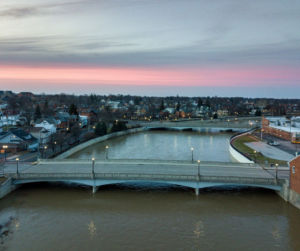
Sandusky River | Our Local Waterways
The Sandusky River is one of Ohio’s longest rivers within the Lake Erie Watershed, boasting a 133-mile-long scenic waterway. Designated an Ohio Scenic River in 1970, it is valued for seasonal fishing, canoeing, and local nature preserves throughout the county. The Sandusky is the only stream in the state that is home to all six species of redhorse suckers, including the state-endangered redhorse.
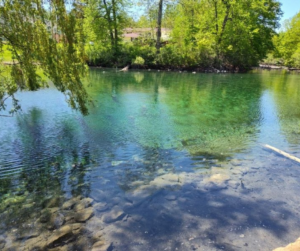
Mineral Springs | Healing Waters and Historic Spas
The mineral springs in Green Springs are said to be the worlds largest natural sulfur spring, flowing up from an underground river at a rate of 8 millions gallons of water every 24 hours. The overflow from the spring runs into Green Creek and eventually into Sandusky Bay and Lake Erie. Originally named Stemtown after founder Jacob Stem, the village was later renamed to Green Springs because of the distinct emerald color of the springs. In the early 1800’s, Stem used the water to establish the area’s first saw and grist mills.
However, mineral springs, which remain at a constant 50 degrees Fahrenheit year-round, became a great source for curing ailments. In 1868, local entrepreneuer Robert Smith had the emerald green water analyzed for mineral content and found it high in calcium and magnesium sulphate. Following this discovery, the area was developed to include hotels and spas, where people from all over came to be near the water. This popularity lasted for decades, and the water was also bottled and sold until the 1930s.
Limestone | Ohio’s Foundational Stone
Limestone was created by sediments left behind by an ancient glacial lake called Lake Maumee, the remnants of which are Lake Erie. Today, Ohio is proud to be one of the top-producing states for limestone, a beautiful natural resource that heavily influenced local architecture right here in our area. For example, the historic Ohio Memorial Church on the Junior Home grounds used a whopping 150 tons of cut limestone, and the lovely greenhouse on the same property also used gray limestone.

The Great Black Swamp | Clearing the Frontier
Set out by pioneers in the early 1820s, the Great Black Swamp was an unforgiving, muddy terrain that often caused pioneer wagons to sink before it was drained. The natural geography varied by area within Seneca County. The southern portion of the county, some parts of present-day Tiffin, were easier to pass through compared to the northern border. The northern area was dense, wet, and dense in wilderness, causing pioneers to have to physically carve their own path using axes to chop through trees, making a trail that allowed their wagons to pass through. The pioneers also heavily relied on established trails carved out by Native Americans.
Before the swamp could actually be drained, the initial goal required clear-cutting the land to open it up for farming. Pioneers relied on unique techniques such as girding, clear-cutting, and using dynamite to blast out the remaining tree stumps. By around the 1840s, they began implementing tiles to successfully drain the Great Black Swamp.
As the swamp dried up, it beautifully transformed into some of the most fertile farmland in the world, establishing the vital importance of agriculture right here in our area.
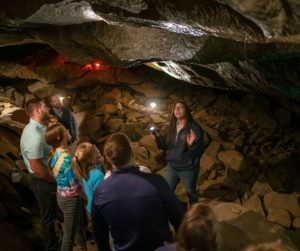
Seneca Caverns | A Natural Underground Adventure
Another fascinating geological wonder in our area is Seneca Caverns, which is recognized as a Registered Natural Landmark by the Ohio Department of Natural Resources. Discovered in June 1872 by two boys chasing a rabbit down a natural sinkhole, the cave was initially known as Good’s Cave after the original landowner. In 1931, a local explorer named Don Bell discovered a new series of deep rooms and passageways leading all the way down to an underground river, prompting him to commercially develop one of Ohio’s largest underground caverns. Opened to the public on May 14, 1933, this unique subterranean landmark has been carefully preserved close to its original, wild, and natural state, offering a memorable educational adventure right beneath the surface.
From the deep, untamed wilderness of our past to the thriving landscapes we enjoy today, Seneca County’s great outdoors continues to be a cornerstone of our community identity. These magnificent natural resources did not just help our ancestors survive, they helped our region truly grow and flourish. As we celebrate our history, we look back with appreciation for the beautiful environment that has shaped our home and remains a vital part of Ohio’s lasting legacy.